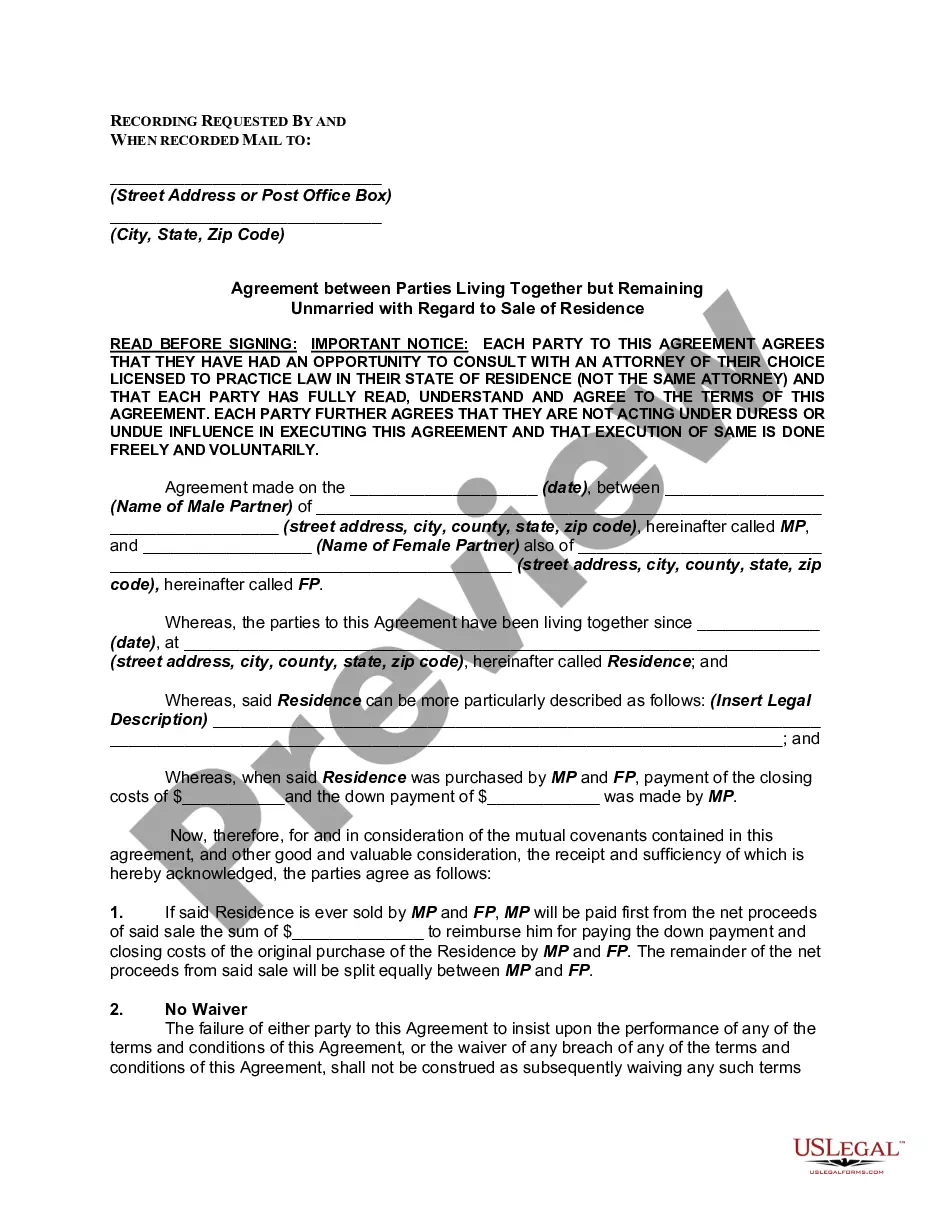
Joint Tenancy For Unmarried Couples In Miami-Dade
Description

Get your form ready online
Our built-in tools help you complete, sign, share, and store your documents in one place.
Make edits, fill in missing information, and update formatting in US Legal Forms—just like you would in MS Word.
Download a copy, print it, send it by email, or mail it via USPS—whatever works best for your next step.
Sign and collect signatures with our SignNow integration. Send to multiple recipients, set reminders, and more. Go Premium to unlock E-Sign.
If this form requires notarization, complete it online through a secure video call—no need to meet a notary in person or wait for an appointment.
We protect your documents and personal data by following strict security and privacy standards.

Make edits, fill in missing information, and update formatting in US Legal Forms—just like you would in MS Word.

Download a copy, print it, send it by email, or mail it via USPS—whatever works best for your next step.

Sign and collect signatures with our SignNow integration. Send to multiple recipients, set reminders, and more. Go Premium to unlock E-Sign.

If this form requires notarization, complete it online through a secure video call—no need to meet a notary in person or wait for an appointment.

We protect your documents and personal data by following strict security and privacy standards.
Looking for another form?









Form popularity
FAQ
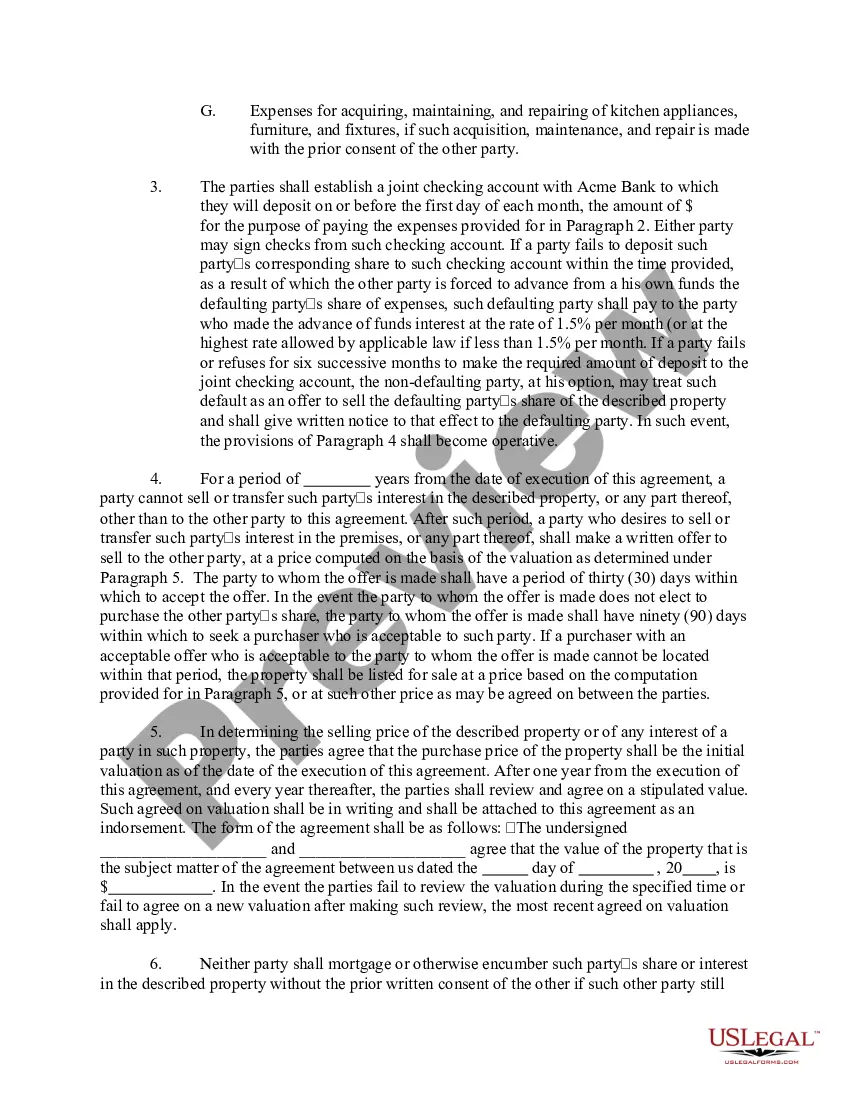
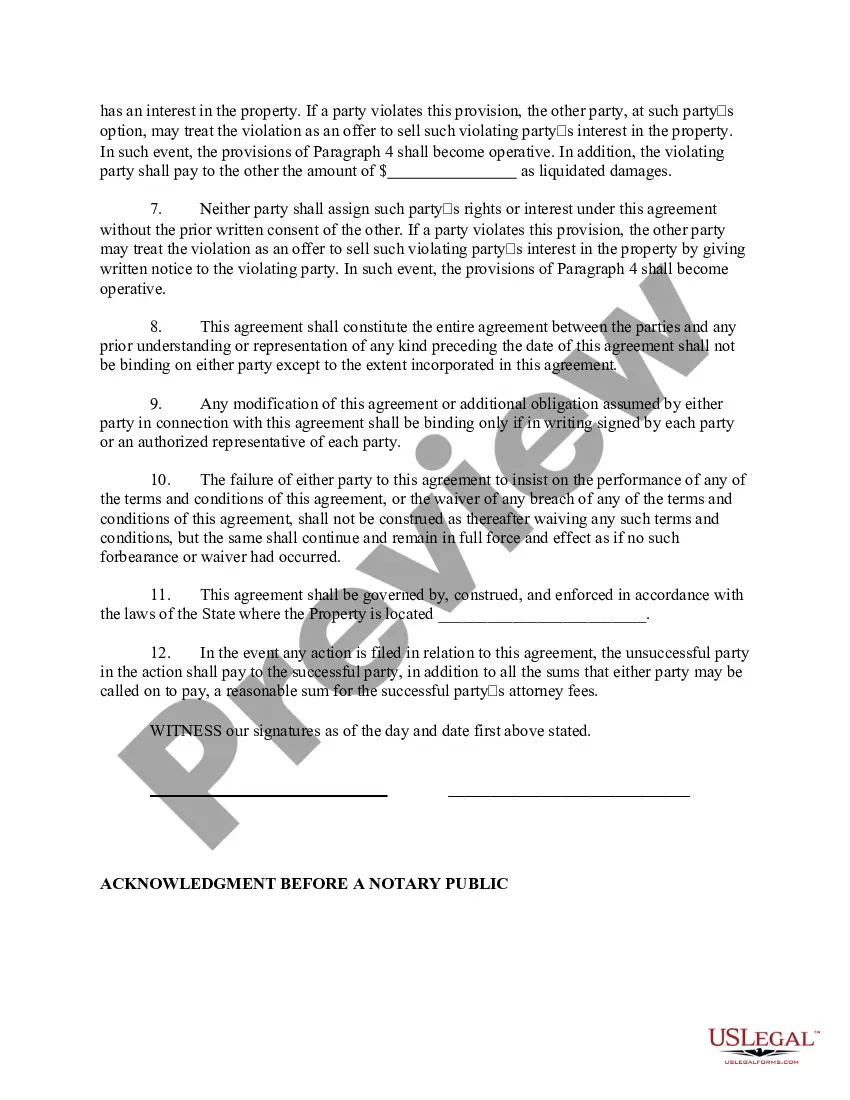
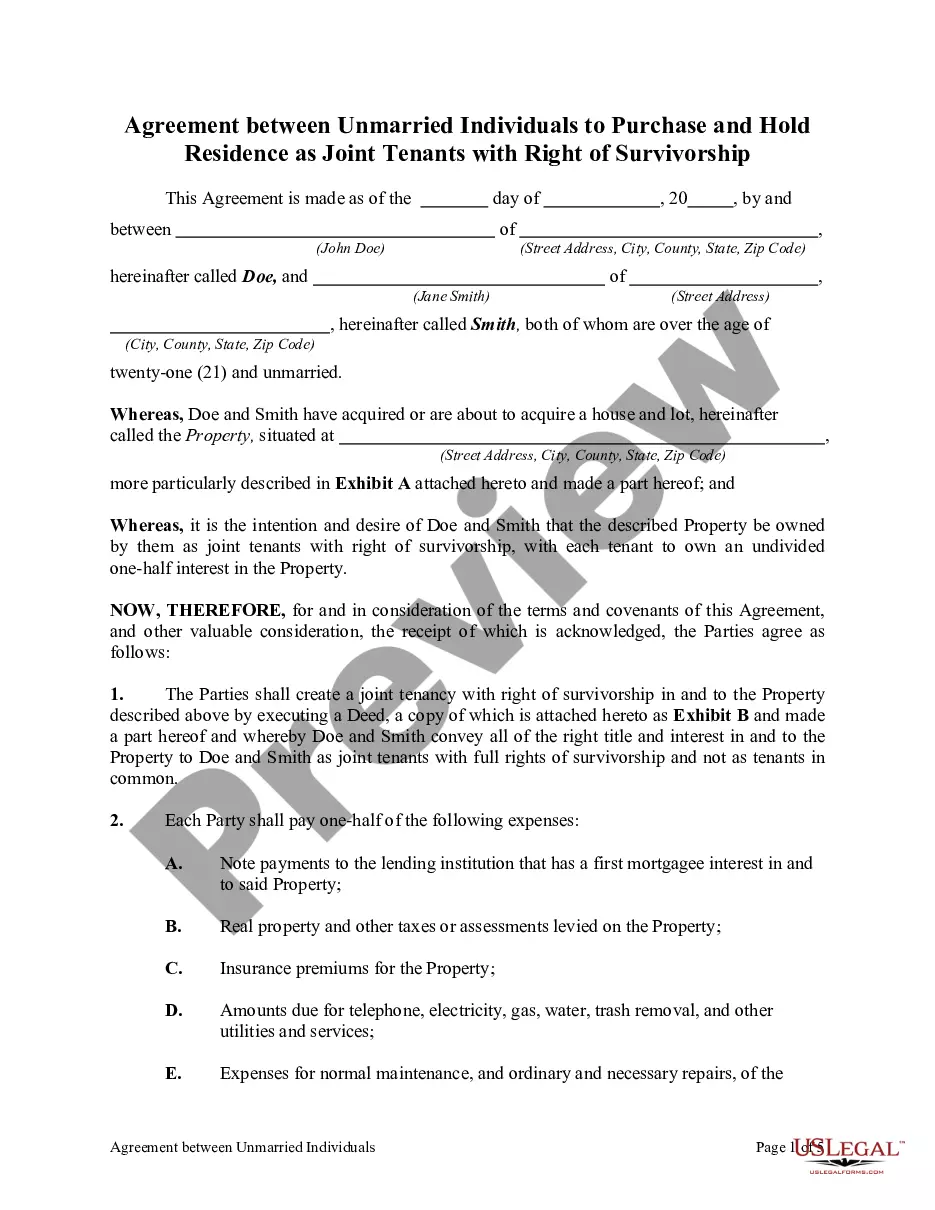
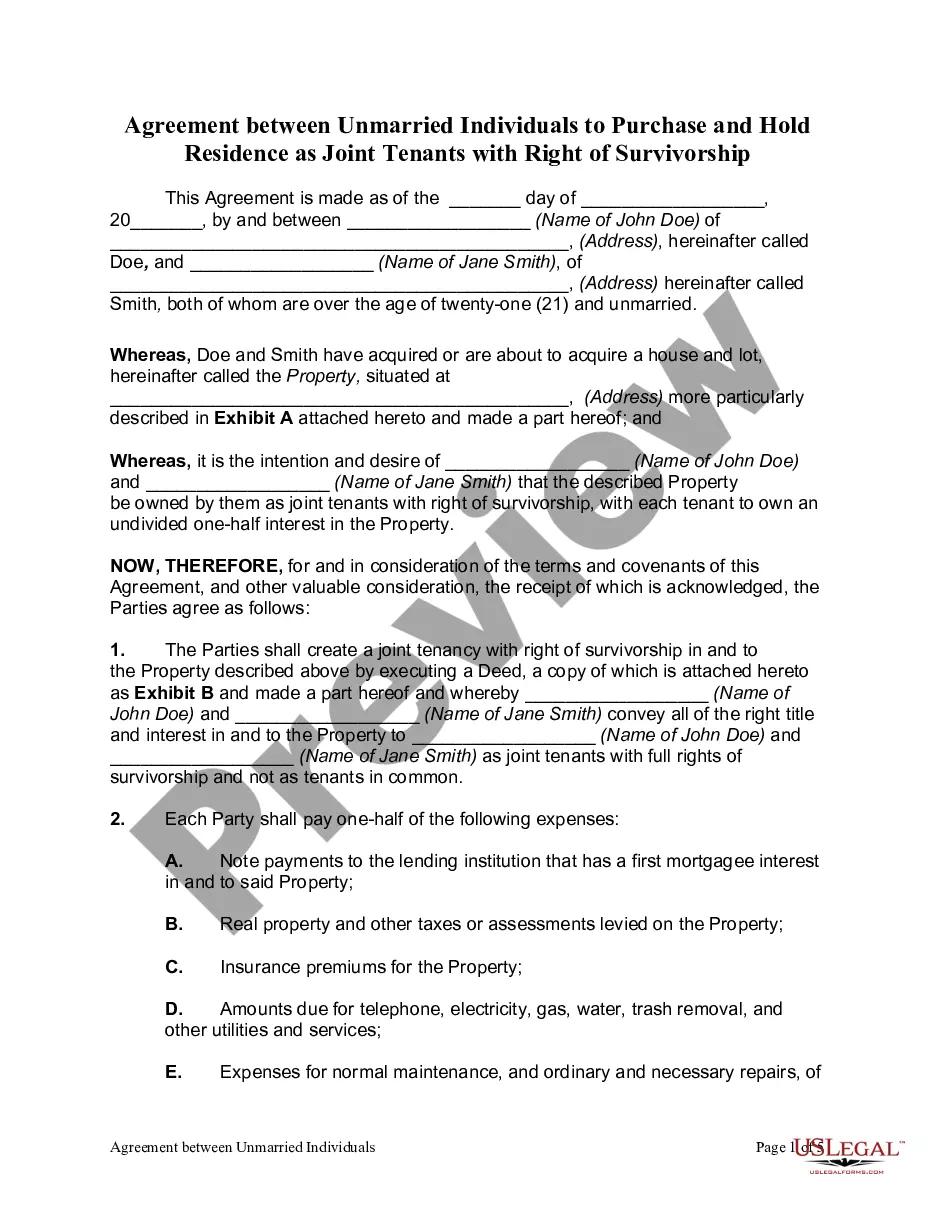
Under Florida law, unmarried couples generally take title as either “tenants in common” or “joint tenants with rights of survivorship.” These terms may seem formalities, but they dictate how your property will be treated in case of separation, marriage, or death.
Many unmarried couples in Florida can also buy a house or hold a title as joint tenants with right of survivorship, in which case, they have complete survivorship rights. In this case, both receive an share property 100% each, and either will inherit the other's share in the event of their death.
A: In Florida, neither spouse is automatically required to leave the marital home during a divorce. Both parties have an equal right to remain in the home until the divorce is finalized and the court decides on property division.
As long as you and your ex can agree on how to divide up your assets, there is no need to involve lawyers or the court system. Even if children are involved, in most states you have the opportunity to separate in private, ing to whatever arrangements the two of you agree on.
What determines who gets the house when an unmarried couple splits up in Florida? In determining who gets the house when an unmarried couple splits up in Florida, legal ownership plays a pivotal role. If the property deed lists only one partner's name, that individual is generally considered the sole owner.
Florida law distinguishes separate property from marital property in a divorce, though there can only be rights to marital property if you are married. Unmarried couples are not considered to have shared property unless both partners are listed as owners.
Typically, when married couples are listed under the real estate title as “husband and wife” a tenancy by the entireties is presumed. At the death of one spouse, the real estate interest passes automatically to the surviving spouse by operation of law similarly to the joint tenancy with right of survivorship.