Dog Walking Contract With Insurance
Description

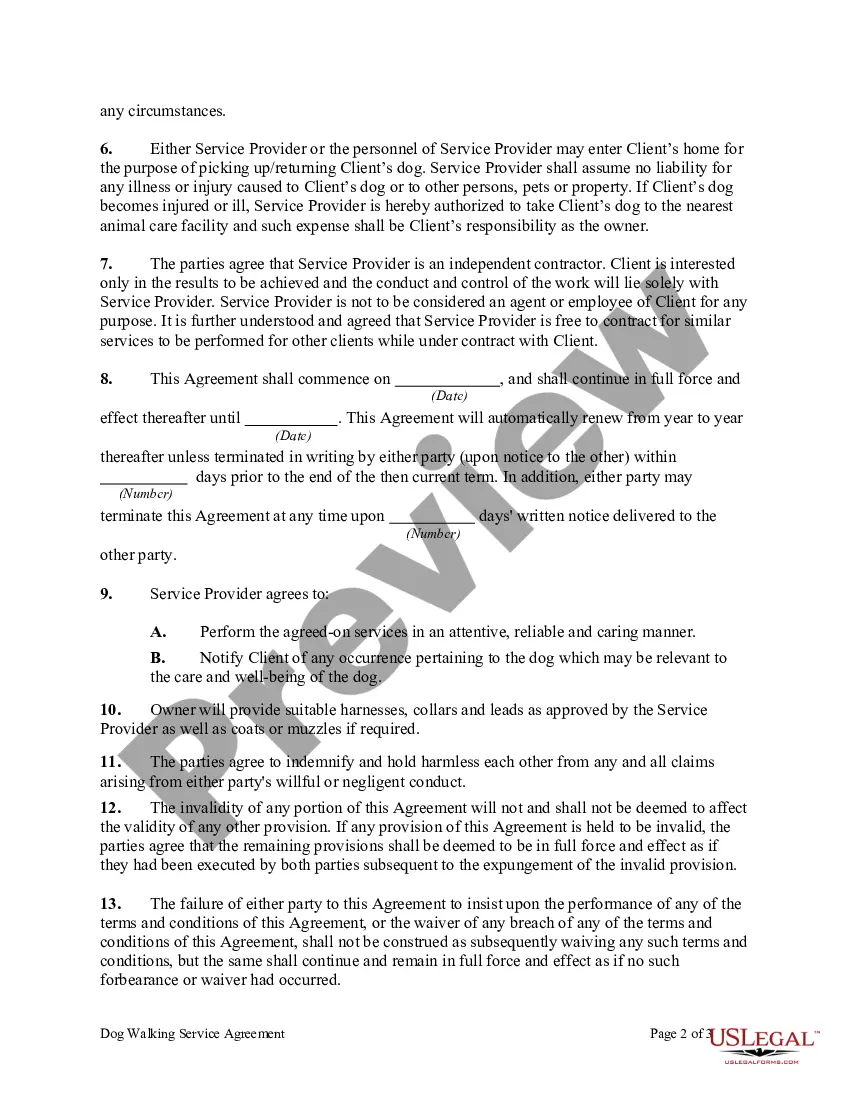
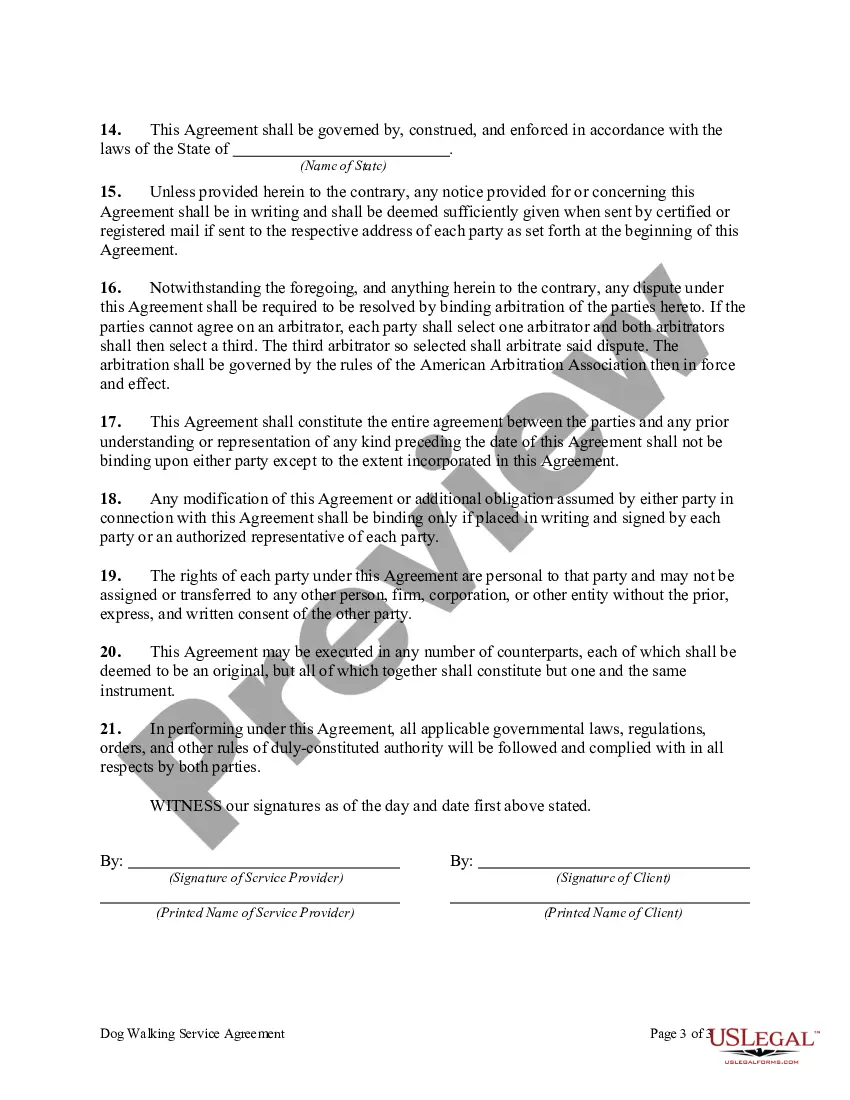
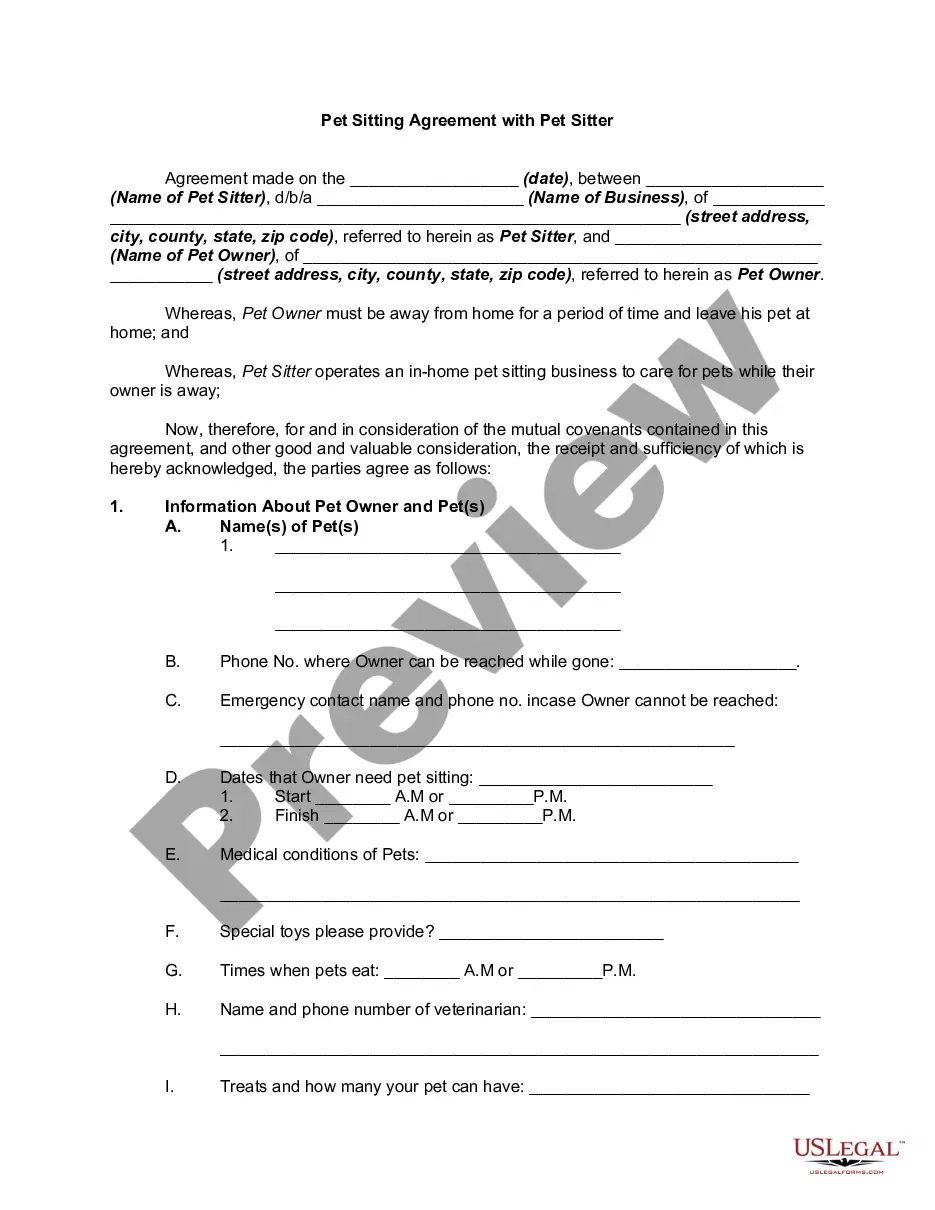
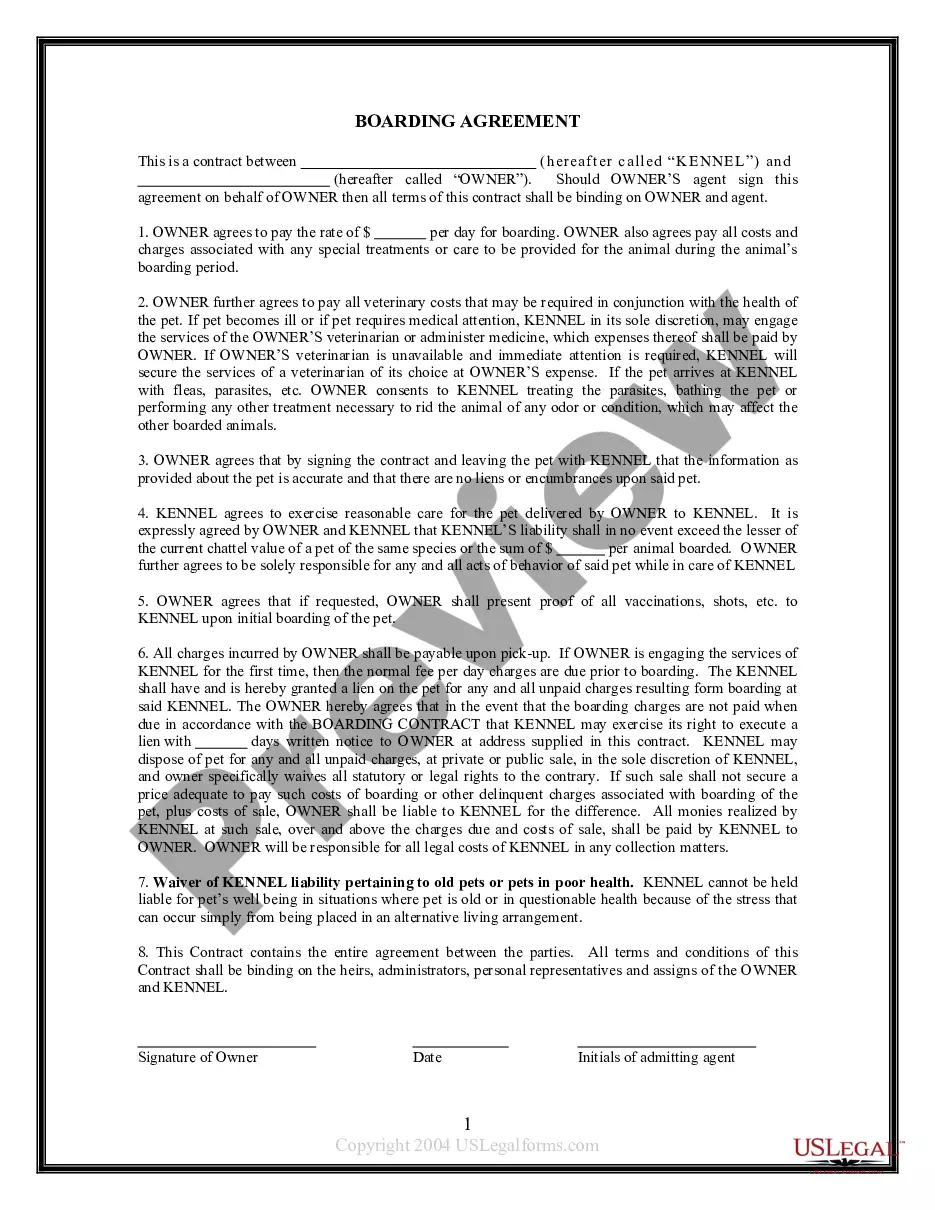
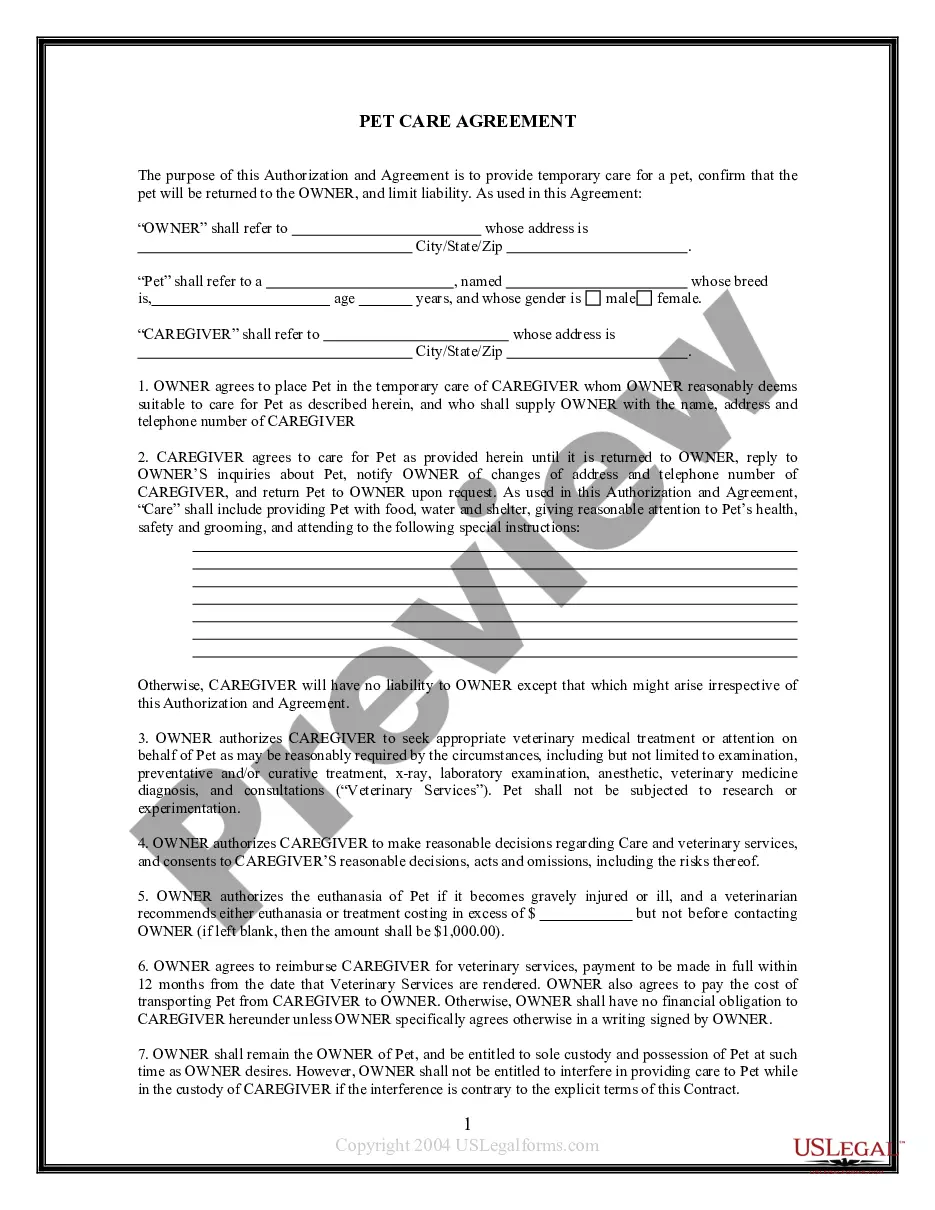
Get your form ready online
Our built-in tools help you complete, sign, share, and store your documents in one place.
Make edits, fill in missing information, and update formatting in US Legal Forms—just like you would in MS Word.
Download a copy, print it, send it by email, or mail it via USPS—whatever works best for your next step.
Sign and collect signatures with our SignNow integration. Send to multiple recipients, set reminders, and more. Go Premium to unlock E-Sign.
If this form requires notarization, complete it online through a secure video call—no need to meet a notary in person or wait for an appointment.
We protect your documents and personal data by following strict security and privacy standards.

Make edits, fill in missing information, and update formatting in US Legal Forms—just like you would in MS Word.

Download a copy, print it, send it by email, or mail it via USPS—whatever works best for your next step.

Sign and collect signatures with our SignNow integration. Send to multiple recipients, set reminders, and more. Go Premium to unlock E-Sign.

If this form requires notarization, complete it online through a secure video call—no need to meet a notary in person or wait for an appointment.

We protect your documents and personal data by following strict security and privacy standards.
Looking for another form?
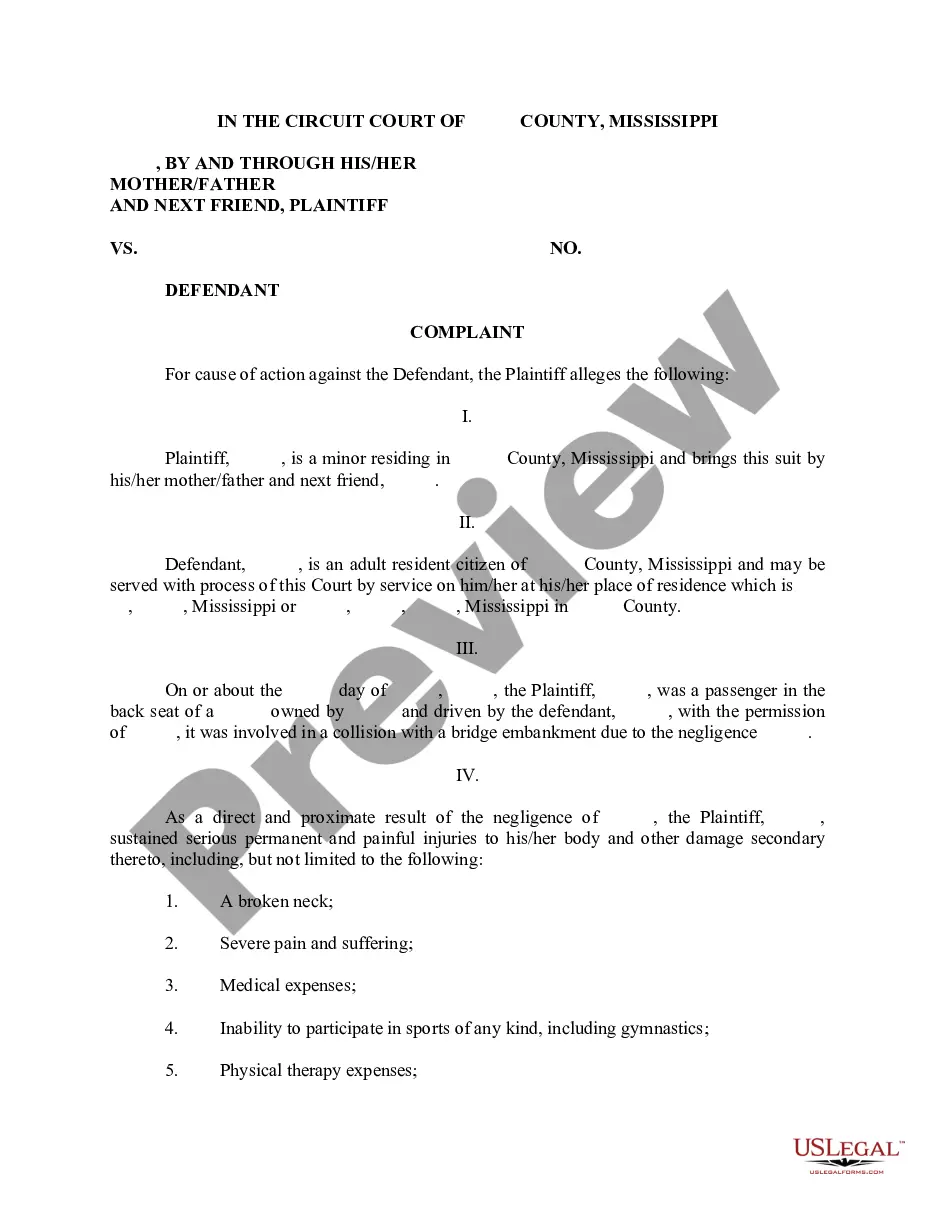









How to fill out Dog Walking Service Agreement?
The Dog Walking Agreement With Coverage presented on this page is a versatile legal template crafted by experienced attorneys in accordance with federal and local laws and guidelines.
For over 25 years, US Legal Forms has assisted individuals, organizations, and lawyers with more than 85,000 authenticated, state-specific documents for any professional and personal situation. It’s the quickest, simplest, and most reliable method to acquire the paperwork you require, as the service ensures the utmost level of data protection and anti-malware safeguards.
Subscribe to US Legal Forms to have validated legal templates for all of life’s circumstances at your fingertips.
- Search for the document you require and examine it.
- Browse through the file you searched and preview it or analyze the form description to verify it meets your needs. If it doesn’t, utilize the search function to find the correct one. Click Buy Now when you have located the template you need.
- Select and Log In to your account.
- Choose the pricing option that best suits you and set up an account. Use PayPal or a credit card to make a swift payment. If you already possess an account, Log In and verify your subscription to proceed.
- Acquire the editable template.
- Select the format you desire for your Dog Walking Agreement With Coverage (PDF, Word, RTF) and store the sample on your device.
- Fill out and sign the document.
- Print the template to fill it out by hand. Alternatively, use an online multifunctional PDF editor to quickly and accurately fill out and sign your form with an electronic signature.
- Re-download your documents as needed.
- Utilize the same document again whenever required. Access the My documents tab in your profile to redownload any previously acquired forms.
Form popularity
FAQ
The State Escheator may take custody of property that is presumed abandoned, whether located in this State or another state, or in a foreign country if the last-known address of the owner, as shown on the records of the holder, is in this State. 81 Del. Laws, c.
Owner's claims for abandoned and unclaimed property reported to Delaware are administered by the Delaware Department of Finance Office of Unclaimed Property. Their website can be found here. Owners can search the database which can be found here to identify abandoned and unclaimed property that may be due to them.
See § 1145. The Revised Uniform Unclaimed Property Act (RUUPA) provides a five-year statutory period for all types of property if a holder files a return and a 10-year statute of repose.
The look-back period is 10 report years (or 15 transaction years as Delaware has a 5 year dormancy period for most property types) from the date the Holder enrolls in the VDA.
The duration of the dormancy period varies depending on the type of property in question, but the vast majority of property types in Delaware have a five year dormancy period.
Delaware residents should search for unclaimed property held by Delaware and other states at or at to search across [?]
(a) For the purposes of this chapter ?abandoned personal property? shall be deemed to be tangible personal property which the rightful owner has left in the care or custody of another person and has failed to maintain, pay for the storage of, exercise dominion or control over, and has failed to otherwise assert or ...
A person is guilty of abandonment of a child when, being a parent, guardian or other person legally charged with the care or custody of a child, the person deserts the child in any place intending permanently to abandon the child. Abandonment of a child is a class E felony unless the child is 14 years of age or older.