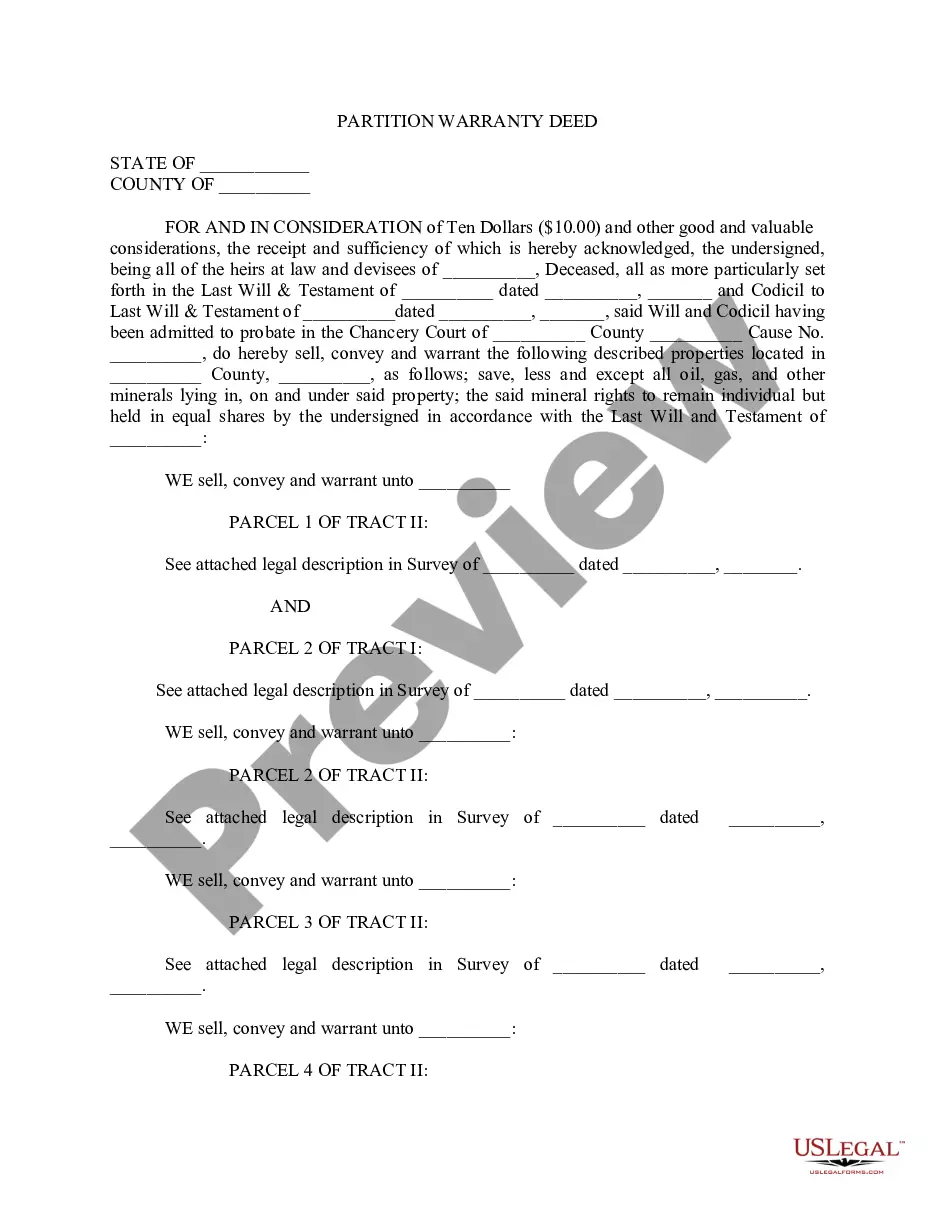
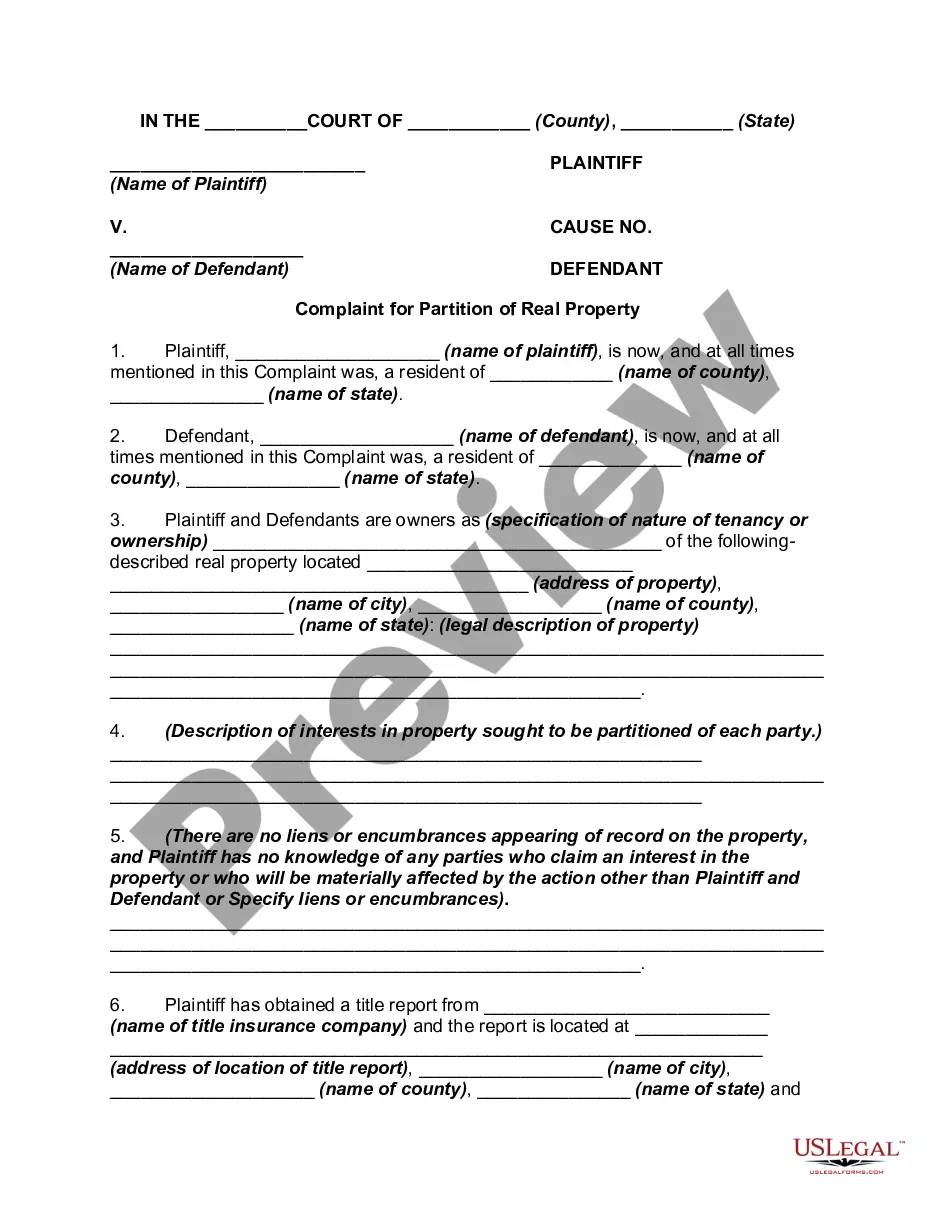
Partition Agreement Sample With Sale In Massachusetts
Description


Get your form ready online
Our built-in tools help you complete, sign, share, and store your documents in one place.
Make edits, fill in missing information, and update formatting in US Legal Forms—just like you would in MS Word.
Download a copy, print it, send it by email, or mail it via USPS—whatever works best for your next step.
Sign and collect signatures with our SignNow integration. Send to multiple recipients, set reminders, and more. Go Premium to unlock E-Sign.
If this form requires notarization, complete it online through a secure video call—no need to meet a notary in person or wait for an appointment.
We protect your documents and personal data by following strict security and privacy standards.

Make edits, fill in missing information, and update formatting in US Legal Forms—just like you would in MS Word.

Download a copy, print it, send it by email, or mail it via USPS—whatever works best for your next step.

Sign and collect signatures with our SignNow integration. Send to multiple recipients, set reminders, and more. Go Premium to unlock E-Sign.

If this form requires notarization, complete it online through a secure video call—no need to meet a notary in person or wait for an appointment.

We protect your documents and personal data by following strict security and privacy standards.
Looking for another form?










Form popularity
FAQ
The actual time it takes from when a partition case is filed to when the land is partitioned physically, by sale, or by set-off varies from case to case. In general, partition cases can take several months or even years to resolve.
The owner who no longer wants ownership of the property can ask the court to force a sale in lieu of partition. Rather than continuing to co-own the property, the court can force the owners to put the house up for sale.
Each tenant can sell or give away his share. If you want to sell the home with a tenant in common, you both must agree to sell your shares. The sale proceeds are divided based on the owner's interest. One owner can also buy out the other tenant in common's share to simplify the process.”
Either of the individuals may also convey their interest without the consent of the other, thereby breaking the “joint” tenancy. In this case, the existing owner will hold title as a tenant in common with the new ownet.
In Massachusetts, the law on partition is set forth in Chapter 241 of the Massachusetts General Laws. This law allows property owners to end their co-ownership of property by bringing a case in either the Land Court or the Probate and Family Court.
In short, to force the sale of jointly owned property, you must first confirm title, then attempt a voluntary sale or buyout, file and serve a partition lawsuit, get an appraisal, sell the property, and finally divide the sale proceeds fairly.
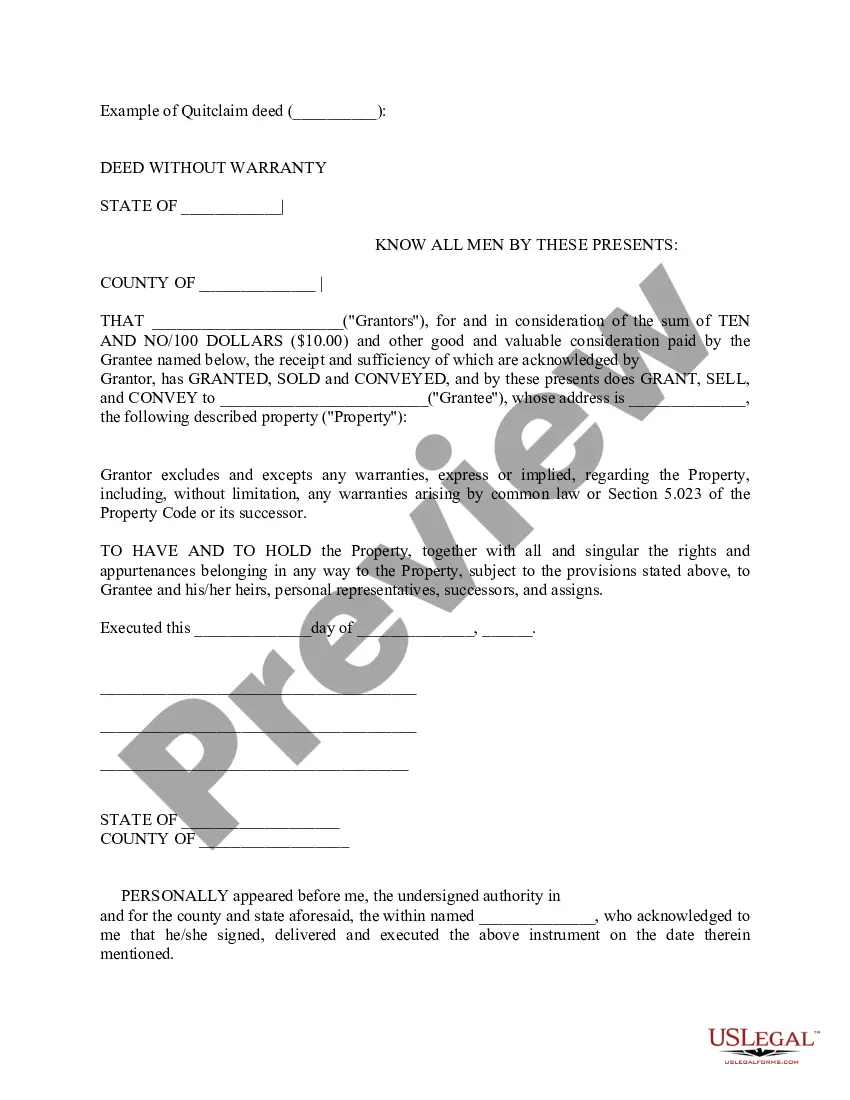
A quitclaim deed is a legal document that transfers property from one person (the grantor) to another (the grantee). It does not guarantee the grantor's ownership rights. Unlike warranty deeds, it doesn't promise anything about the property's title or the grantor's rights.
Joint Tenants – When one joint tenant dies, the surviving joint tenant automatically owns the entire property. This is said to be a “right of survivorship.” A deed to two or more people must specify that they hold the property “as joint tenants” to create a joint tenancy.
Partition definition: it is defined as a room divider or wooden partition wall constructed from a sturdy material such as glass, bricks, or wood studs, whose sole purpose is to be a room divider and separate one room from another.
