Sample Partition Agreement With Mexico In Georgia
Description


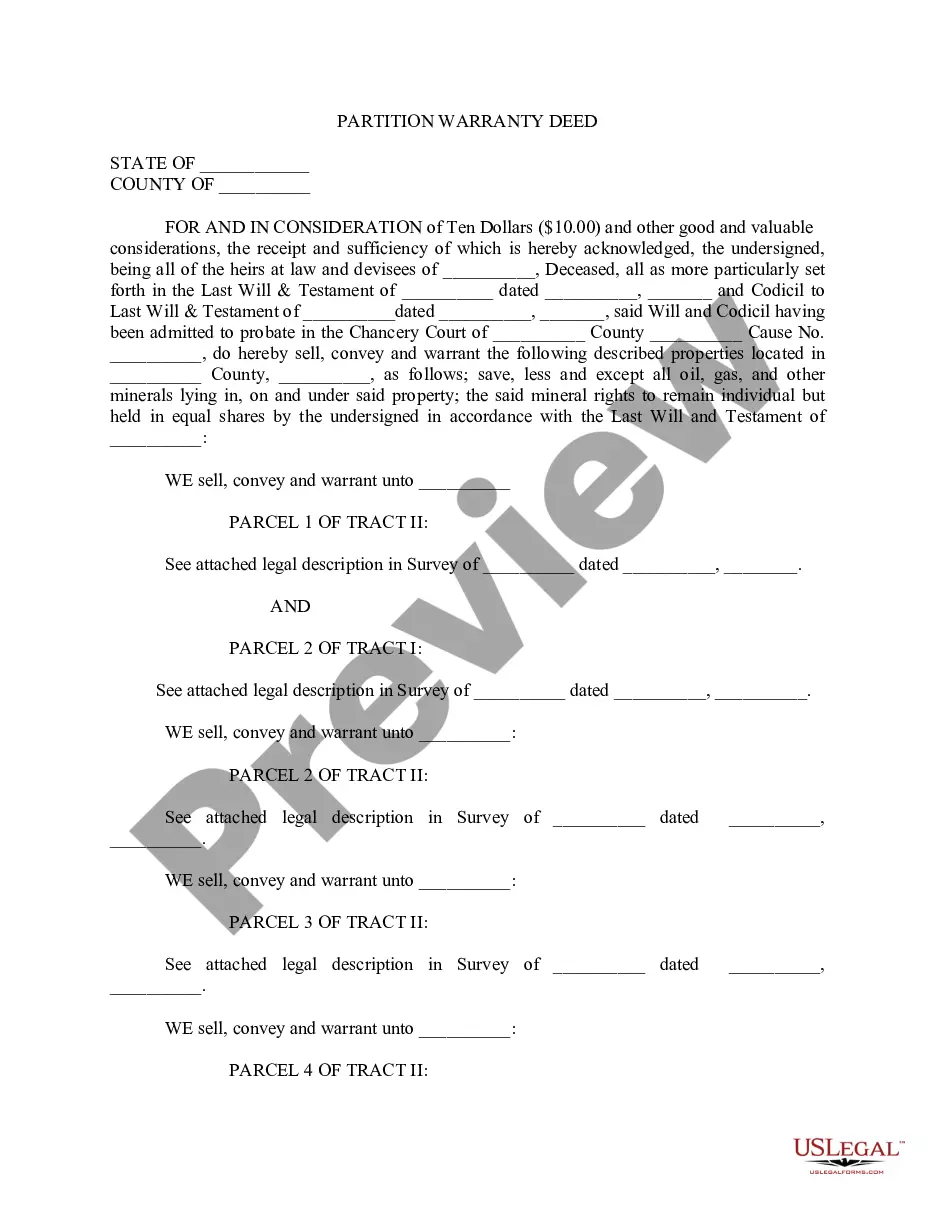
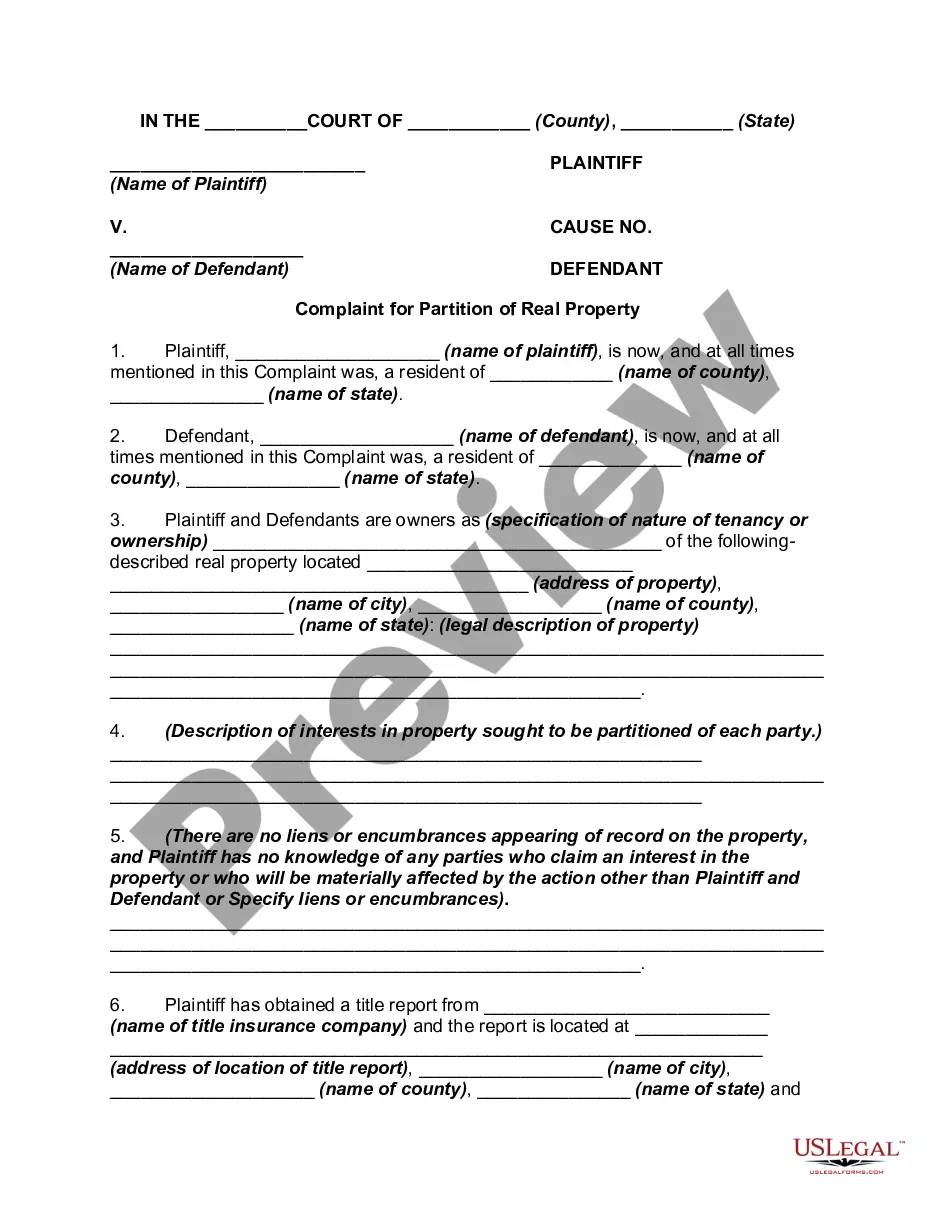
Get your form ready online
Our built-in tools help you complete, sign, share, and store your documents in one place.
Make edits, fill in missing information, and update formatting in US Legal Forms—just like you would in MS Word.
Download a copy, print it, send it by email, or mail it via USPS—whatever works best for your next step.
Sign and collect signatures with our SignNow integration. Send to multiple recipients, set reminders, and more. Go Premium to unlock E-Sign.
If this form requires notarization, complete it online through a secure video call—no need to meet a notary in person or wait for an appointment.
We protect your documents and personal data by following strict security and privacy standards.

Make edits, fill in missing information, and update formatting in US Legal Forms—just like you would in MS Word.

Download a copy, print it, send it by email, or mail it via USPS—whatever works best for your next step.

Sign and collect signatures with our SignNow integration. Send to multiple recipients, set reminders, and more. Go Premium to unlock E-Sign.

If this form requires notarization, complete it online through a secure video call—no need to meet a notary in person or wait for an appointment.

We protect your documents and personal data by following strict security and privacy standards.
Looking for another form?

Form popularity
FAQ
In California, the timeline of a partition lawsuit can range from several months to over a year. The duration is influenced by factors such as the number of parties involved, the nature of the property, and whether the case is contested.
After the petition for a statutory partition is filed, the court will issue a writ for petition and appoint five partitioners. The partitioners will then provide eight days' notice to all parties with an interest in the property, after which they will partition the land in an equal and just way.
Typically, a partition action in Southern California can take anywhere from 6 to 12 months to complete. However, it's important to note that this is just an average, and your case could be resolved more quickly or take longer depending on various factors.
The actual time it takes from when a partition case is filed to when the land is partitioned physically, by sale, or by set-off varies from case to case. In general, partition cases can take several months or even years to resolve.
In short, to force the sale of jointly owned property, you must first confirm title, then attempt a voluntary sale or buyout, file and serve a partition lawsuit, get an appraisal, sell the property, and finally divide the sale proceeds fairly.
On the death of one of 2 joint tenants, the survivor becomes the sole owner; on the death of one of 3 or more joint tenants, the survivors are joint tenants of the entire interest.
In Wisconsin, every co-owner who no longer wishes to own their interest in the real estate has a right to partition their interest in the property, no matter what ownership percentage of the property they own. Chapter 842 of the Wisconsin Statutes governs the partition of real estate in Wisconsin.
In a partition suit, a court is required to define the shares of the parties, identify the joint properties which are to be partitioned, allocate properties to parties as per their respective shares and put the parties in possession of properties allocated to them.
Partition by Sale: Partition by sale occurs when the entire property is sold, and the proceeds of that sale are split between the owners ing to their proportional interest in the property. So, if co-owner A owns a 20% interest in the property, he or she should get 20% of the net proceeds.
