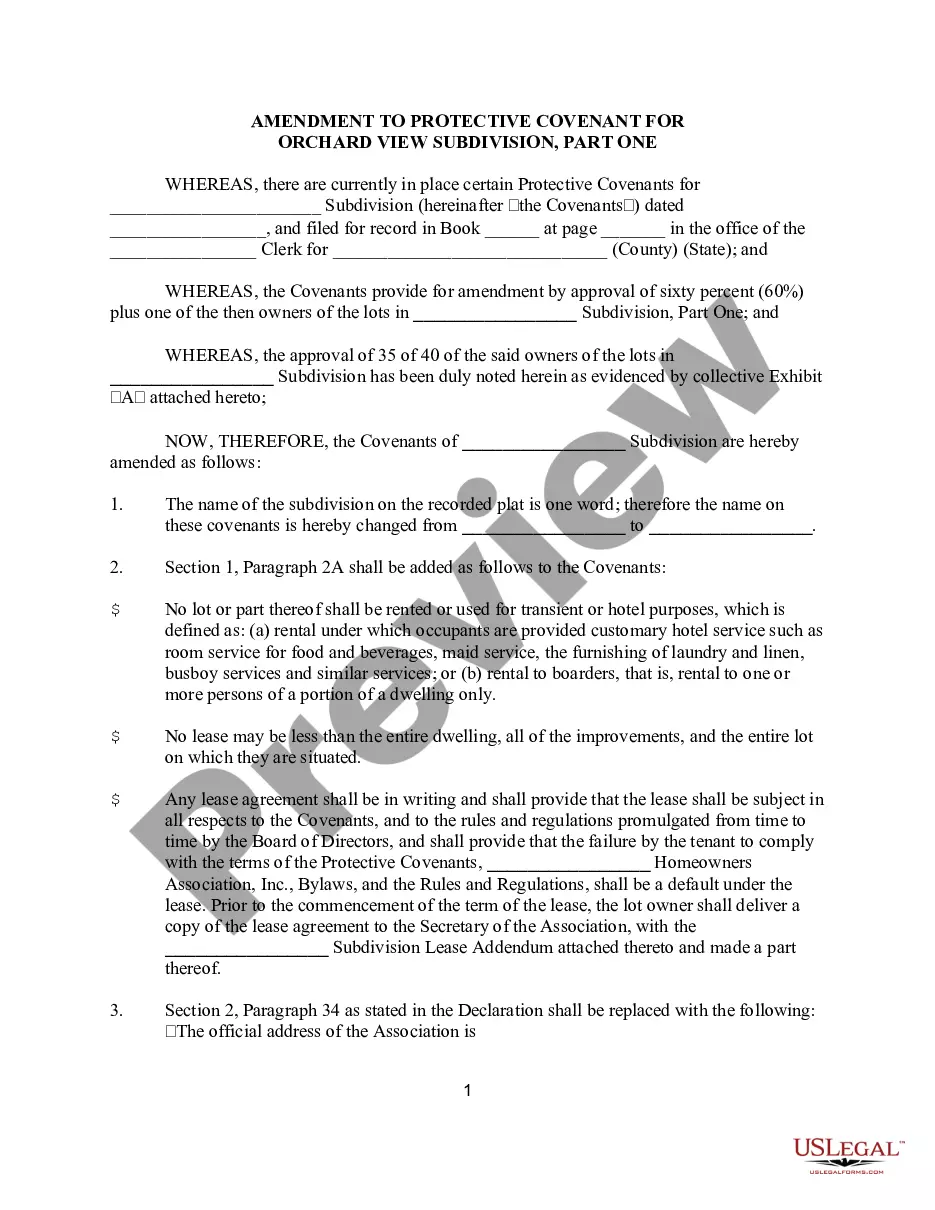
A Protective Covenant For Indemnity In Cook
Description
Get your form ready online
Our built-in tools help you complete, sign, share, and store your documents in one place.
Make edits, fill in missing information, and update formatting in US Legal Forms—just like you would in MS Word.
Download a copy, print it, send it by email, or mail it via USPS—whatever works best for your next step.
Sign and collect signatures with our SignNow integration. Send to multiple recipients, set reminders, and more. Go Premium to unlock E-Sign.
If this form requires notarization, complete it online through a secure video call—no need to meet a notary in person or wait for an appointment.
We protect your documents and personal data by following strict security and privacy standards.

Make edits, fill in missing information, and update formatting in US Legal Forms—just like you would in MS Word.

Download a copy, print it, send it by email, or mail it via USPS—whatever works best for your next step.

Sign and collect signatures with our SignNow integration. Send to multiple recipients, set reminders, and more. Go Premium to unlock E-Sign.

If this form requires notarization, complete it online through a secure video call—no need to meet a notary in person or wait for an appointment.

We protect your documents and personal data by following strict security and privacy standards.
Looking for another form?







Form popularity
FAQ
For example, an indemnity covenant in a contract for the sale of a property may require the seller to compensate the buyer for any losses suffered as a result of a defect in the property.
An indemnification clause is a legally binding agreement between two parties specifying that one party (the indemnifying party) will compensate the other party (the indemnified party) for any losses or damages that may arise from a particular event or circumstance.
If you want the indemnified party to be required to mitigate their losses, you need to write that into the clause explicitly. Otherwise, you may end up on the hook for losses that could have been avoided had they taken reasonable steps to reduce them.
Letters of indemnity should include the names and addresses of both parties involved, plus the name and affiliation of the third party, if any. Detailed descriptions of the items and intentions are also required, as are the signatures of the parties and the date the contract is executed.
How to Write an Indemnity Agreement Consider the Indemnity Laws in Your Area. Draft the Indemnification Clause. Outline the Indemnification Period and Scope of Coverage. State the Indemnification Exceptions. Specify How the Indemnitee Notifies the Indemnitor About Claims. Write the Settlement and Consent Clause.
Tips for Enforcing Indemnification Provisions Identify Time Periods for Asserting Indemnification Rights. Provide Notice in a Timely Fashion. Notify All Concerned Parties. Understand Limitations on Recovery. Exclusive Remedy. Scope of Damages. Claims Process/Dispute Resolution.
In the UK, indemnity covenants are agreements between two parties in which one party, the indemnifier, agrees to compensate the other party, the indemnified party, for any losses or damages that may occur as a result of a specific event or occurrence.
A protective covenant can be used to protect rights while using residential property. The restriction might be put from conducting any business activity on the property like using it for running office or business from the residential property.
Protective covenants, also known as restrictive covenants, are legal obligations embedded in the deed of a property. These covenants are agreements between property owners that impose certain restrictions or requirements on the use of the land.
Protective Covenants: Safeguarding Your Secret Sauce In general, it is a legal provision in an agreement or legal instrument where one party promises to take or is restricted from taking certain actions or otherwise has certain obligations to protect an interest of another party.
