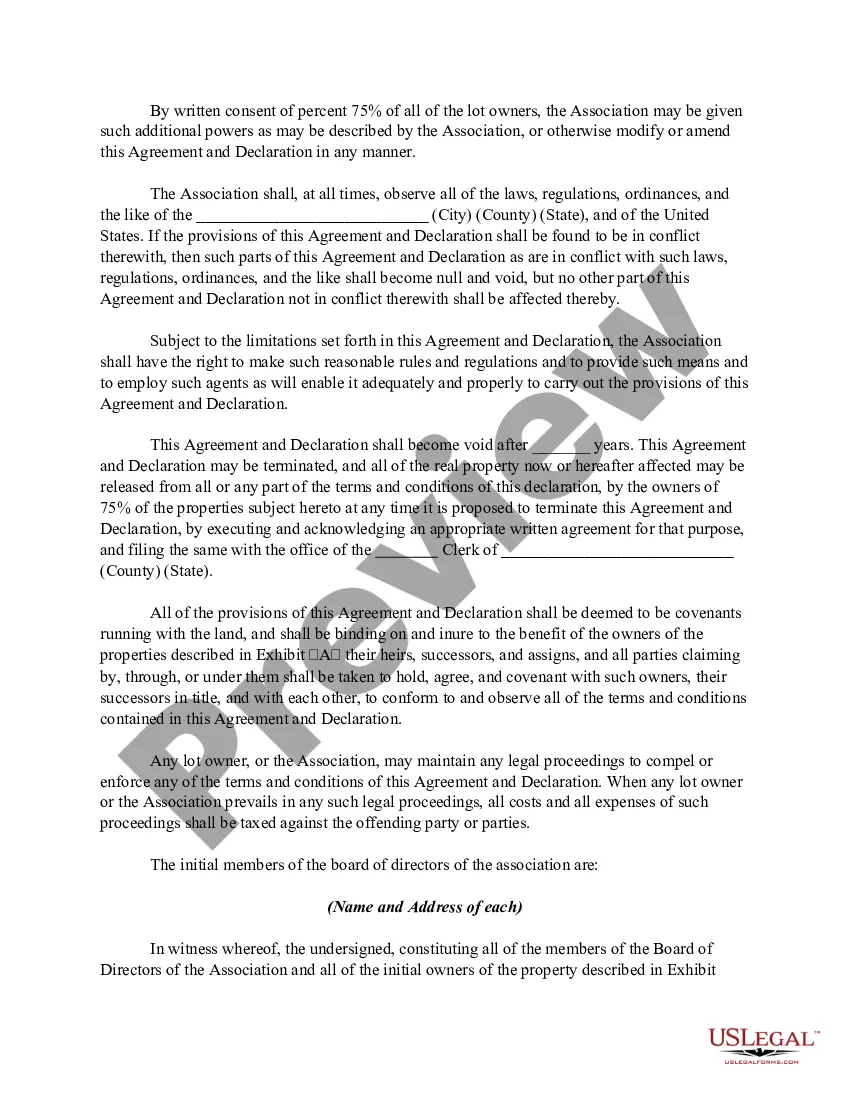
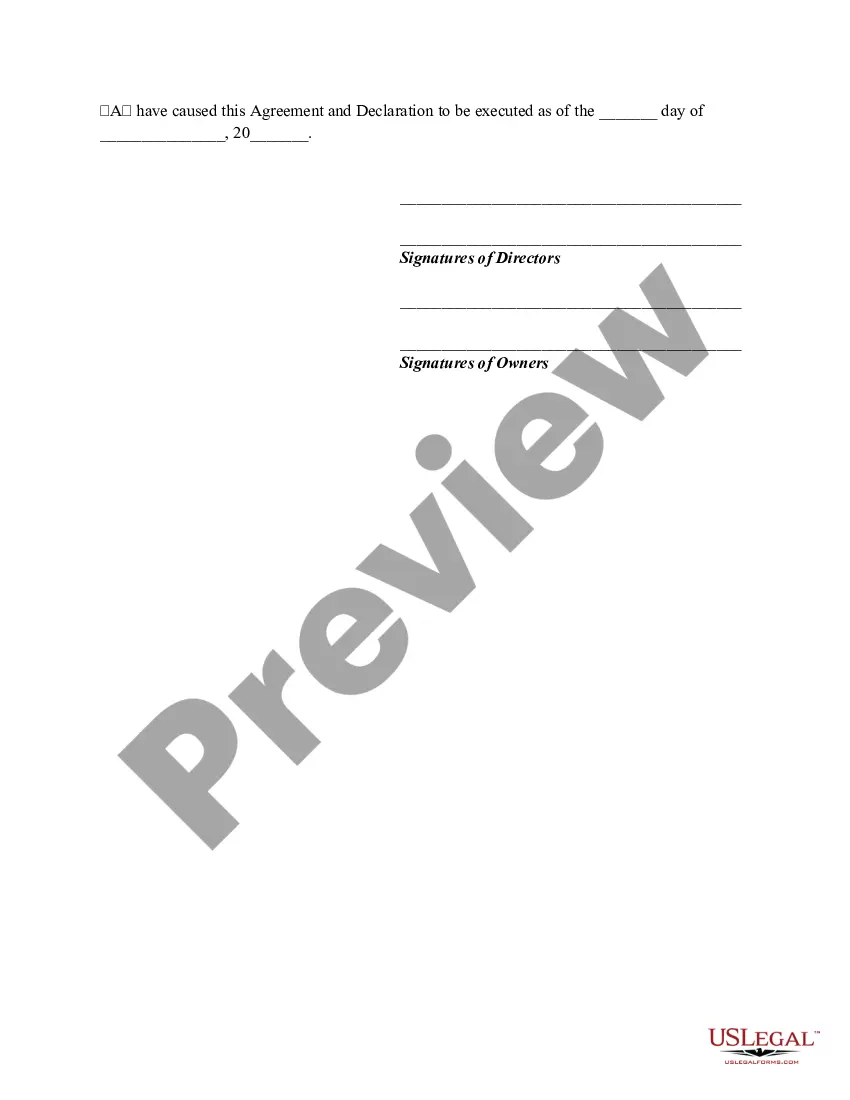
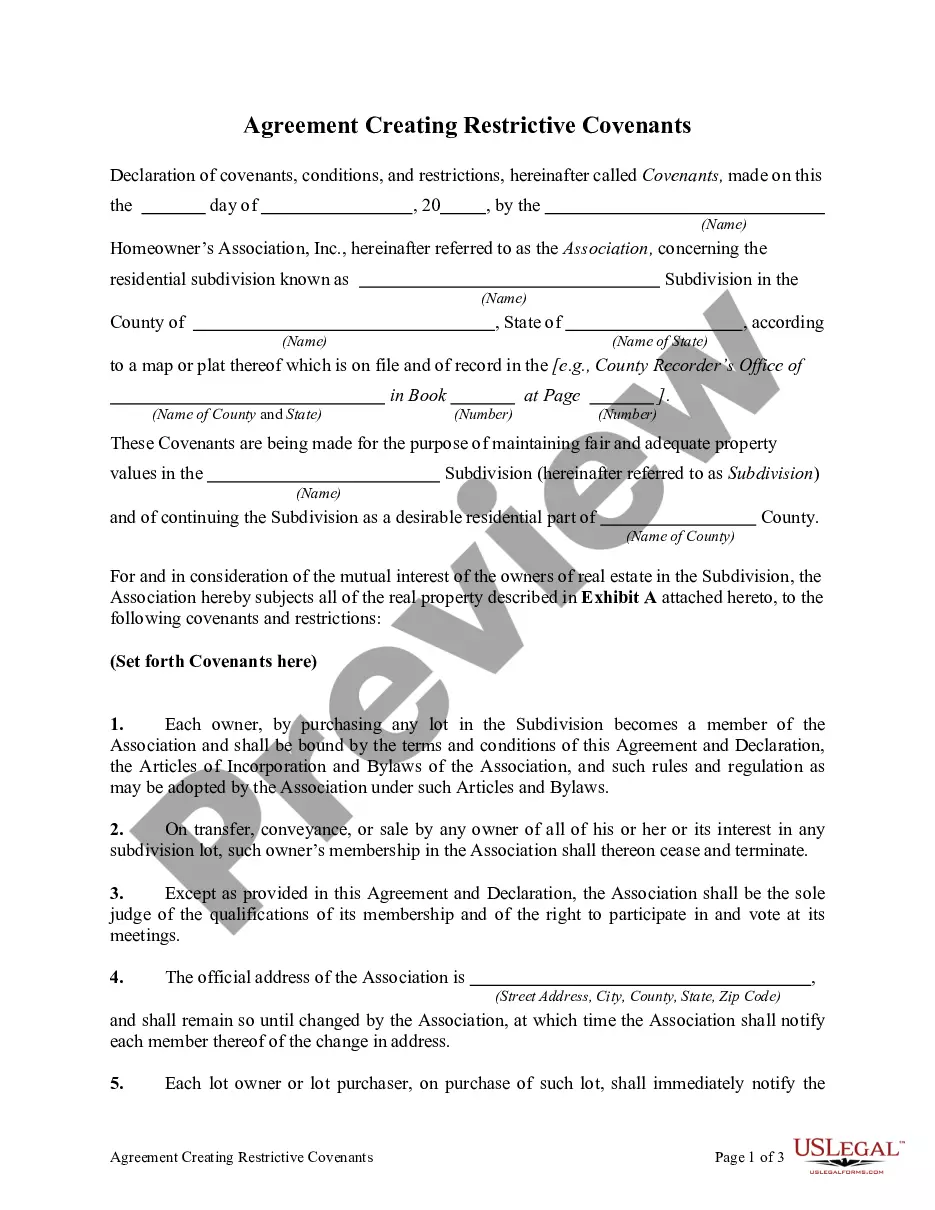
Covenant Agreement Meaning In Utah
Description

Get your form ready online
Our built-in tools help you complete, sign, share, and store your documents in one place.
Make edits, fill in missing information, and update formatting in US Legal Forms—just like you would in MS Word.
Download a copy, print it, send it by email, or mail it via USPS—whatever works best for your next step.
Sign and collect signatures with our SignNow integration. Send to multiple recipients, set reminders, and more. Go Premium to unlock E-Sign.
If this form requires notarization, complete it online through a secure video call—no need to meet a notary in person or wait for an appointment.
We protect your documents and personal data by following strict security and privacy standards.

Make edits, fill in missing information, and update formatting in US Legal Forms—just like you would in MS Word.

Download a copy, print it, send it by email, or mail it via USPS—whatever works best for your next step.

Sign and collect signatures with our SignNow integration. Send to multiple recipients, set reminders, and more. Go Premium to unlock E-Sign.

If this form requires notarization, complete it online through a secure video call—no need to meet a notary in person or wait for an appointment.

We protect your documents and personal data by following strict security and privacy standards.
Looking for another form?






Form popularity
FAQ
A covenant is fundamentally not a self-centered agreement. Sixth, a covenant entails holiness while a contract does not. Because marriage is a covenant, marriage is holy. That's why we refer to marriage as “holy matrimony.” To say your mate is “holy” doesn't mean that he or she is perfect.
A covenant is different than a contract, it's the mutual binding of lives together. Rather than something that protects its own interest from the other, it builds a new thing alongside one another.
The elements of a contract are offer, acceptance, and consideration, which have strict standards of enforceability. We will look at several contract issues that could potentially nullify legal obligations of the parties involved and examine Utah law on such issues.
It's a covenant. Rabbi Jonathen Sacks clarifies the difference: “A contract is a transaction. A covenant is a relationship.
A contract is an agreement between parties while a covenant is a pledge. A contract is an agreement you can break while a covenant is a perpetual promise. You seal a covenant while you sign a contract. A contract is a mutually beneficial relationship while a covenant is something you fulfill.
Simply put, a covenant within a contract is an agreement that certain activities or things will or won't happen once the contract is signed. You'll often find covenants in financial or property-related contracts, where one party wants a certain guarantee that something will or won't occur.
Basically the signers of a contract agree to hold up their ends as long as the other signatories hold up theirs too. With a covenant, both parties agree to hold up their ends regardless of whether the other party keeps their part of the agreement.
Covenants are particularly relevant in the fields of contract law and property law. An example of a contractual covenant is a non-compete agreement . Examples of common covenants in property law include agreements not to build a fence or agreements to maintain a shared driveway.
The key differences between a promise and a covenant are: 1. A promise is a verbal or written agreement to do or not do something, while a covenant is a more formal and binding agreement, compact, or contract between two parties. 2.
