Restrictive Covenants In Land Law In Riverside
Description

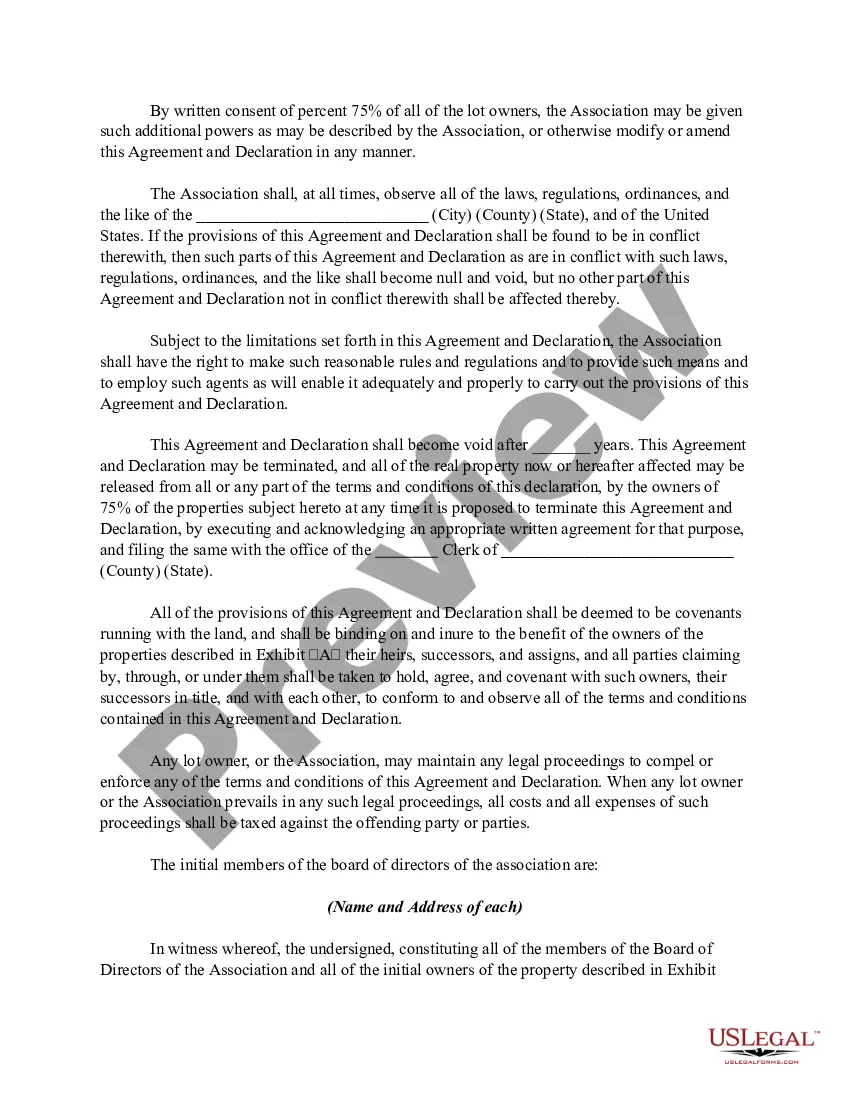
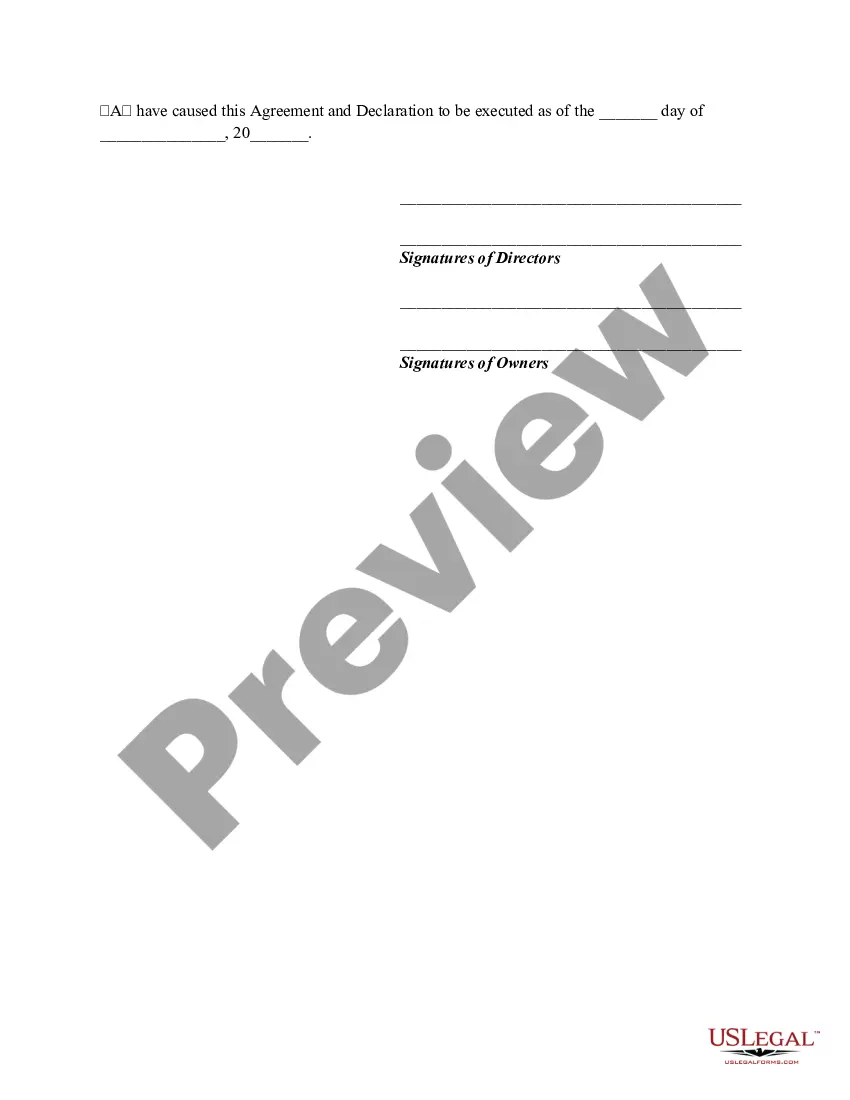
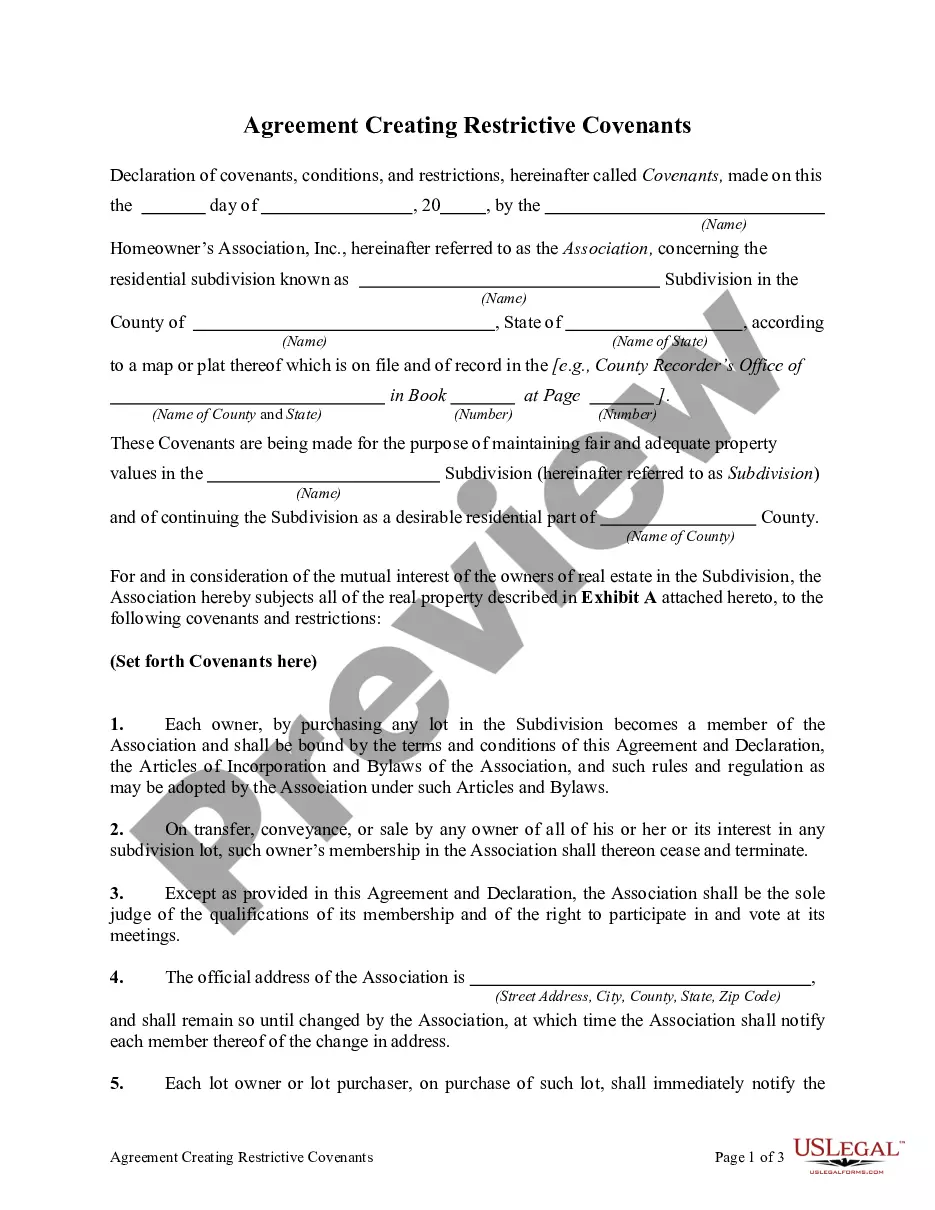
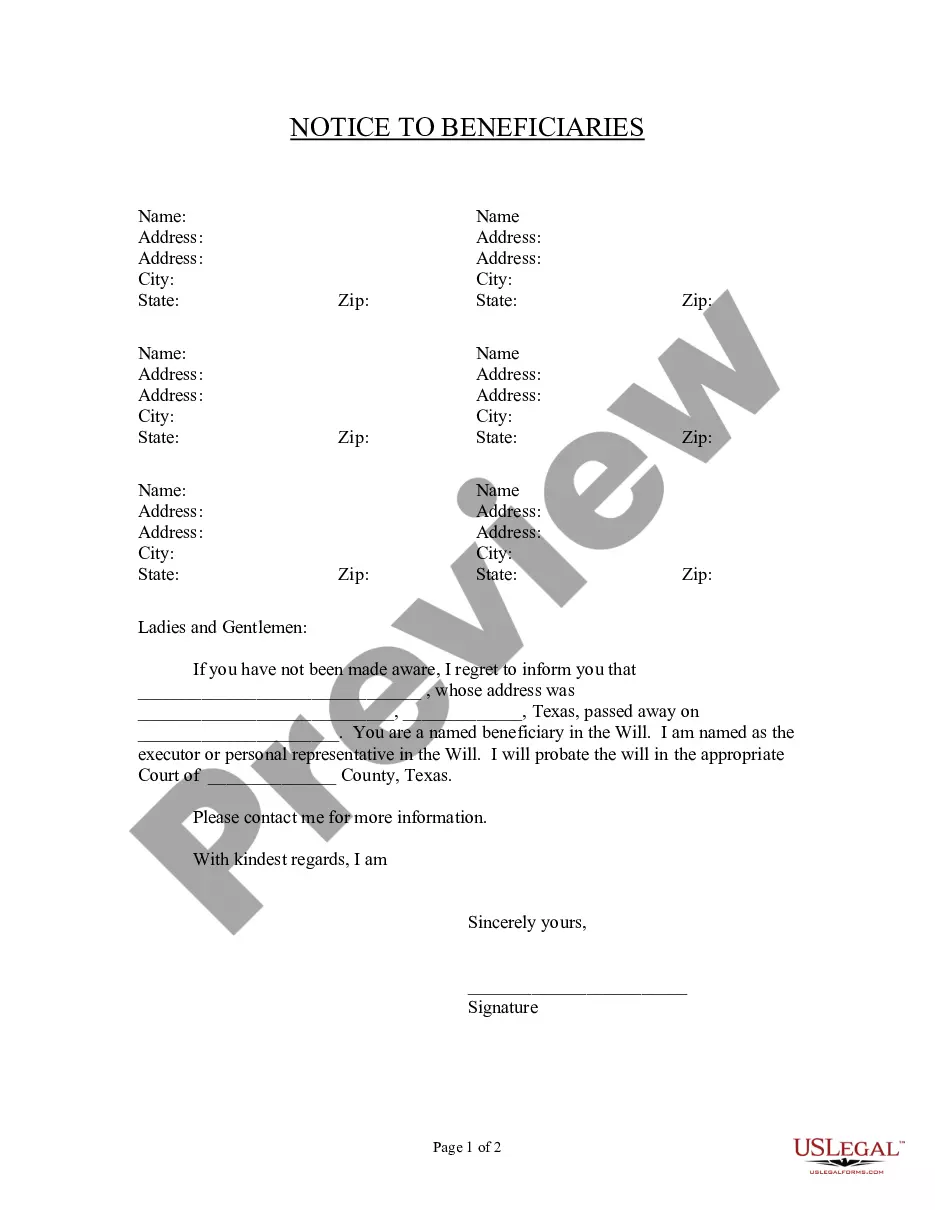
Get your form ready online
Our built-in tools help you complete, sign, share, and store your documents in one place.
Make edits, fill in missing information, and update formatting in US Legal Forms—just like you would in MS Word.
Download a copy, print it, send it by email, or mail it via USPS—whatever works best for your next step.
Sign and collect signatures with our SignNow integration. Send to multiple recipients, set reminders, and more. Go Premium to unlock E-Sign.
If this form requires notarization, complete it online through a secure video call—no need to meet a notary in person or wait for an appointment.
We protect your documents and personal data by following strict security and privacy standards.

Make edits, fill in missing information, and update formatting in US Legal Forms—just like you would in MS Word.

Download a copy, print it, send it by email, or mail it via USPS—whatever works best for your next step.

Sign and collect signatures with our SignNow integration. Send to multiple recipients, set reminders, and more. Go Premium to unlock E-Sign.

If this form requires notarization, complete it online through a secure video call—no need to meet a notary in person or wait for an appointment.

We protect your documents and personal data by following strict security and privacy standards.
Looking for another form?









Form popularity
FAQ
Landowners burdened by a restrictive covenant have the option to seek modifications or discharges through the Upper Tribunal (Lands Chamber). This legal avenue is governed by Section 84(1) of the Law of Property Act 1925, which outlines specific conditions that must be met for a successful application.
In the minority of jurisdictions, like California, courts will likewise disregard the fact that something is labelled as a covenant not to solicit customers and/or clients, and may instead deem it akin to a covenant not to compete and treat it as such.
Keep in mind that there may be a limit to the duration of the extension. For instance, under California law, extensions are deemed invalid if they exceed the length of the initial term of the CC&Rs or 20 years, whichever is less.
The easiest way to elude the requirements of a restrictive covenant is to simply ignore it. Covenants can become unenforceable if they expire, if there is a history of the covenant being violated, or if there is no individual or group benefiting from them.
The prerequisites for a covenant to “run with the land” are these: (1) the covenants must have been enforceable between the original parties, such enforceability being a question of contract law except insofar as the covenant must satisfy the statute of frauds; (2) the covenant must “touch and concern” both the land to ...
A judge can rule to void the restriction from your deed, or from the common CC&Rs of the association. This is usually very difficult. In most cases, you will have to prove that the HOA does not have the right to enforce the restriction, or that they have not exercised the right.
And determine their validity courts can enforce or nullify covenants based on legal principles theyMoreAnd determine their validity courts can enforce or nullify covenants based on legal principles they ensure that enforcement is fair and just in summary restrictive covenants are enforced by HOAs.
To make a change or remove the restriction, the process includes a court appearance. In some instances, the document is only registered against two or three homes. In these cases or any where you secure the signature of every homeowner the restriction relates to, the process is simpler and less expensive.
A restrictive covenant will only be enforced if it is “reasonable,” whether or not the restrictive covenant is obtained in a commercial context.
