Covenants Form With Covenants In North Carolina
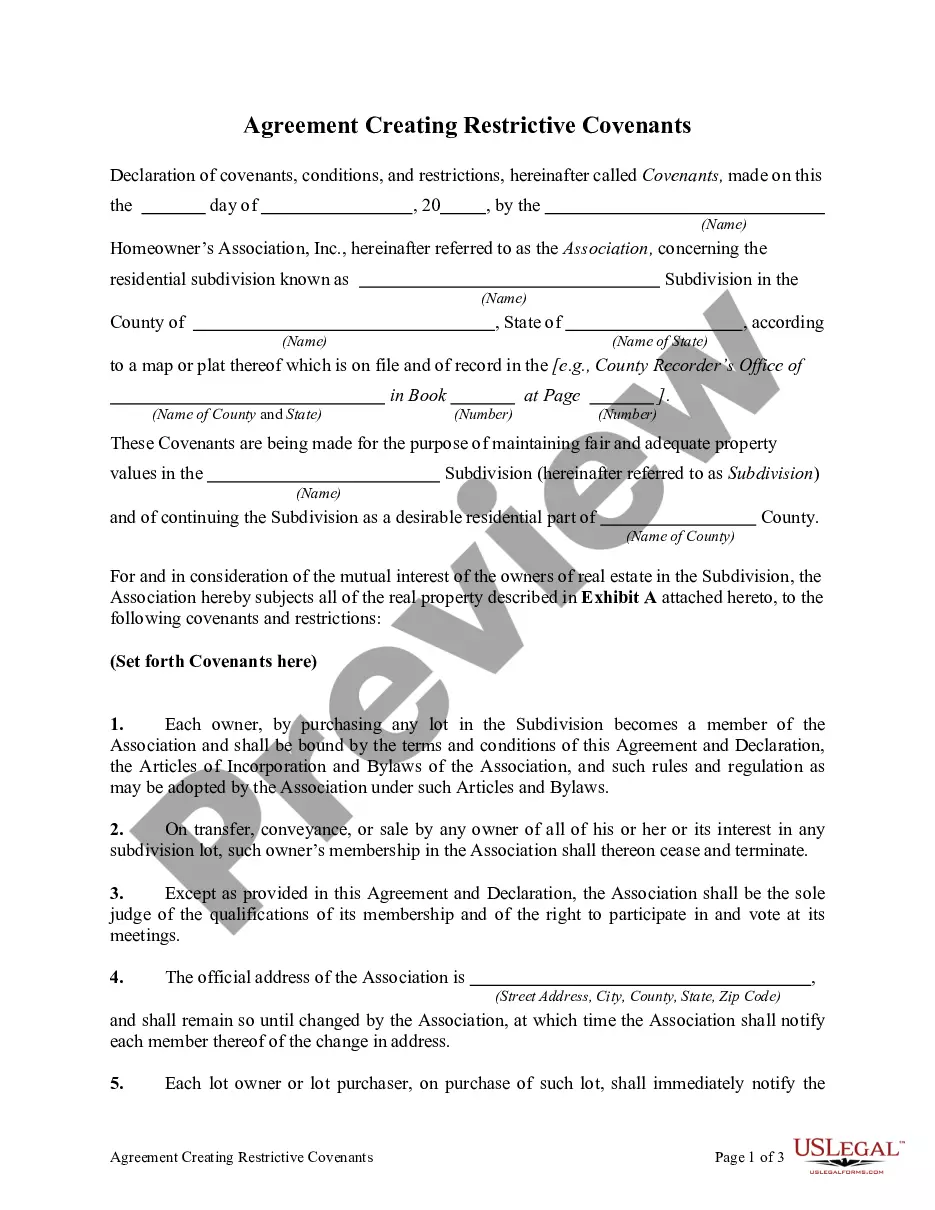
Description

Get your form ready online
Our built-in tools help you complete, sign, share, and store your documents in one place.
Make edits, fill in missing information, and update formatting in US Legal Forms—just like you would in MS Word.
Download a copy, print it, send it by email, or mail it via USPS—whatever works best for your next step.
Sign and collect signatures with our SignNow integration. Send to multiple recipients, set reminders, and more. Go Premium to unlock E-Sign.
If this form requires notarization, complete it online through a secure video call—no need to meet a notary in person or wait for an appointment.
We protect your documents and personal data by following strict security and privacy standards.

Make edits, fill in missing information, and update formatting in US Legal Forms—just like you would in MS Word.

Download a copy, print it, send it by email, or mail it via USPS—whatever works best for your next step.

Sign and collect signatures with our SignNow integration. Send to multiple recipients, set reminders, and more. Go Premium to unlock E-Sign.

If this form requires notarization, complete it online through a secure video call—no need to meet a notary in person or wait for an appointment.

We protect your documents and personal data by following strict security and privacy standards.
Looking for another form?





Form popularity
FAQ
In the United States, employers generally use four types of restrictive covenants: (1) covenants not to compete for a certain period of time following the employee's termination from employment (or following a business transaction such as a sale, merger, etc.); (2) covenants not to solicit customers or clients for a ...
A covenant is a chosen relationship or partnership in which two parties make binding promises to each other and work together to reach a common goal. They're often accompanied by oaths, signs, and ceremonies.
In many states, covenants only last 30 years, becoming unenforceable after they expire. However, North Carolina isn't one of these states. There's no specific law in North Carolina that states restrictive covenants expire after 30 years, meaning these covenants continue to be enforceable indefinitely.
Some of the most common restrictive covenants include: Alterations and extensions to the building. Changes to the use of a property, for example, converting a building into flats or turning a house into business premises. Rent and lease restrictions. Limitations on pets. Limitations on home colour.
The three types of covenants are positive, negative, and financial. Each contains a unique set of requirements and stipulations. Positive and negative covenants are not interchangeable as good or bad but rather refer to what borrowers can or cannot do.
Restrictive Covenants, Explained This restricts how homeowners can manage and modify their land. Examples include restrictions on fence options, the type of animals allowed and the use of outbuildings, such as sheds.
If a deed restriction is not enforceable, you can choose to ignore it and take on the risk of a neighbor filing suit, or you can seek out a judge's ruling to have the covenant removed from the deed. Obtaining that ruling is easier when no one is actively enforcing the covenant.
The five points of God's covenant model are: ethics, oath, representation, grace, and succession. These same points apply to our relationship with God and with other people.
A real covenant is only enforceable if it was created intentionally, it relates to the property in question, and two kinds of privity are established. Additionally, a real covenant must be in writing. The party capable of enforcing the covenant depends on whether the burden or the benefit runs with the land.
The covenant agreement is recorded at the county Register of Deeds and runs in perpetuity with the deed to the property, thus protecting the historic resource for future generations.