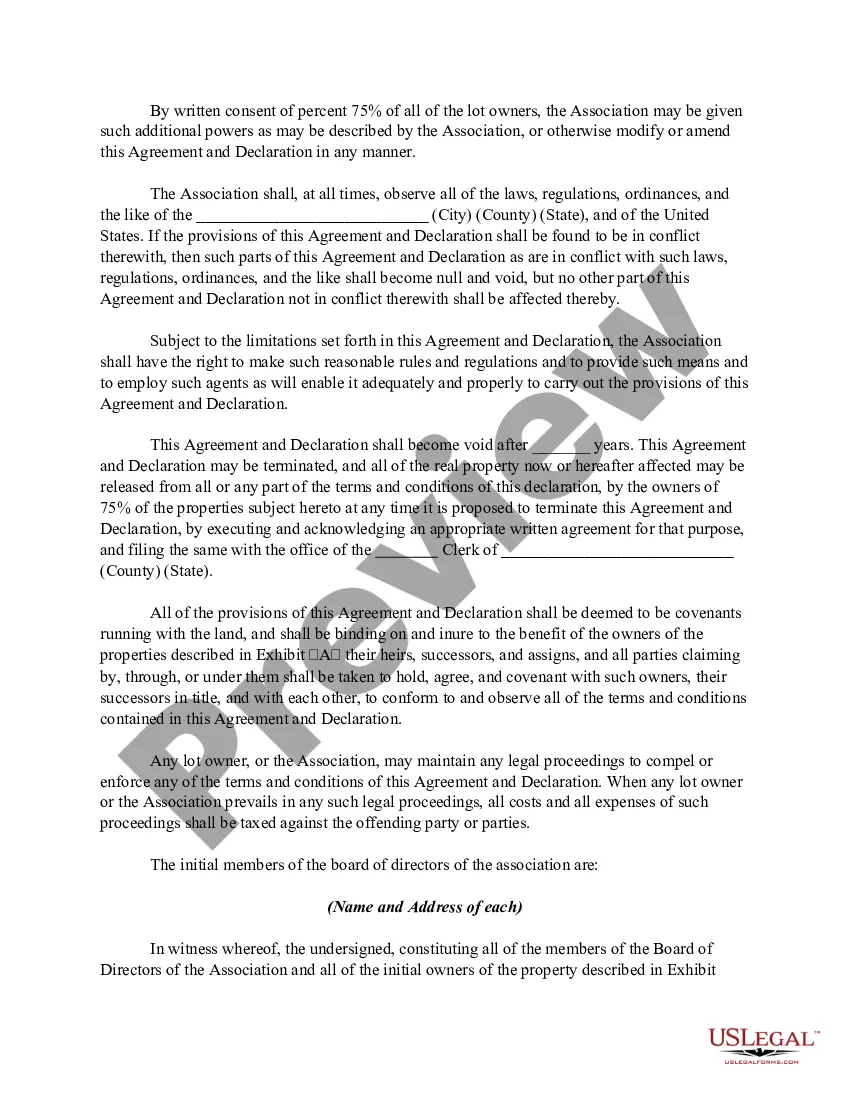
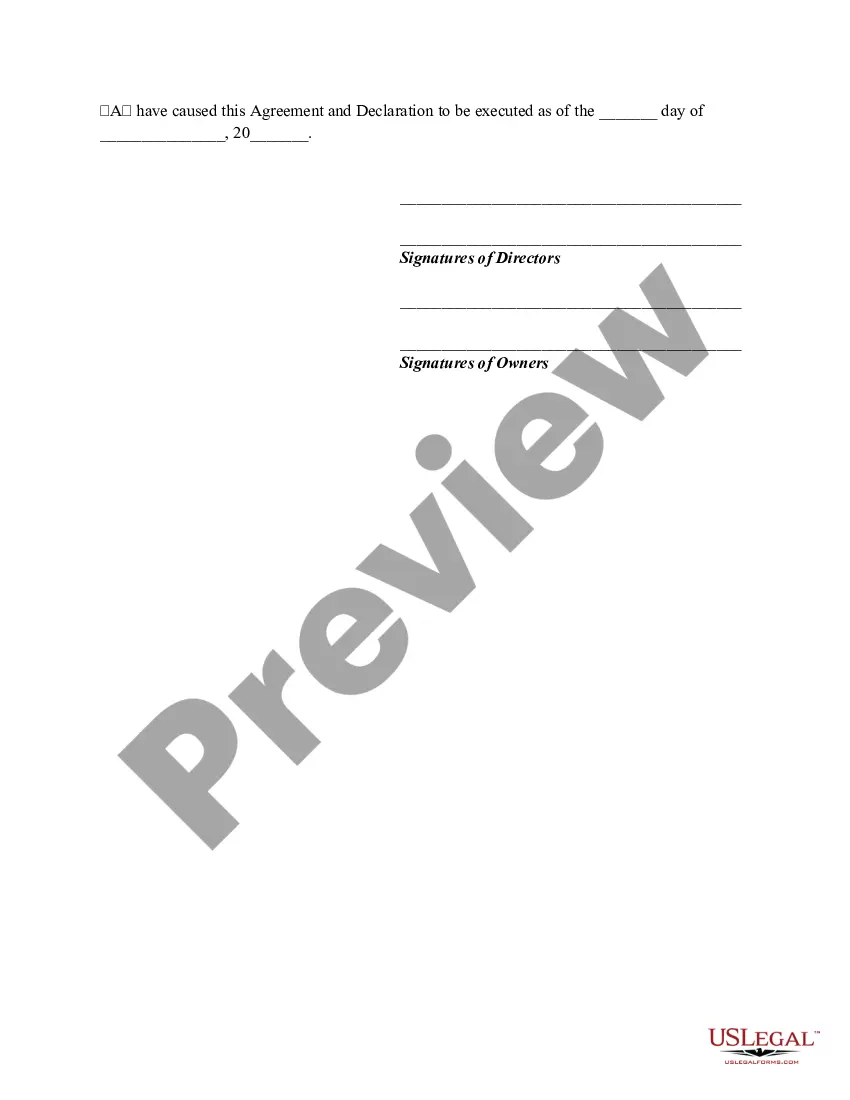
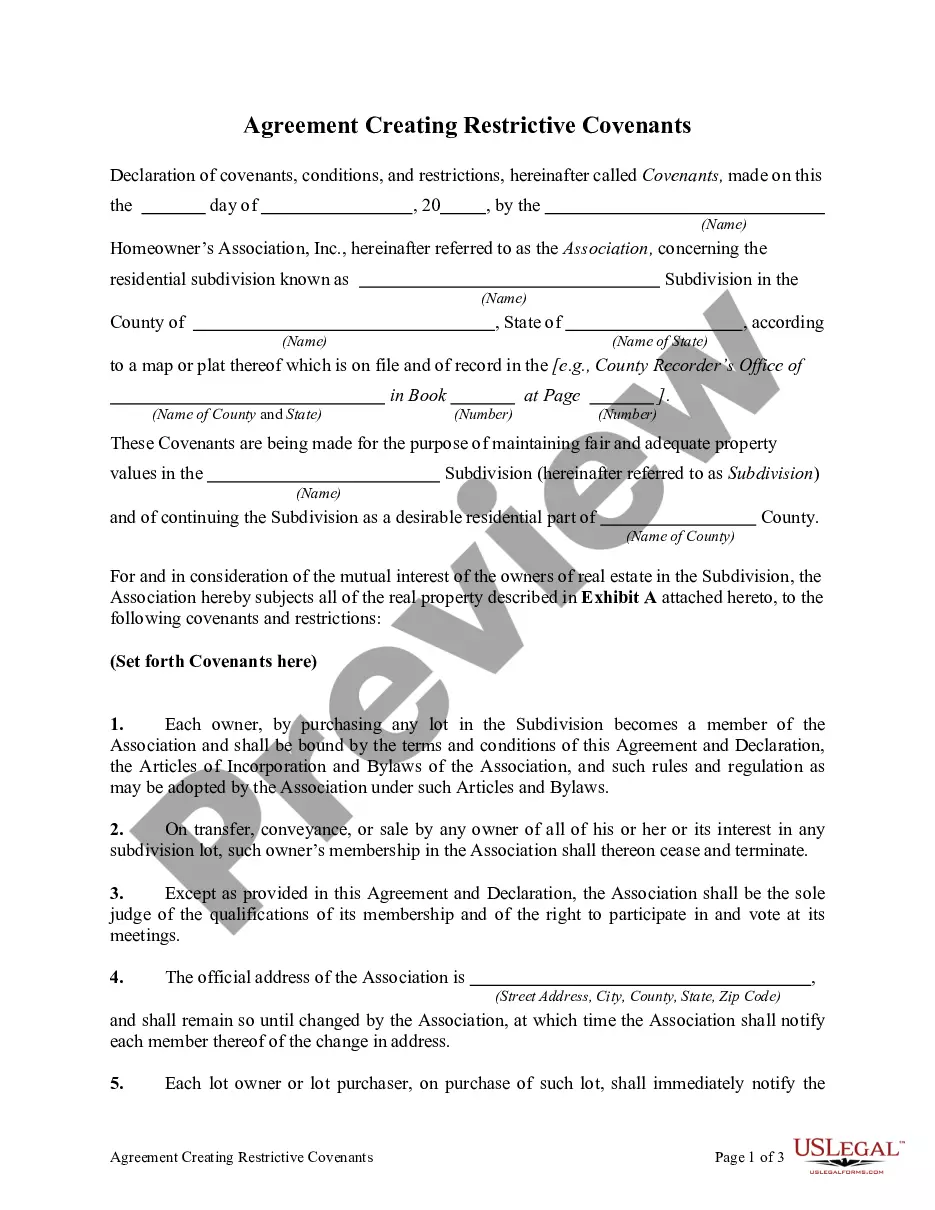
Restrictive Covenants In Land Law In Chicago
Description

Get your form ready online
Our built-in tools help you complete, sign, share, and store your documents in one place.
Make edits, fill in missing information, and update formatting in US Legal Forms—just like you would in MS Word.
Download a copy, print it, send it by email, or mail it via USPS—whatever works best for your next step.
Sign and collect signatures with our SignNow integration. Send to multiple recipients, set reminders, and more. Go Premium to unlock E-Sign.
If this form requires notarization, complete it online through a secure video call—no need to meet a notary in person or wait for an appointment.
We protect your documents and personal data by following strict security and privacy standards.

Make edits, fill in missing information, and update formatting in US Legal Forms—just like you would in MS Word.

Download a copy, print it, send it by email, or mail it via USPS—whatever works best for your next step.

Sign and collect signatures with our SignNow integration. Send to multiple recipients, set reminders, and more. Go Premium to unlock E-Sign.

If this form requires notarization, complete it online through a secure video call—no need to meet a notary in person or wait for an appointment.

We protect your documents and personal data by following strict security and privacy standards.
Looking for another form?








Form popularity
FAQ
From the early twentieth century, RRCs were used to prevent mostly African Americans (but also Hispanic/Latino Americans, Asian Americans, Jewish Americans, and Middle-easterners) from purchasing or living in homes located in white neighborhoods or subdivisions covered by the covenants.
Restrictive Covenants, Explained This restricts how homeowners can manage and modify their land. Examples include restrictions on fence options, the type of animals allowed and the use of outbuildings, such as sheds.
Thus, to be enforceable under Illinois law, an employee restrictive covenant must be (1) necessary to protect a legitimate business interest, (2) limited in terms of duration, geographic scope, and prohibited activity, (3) supported by sufficient consideration, and (4) ancillary to a valid employment agreement or sale ...
The 2.5 miles radius would be reasonable. However, Illinois courts will not enforce a non-compete unless the employee received "something of value" in return. This is usually considered to be at least two years of employment or other benefits.
My limited understanding is, restrictive covenants are only enforceable by a home owners association created among them. A local government isn't going to swoop in and enforce, or defend, a covenant that you created on your property. The local government is only concerned with land use ordinance's and state laws.
Proving there was a breach of your employment contract is another way that you can defeat a non-compete agreement. If your employer did not fulfill the employment contract terms, they likely can't force you to stick to a non-compete agreement. This is known as a material breach.
If a deed restriction is not enforceable, you can choose to ignore it and take on the risk of a neighbor filing suit, or you can seek out a judge's ruling to have the covenant removed from the deed. Obtaining that ruling is easier when no one is actively enforcing the covenant.
Illinois courts generally disfavor non-competes as a restraint of trade. However, Illinois courts enforce non-compete agreements if they are: ∎ Reasonable. ∎ Supported by adequate consideration.
Some of the most common restrictive covenants include: Alterations and extensions to the building. Changes to the use of a property, for example, converting a building into flats or turning a house into business premises. Rent and lease restrictions. Limitations on pets. Limitations on home colour.
