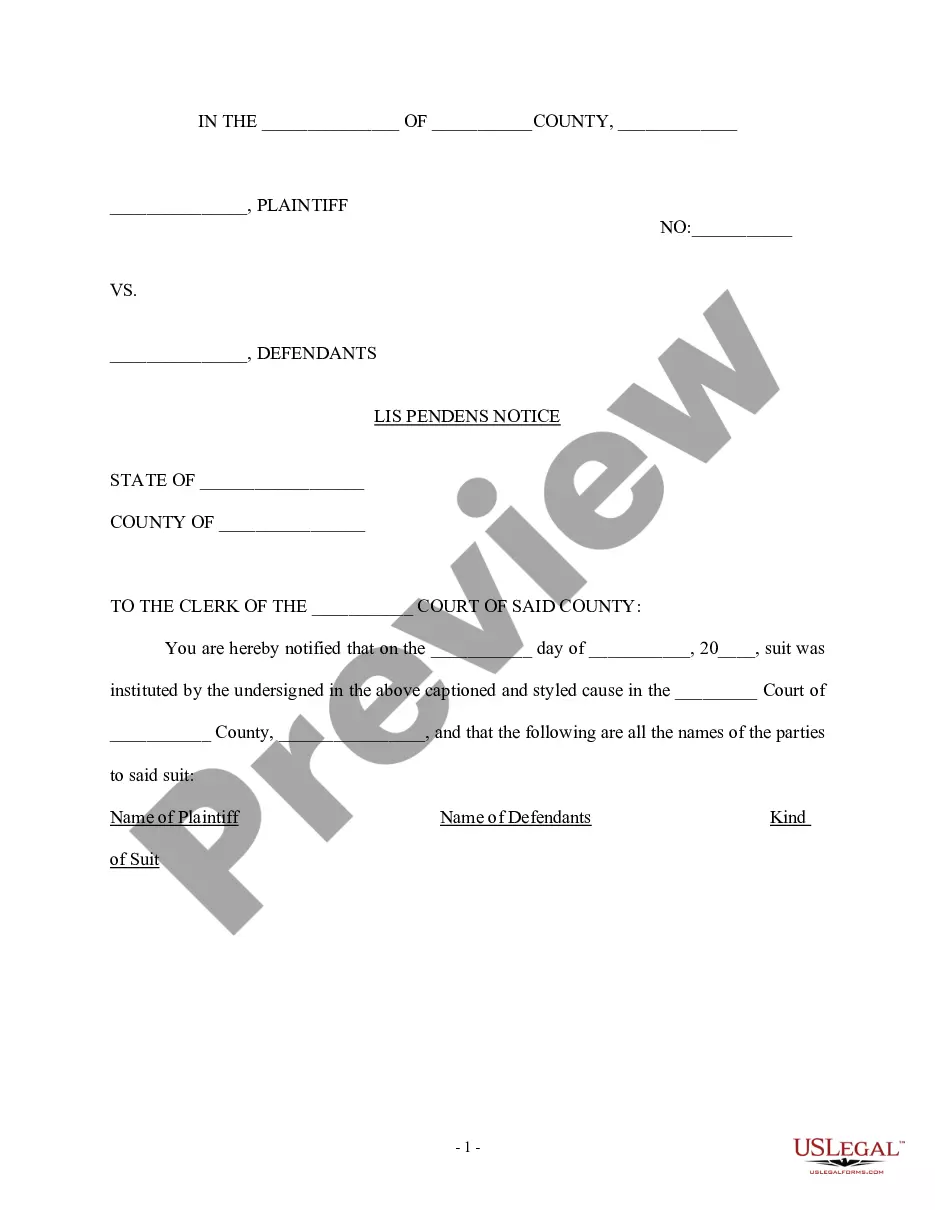
File Notice Lis Pendens Foreclosure In Nevada
Description

Get your form ready online
Our built-in tools help you complete, sign, share, and store your documents in one place.
Make edits, fill in missing information, and update formatting in US Legal Forms—just like you would in MS Word.
Download a copy, print it, send it by email, or mail it via USPS—whatever works best for your next step.
Sign and collect signatures with our SignNow integration. Send to multiple recipients, set reminders, and more. Go Premium to unlock E-Sign.
If this form requires notarization, complete it online through a secure video call—no need to meet a notary in person or wait for an appointment.
We protect your documents and personal data by following strict security and privacy standards.

Make edits, fill in missing information, and update formatting in US Legal Forms—just like you would in MS Word.

Download a copy, print it, send it by email, or mail it via USPS—whatever works best for your next step.

Sign and collect signatures with our SignNow integration. Send to multiple recipients, set reminders, and more. Go Premium to unlock E-Sign.

If this form requires notarization, complete it online through a secure video call—no need to meet a notary in person or wait for an appointment.

We protect your documents and personal data by following strict security and privacy standards.
Looking for another form?







Form popularity
FAQ
LIS PENDENS – A notice recorded in the official records of a county to indicate that an action affecting a particular property has been filed in either a state or a federal court.
A deed in lieu of foreclosure is an agreement between a borrower and their lender to transfer property ownership to the lender if the borrower cannot make their mortgage payments.
Short Answer: After filing a lis pendens, property sales may stall due to legal disputes impacting the title. Misfiling can result in sanctions or slander of title damages. Removal involves court-ordered expungement or voluntary discharge.
Typical Nevada Foreclosure Time Frame: Approximately 120 days. Judicial Foreclosure Available? : Yes. Non-Judicial Foreclosure Available? : Yes. Types of Security Instruments Utilized: Mortgage and Deed of Trust.
Through a deed-in-lieu of foreclosure, you sign your home over to your lender, and in exchange your lender foregoes foreclosure and releases you from your mortgage. The deficiency amount under a deed-in-lieu of foreclosure is the difference between the fair market value of the property and the total debt.
Lender Disadvantages: Subordinate Liens, Encumbrances, and Judgments: Unlike in a foreclosure action, subordinate liens are not extinguished when a lender acquires title by deed in lieu.
The best way to prevent foreclosure is to use a budget to live within your means and build savings. Foreclosure occurs when a homeowner fails to make mortgage payments, leading the lender to take possession of the property. To achieve this: Create a Budget: Start by tracking your income and expenses.
Does Nevada Law Allow for a Redemption Period After a Foreclosure? Nevada law allows for both judicial and non judicial foreclosures. If a lender pursues a foreclosure through the judicial system then the owner has a 1 year right of redemption following the foreclosure sale.
One way to temporarily halt the foreclosure proceedings is to request mediation through Nevada's Foreclosure Mediation program. You can also file a Chapter 13 bankruptcy if you have the ability to enter into a payment plan to cure default. The Bankruptcy Court also has a mediation program for homeowners.

