Release Lis Pendens Form Withdrawal In Illinois
Description

Get your form ready online
Our built-in tools help you complete, sign, share, and store your documents in one place.
Make edits, fill in missing information, and update formatting in US Legal Forms—just like you would in MS Word.
Download a copy, print it, send it by email, or mail it via USPS—whatever works best for your next step.
Sign and collect signatures with our SignNow integration. Send to multiple recipients, set reminders, and more. Go Premium to unlock E-Sign.
If this form requires notarization, complete it online through a secure video call—no need to meet a notary in person or wait for an appointment.
We protect your documents and personal data by following strict security and privacy standards.

Make edits, fill in missing information, and update formatting in US Legal Forms—just like you would in MS Word.

Download a copy, print it, send it by email, or mail it via USPS—whatever works best for your next step.

Sign and collect signatures with our SignNow integration. Send to multiple recipients, set reminders, and more. Go Premium to unlock E-Sign.

If this form requires notarization, complete it online through a secure video call—no need to meet a notary in person or wait for an appointment.

We protect your documents and personal data by following strict security and privacy standards.
Looking for another form?








Form popularity
FAQ
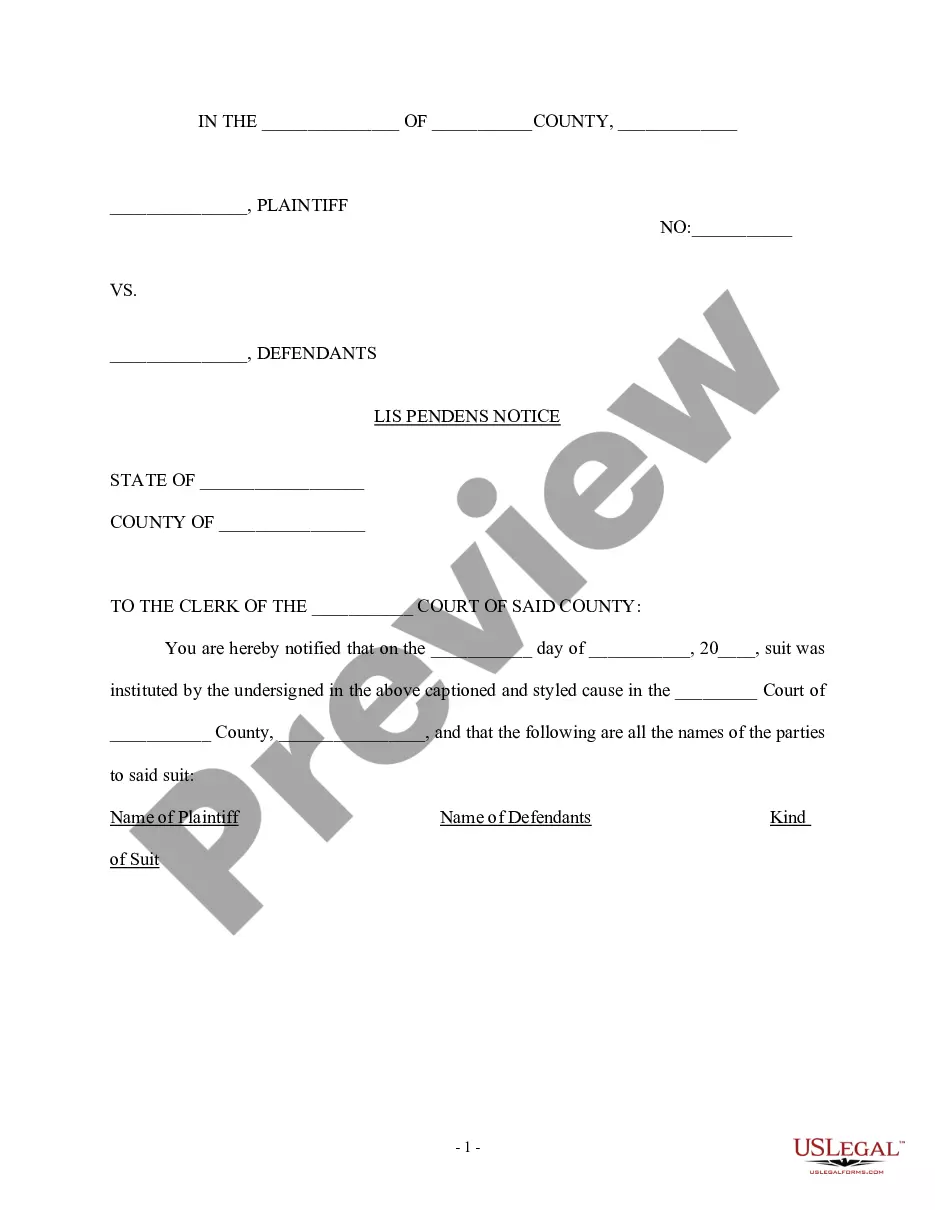
A lis pendens is a written notice that a lawsuit has been filed concerning real estate, involving either the title to the property or a claimed ownership interest in it.
To file a lis pendens, the party filing must have or show one of two things: That there is a recorded instrument, usually some mortgage or encumbrance, or perhaps something related to a construction mechanics lien—that potentially provides the filer the right to the property on or in the document.
A release of lis pendens under Illinois law to record and provide notice to third parties that litigation is resolved or title to real property is no longer in controversy.
California Code of Civil Procedure section 405.30 allows a property owner to remove a lis pendens by bringing a “motion to expunge.” There are several bases for a motion to expunge, including: (1) the lack of a real property claim, (2) the claimant's failure to establish a “probable validity of their claim, or (3) the ...
Releasing a lis pendens in California requires that the party that signed the original lis pendens, or their successor in interest, must sign and record the notice of release of lis pendens . The signature on the notice of release of a lis pendens must be notarized.

