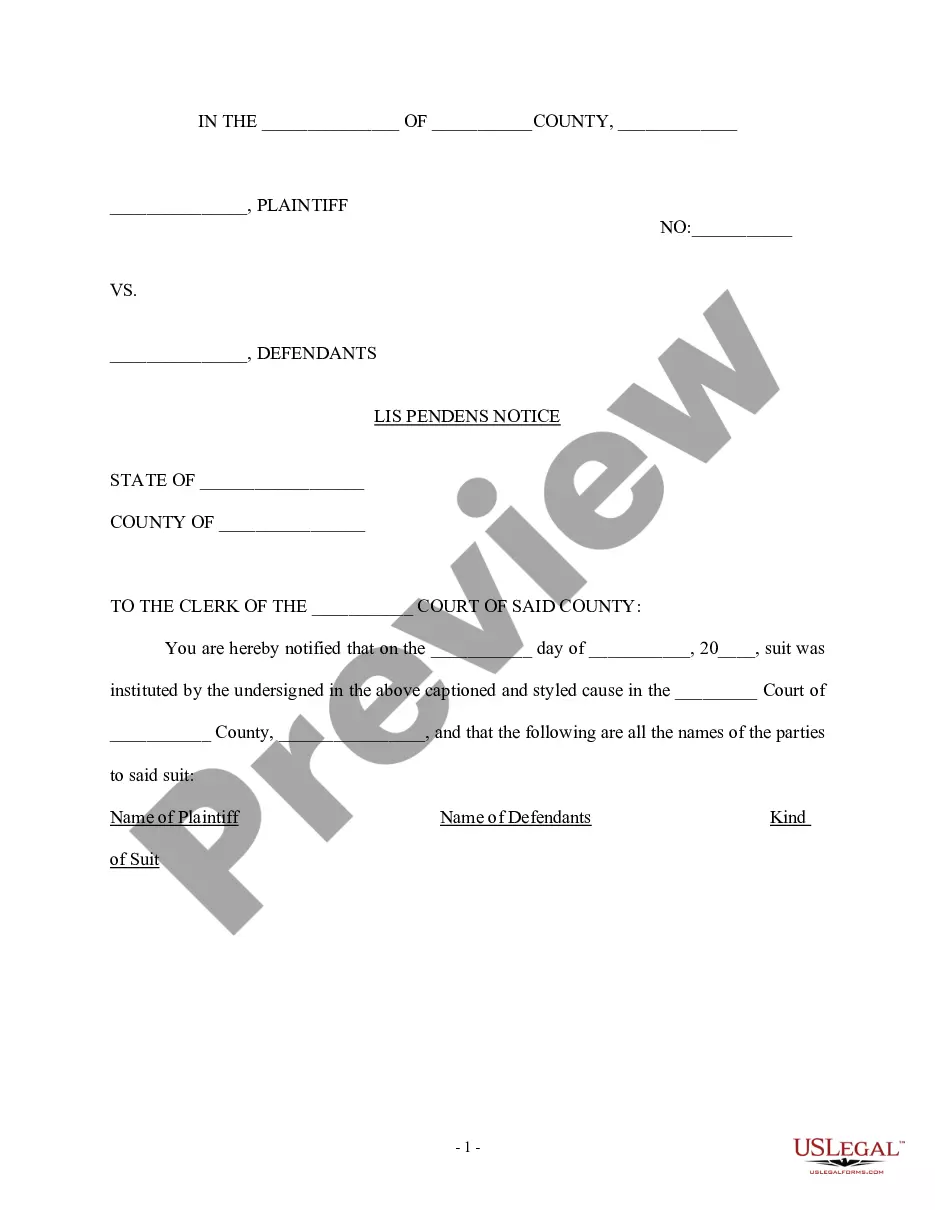
File Notice Lis Pendens Foreclosure In Arizona
Description

Get your form ready online
Our built-in tools help you complete, sign, share, and store your documents in one place.
Make edits, fill in missing information, and update formatting in US Legal Forms—just like you would in MS Word.
Download a copy, print it, send it by email, or mail it via USPS—whatever works best for your next step.
Sign and collect signatures with our SignNow integration. Send to multiple recipients, set reminders, and more. Go Premium to unlock E-Sign.
If this form requires notarization, complete it online through a secure video call—no need to meet a notary in person or wait for an appointment.
We protect your documents and personal data by following strict security and privacy standards.

Make edits, fill in missing information, and update formatting in US Legal Forms—just like you would in MS Word.

Download a copy, print it, send it by email, or mail it via USPS—whatever works best for your next step.

Sign and collect signatures with our SignNow integration. Send to multiple recipients, set reminders, and more. Go Premium to unlock E-Sign.

If this form requires notarization, complete it online through a secure video call—no need to meet a notary in person or wait for an appointment.

We protect your documents and personal data by following strict security and privacy standards.
Looking for another form?









Form popularity
FAQ
Answer: After a judicial foreclosure in Arizona, the debtor or his successors in interest ordinarily may redeem at any time at any time within six months after the date of the sale (A.R.S. 33-12-1282).
Under the Protecting Tenants at Foreclosure Act of 2009, if a property is foreclosed on, the new purchaser has to give the tenant of the property (if the tenant isn't the former owner of the property) at least 90 days notice to vacate the property.
Basically, a Lis Pendens is written notice that's recorded in the county recorder's records where the real estate is located and that gives notice than an action, a lawsuit involving title to the real estate is pending.
Expunging a Lis Pendens This can happen if the party believes that the lis pendens was improperly filed or if the underlying lawsuit has been resolved. Court Hearing: If a party seeks expungement, the court will conduct a hearing to determine whether the lis pendens should be canceled.
Some states also provide foreclosed borrowers a redemption period after the foreclosure sale, during which they can buy back the home. Arizona, however, doesn't have a law permitting the former owner to redeem the home after a nonjudicial foreclosure. (Ariz.
Notice of a Nonjudicial Foreclosure To officially start a nonjudicial foreclosure in Arizona, the trustee records a notice of sale in the land records. The sale date can't be any sooner than 91 days after the date the trustee records the notice.
Notice of a Nonjudicial Foreclosure To officially start a nonjudicial foreclosure in Arizona, the trustee records a notice of sale in the land records. The sale date can't be any sooner than 91 days after the date the trustee records the notice. (Ariz.
