Selling Receivables Is Called In Arizona
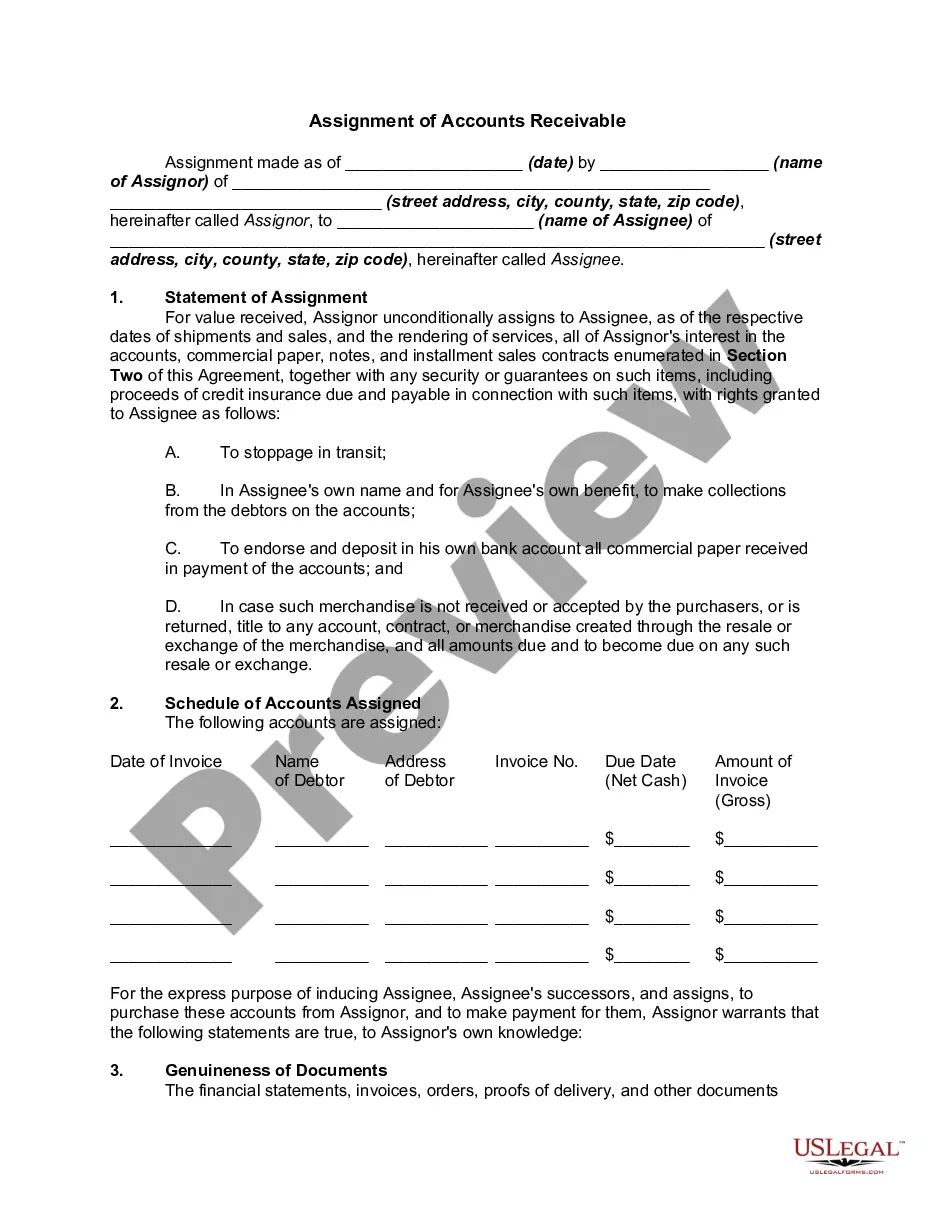
Description



Get your form ready online
Our built-in tools help you complete, sign, share, and store your documents in one place.
Make edits, fill in missing information, and update formatting in US Legal Forms—just like you would in MS Word.
Download a copy, print it, send it by email, or mail it via USPS—whatever works best for your next step.
Sign and collect signatures with our SignNow integration. Send to multiple recipients, set reminders, and more. Go Premium to unlock E-Sign.
If this form requires notarization, complete it online through a secure video call—no need to meet a notary in person or wait for an appointment.
We protect your documents and personal data by following strict security and privacy standards.

Make edits, fill in missing information, and update formatting in US Legal Forms—just like you would in MS Word.

Download a copy, print it, send it by email, or mail it via USPS—whatever works best for your next step.

Sign and collect signatures with our SignNow integration. Send to multiple recipients, set reminders, and more. Go Premium to unlock E-Sign.

If this form requires notarization, complete it online through a secure video call—no need to meet a notary in person or wait for an appointment.

We protect your documents and personal data by following strict security and privacy standards.
Looking for another form?









Form popularity
FAQ
Answer and Explanation: Factoring of receivables without recourse is considered as a sale of receivable because it transfer the risk and ownership of the receivable to the other party.
“True sale” refers to a transaction in which ownership and all interest in an asset is completely transferred from the original owner (the seller) to another party (the buyer). The buyer assumes all risks and benefits associated with the asset, and the seller no longer has any rights or control over the asset.
Receivables are frequently classified into three categories: accounts receivable, notes receivable, and other receivables. Accounts receivable are balances customers owe on account as a result of the sale of goods or services.
Accounts receivable staff work closely with sales and finance teams and are typically responsible for collecting revenue, recording transactions, verifying payments, and resolving discrepancies on accounts.
To record accounts receivable in a journal entry, follow these steps: Identify the transaction. Determine the amount of the accounts receivable. Debit the Accounts Receivable account. Credit the Sales Revenue account. Post the journal entry to the general ledger.
The four types of accounts receivable are trade receivables, or accounts reflecting the sale of goods or services; non-trade receivables, or accounts not related to the sale of goods or services, like loans, insurance claims, and interest payments; secured receivables, which are backed by collateral and enshrined by a ...
Accounts Receivable are the most common kind of receivable. Accounts Receivable are amounts due from customers from the sale of services or merchandise on credit. They are usually due in 30 – 60 days.
The main types include: Trade receivables. Trade receivables are amounts customers owe for selling goods or services as part of the normal course of business. Non-trade receivables. Secured receivables. Unsecured receivables.
Businesses that perform the following activities are subject to TPT and must be licensed. retail sales. restaurants/bars. hotel/motel (transient lodging) commercial lease. amusements. personal property rentals. contracting. severance (metal mining)
To record accounts receivable in a journal entry, follow these steps: Identify the transaction. Determine the amount of the accounts receivable. Debit the Accounts Receivable account. Credit the Sales Revenue account. Post the journal entry to the general ledger.
