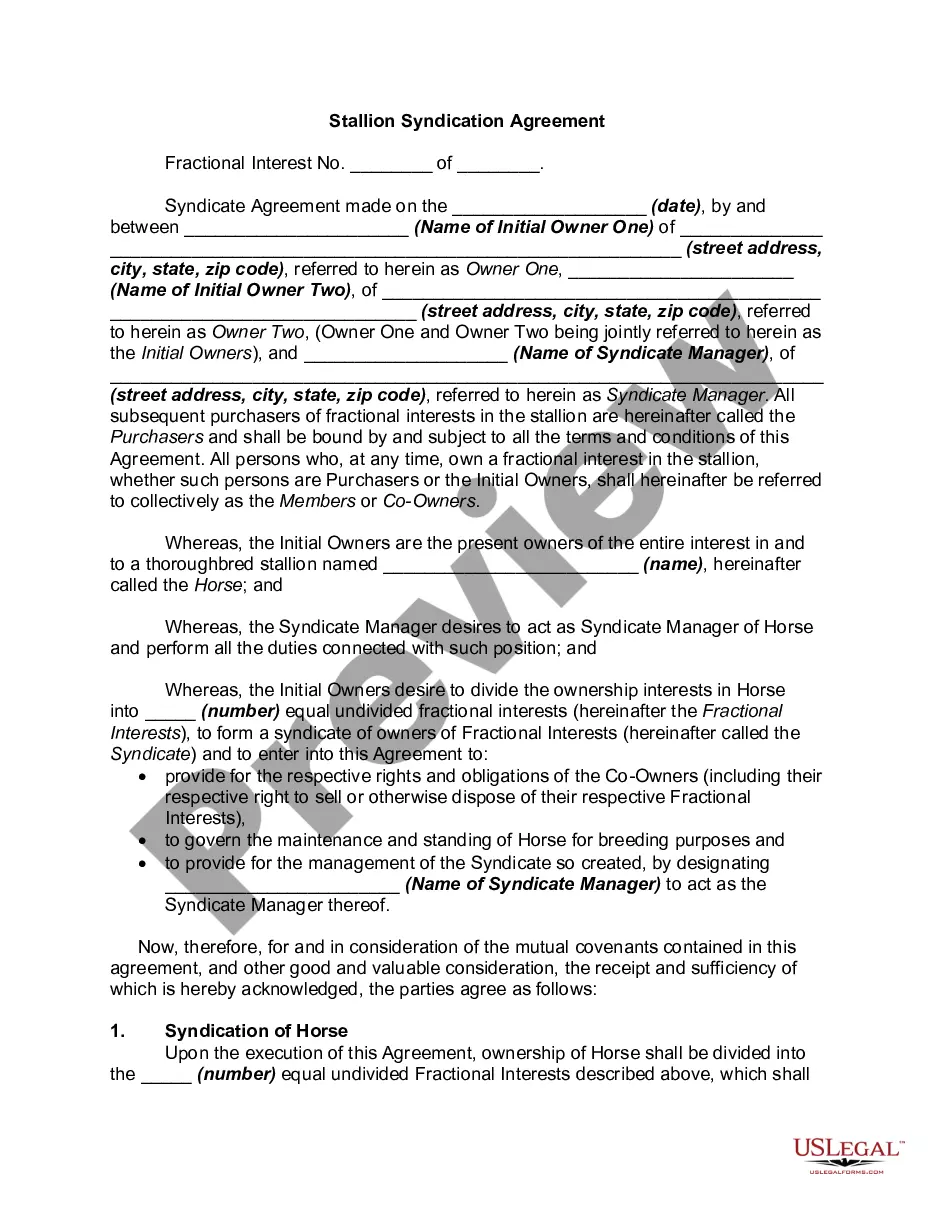
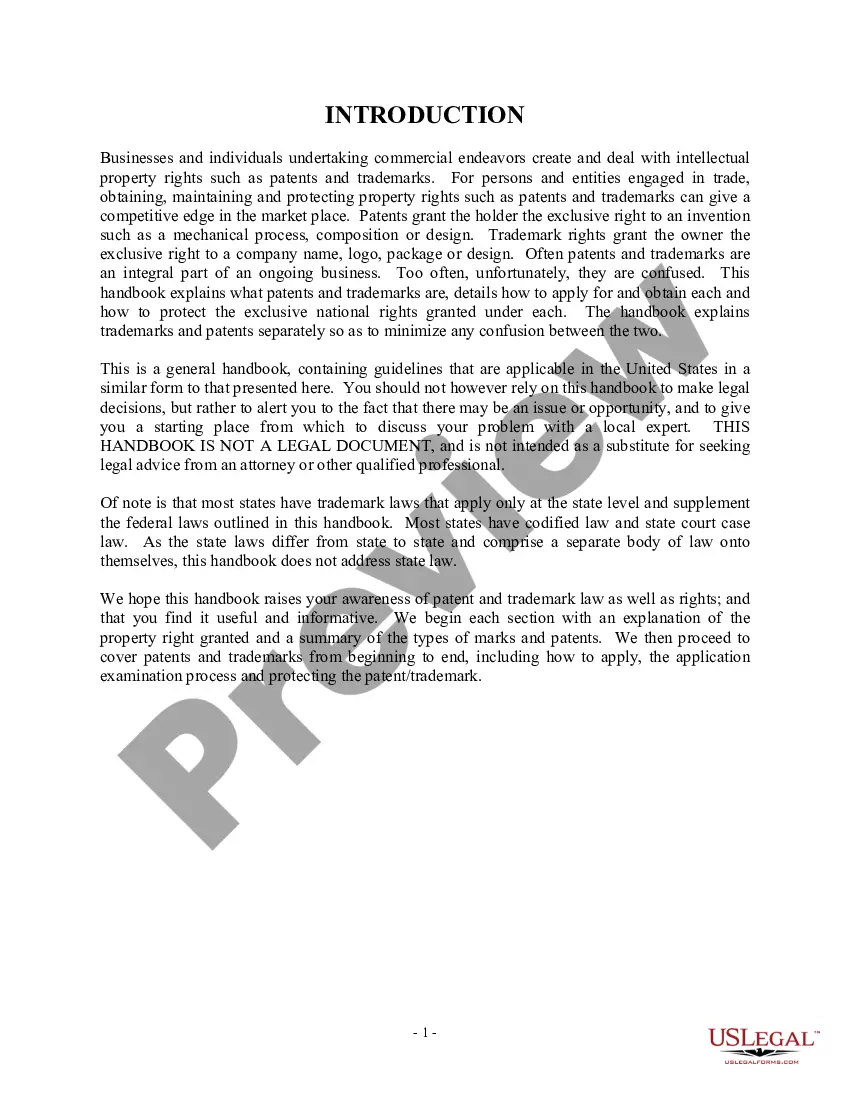
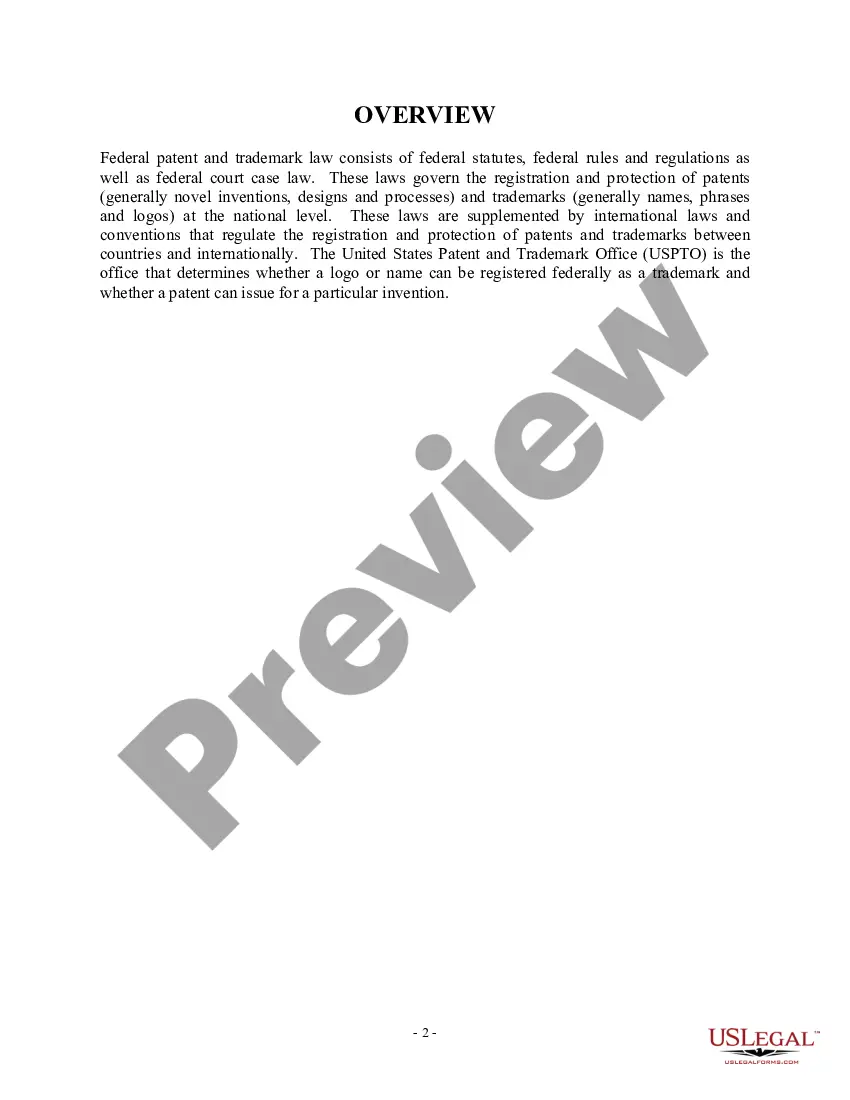
Patent Trademark File Format In Utah
Description




Get your form ready online
Our built-in tools help you complete, sign, share, and store your documents in one place.
Make edits, fill in missing information, and update formatting in US Legal Forms—just like you would in MS Word.
Download a copy, print it, send it by email, or mail it via USPS—whatever works best for your next step.
Sign and collect signatures with our SignNow integration. Send to multiple recipients, set reminders, and more. Go Premium to unlock E-Sign.
If this form requires notarization, complete it online through a secure video call—no need to meet a notary in person or wait for an appointment.
We protect your documents and personal data by following strict security and privacy standards.

Make edits, fill in missing information, and update formatting in US Legal Forms—just like you would in MS Word.

Download a copy, print it, send it by email, or mail it via USPS—whatever works best for your next step.

Sign and collect signatures with our SignNow integration. Send to multiple recipients, set reminders, and more. Go Premium to unlock E-Sign.

If this form requires notarization, complete it online through a secure video call—no need to meet a notary in person or wait for an appointment.

We protect your documents and personal data by following strict security and privacy standards.
Looking for another form?







Form popularity
FAQ
Countries that use the 'first-to-use' system include Australia, Canada, India, New Zealand and the USA.
In the United States, rights to a mark are established by actual use of the designation rather than registration. Therefore, the rule is that ownership of a mark is given to the first-to-use, not the first-to-file.
The TM symbol is used when an application for trademark is made with the trademark registry. The TM symbol is thus used to indicate the fact that a trademark application exists with respect to the trademark and serves as a warning for infringers and counter-fitters.
The UK and EU largely operate 'first to file' trade mark systems. Getting in first with an application is usually essential. However, prior unregistered rights can (in certain circumstances) pose a bar to the use and registration of UK trade marks and EUTMs (more here).
Trademark rights generally belong not to the first trademark filer, but the first user. In the US, trademark rights generally go to one who was first to use the mark in commerce, meaning that whoever was first to use a mark on certain goods or services would be presumed the lawful owner of the trademark.
Ing to the first-to-file principle, the owner of the mark who first files their application with the IP office has priority over anyone using the same/confusingly similar mark on the same market.
First to file and first to invent are legal concepts that define who has the right to the grant of a patent for an invention. Since March 16, 2013, after the United States abandoned its "first to invent/document" system, all countries have operated under the "first-to-file" patent priority requirement.
No, It Isn't Possible to Patent a Name Patents are only issued for inventions, ornamental designs of goods, or plants, not names.
The first to file rule asserts that the first party to file a lawsuit is awarded their home location for a trial or legal proceeding. 1 The first to file rule also applies to patent applications, awarding the first person to file a patent the right to claim the intellectual property to it.
The best way to patent an invention is to hire a specialized attorney to guide you through the patent process. Alternatively, you can consult the USPTO's guidance documents to prepare your application.