Patent Trademark Law For Engineers In Phoenix
Description



Get your form ready online
Our built-in tools help you complete, sign, share, and store your documents in one place.
Make edits, fill in missing information, and update formatting in US Legal Forms—just like you would in MS Word.
Download a copy, print it, send it by email, or mail it via USPS—whatever works best for your next step.
Sign and collect signatures with our SignNow integration. Send to multiple recipients, set reminders, and more. Go Premium to unlock E-Sign.
If this form requires notarization, complete it online through a secure video call—no need to meet a notary in person or wait for an appointment.
We protect your documents and personal data by following strict security and privacy standards.

Make edits, fill in missing information, and update formatting in US Legal Forms—just like you would in MS Word.

Download a copy, print it, send it by email, or mail it via USPS—whatever works best for your next step.

Sign and collect signatures with our SignNow integration. Send to multiple recipients, set reminders, and more. Go Premium to unlock E-Sign.

If this form requires notarization, complete it online through a secure video call—no need to meet a notary in person or wait for an appointment.

We protect your documents and personal data by following strict security and privacy standards.
Looking for another form?









Form popularity
FAQ
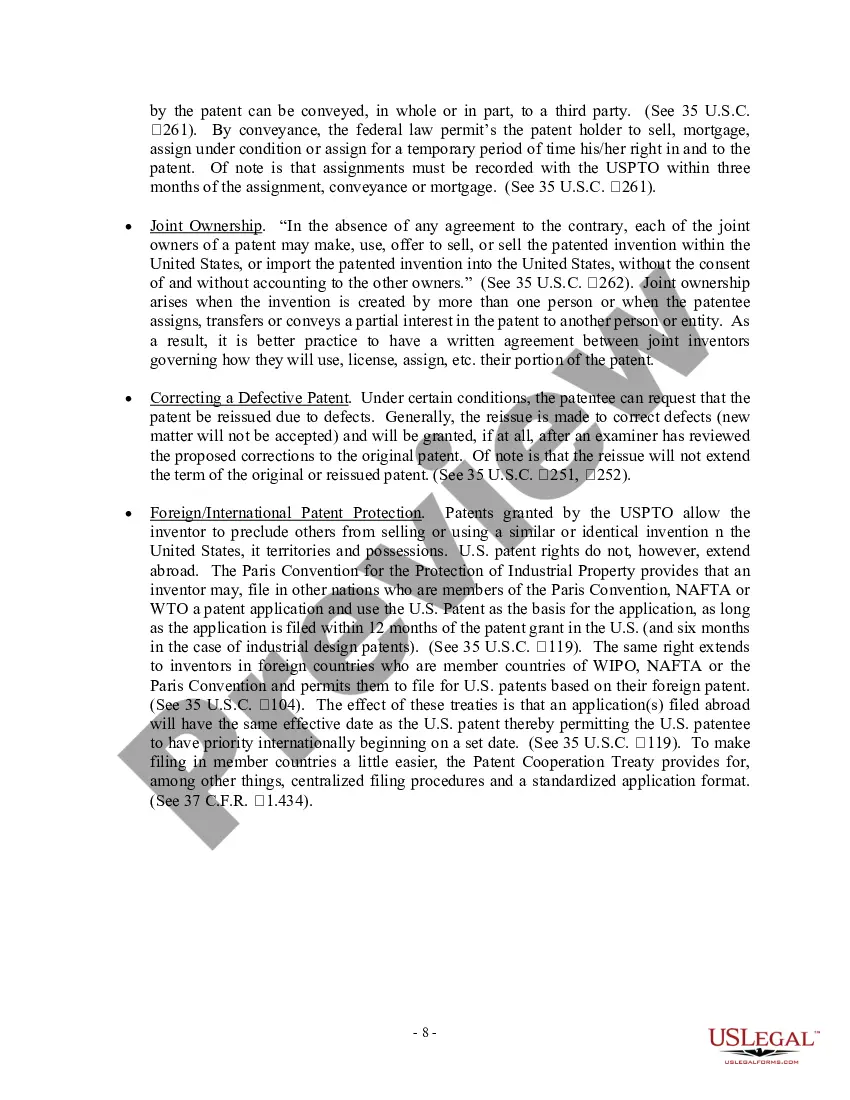
The role of a Patent Attorney is more focused on obtaining patent rights whereas Patent lawyers may be more focused on disputes and Court proceedings, but are excluded from patent drafting.
No, the use of an attorney or registered agent is not required for filing a patent application. However, an attorney or registered agent is often a useful resource and the USPTO recommends the use of such for preparing a patent application and conducting the proceedings in the USPTO.
If you have an engineering or science degree or background you can take the Patent Office's Registration Exam to become a Patent Agent or Attorney!
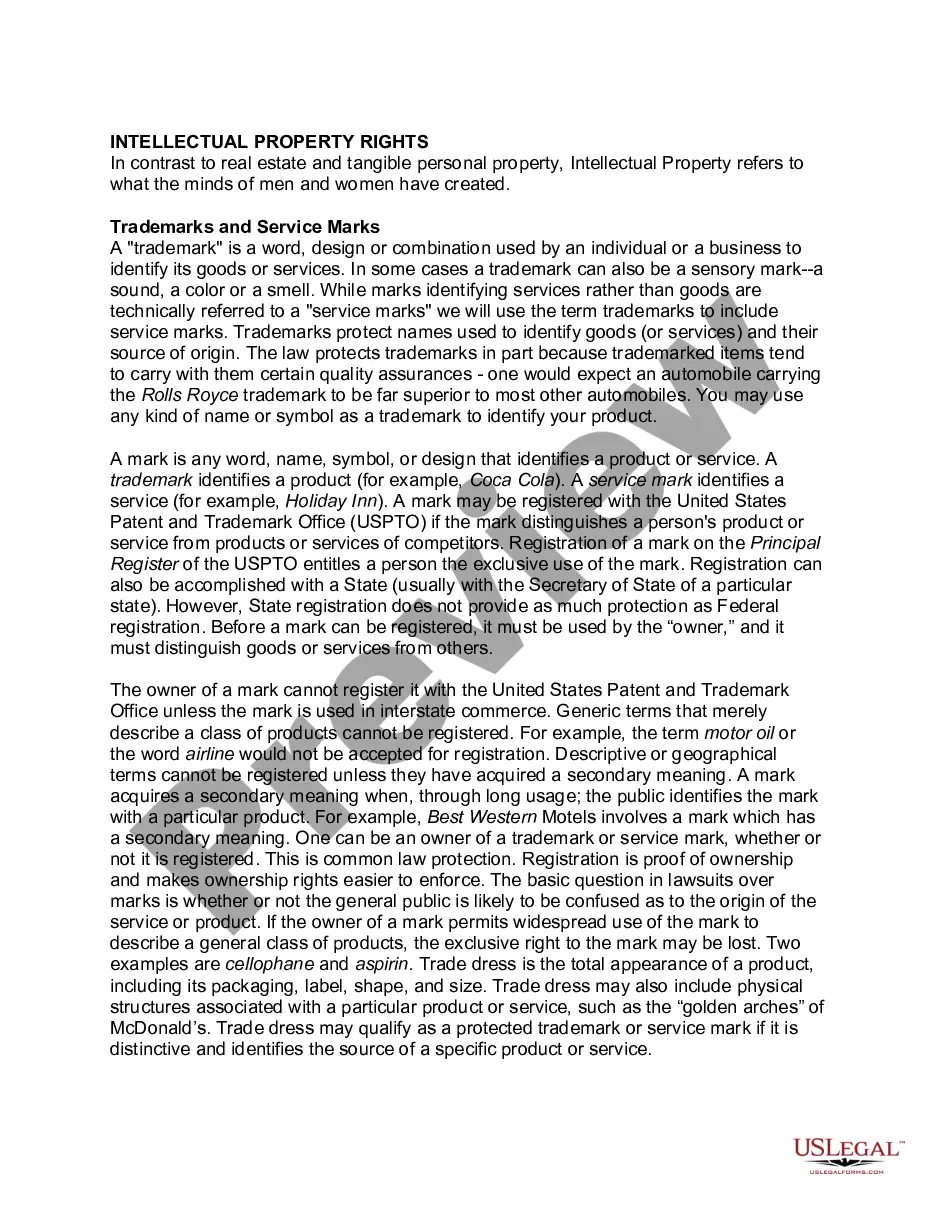
In many instances, the same design can be protected by trademark and design patent laws. Examples of well-known design trademarks which also have been the subject of design patents include the DUSTBUSTER® vacuum cleaner, the APPLE iPod® electronic music player, and the NIKE Air Max 1995® shoe upper.
Patent applications: the three criteria Novelty. This means that your invention must not have been made public – not even by yourself – before the date of the application. Inventive step. This means that your product or process must be an inventive solution. Industrial applicability.
With a granted patent, you gain exclusive rights, preventing direct competition and enabling you to monetize your invention through licensing, selling, or building a business around it. Without a patent, competitors can copy your innovative solution, potentially leading to lost market share and profits.
Format of a Patent Application The Specification. The Title. The Description. The Claims. The Drawings. The Abstract. Sample Specifications. Minimum Requirements for a Filing Date.
In fact the best IP law schools for LLM are UC Berkeley and Stanford, followed by Other schools such George Washington, University of Washington, Santa Clara University, American University, etc. UC Berkeley and Stanford are the major Universities...
If you do pursue a bachelor's degree in engineering, you should take courses in mathematics, physics, chemistry, computer science, engineering, economics, business, and accounting. Students who choose to focus on IP law tend to go directly to law school after earning their bachelor's degree.
Mechanical Engineering: Mechanical engineering covers a wide range of industries, including manufacturing, robotics, and automotive, making it a solid choice for patent law. Chemical Engineering: This field is crucial for patents related to chemicals, pharmaceuticals, and materials science.
