Patent Trademark Law For Engineers And Scientists Nptel In Harris
Description








Form popularity
FAQ
The Patent Process Determine the type of intellectual property you need. Determine if your invention is patentable. Determine what kind of patent you need. Get ready to apply. Submit your application. Work with your examiner. Receive your approval. Maintain your patent.
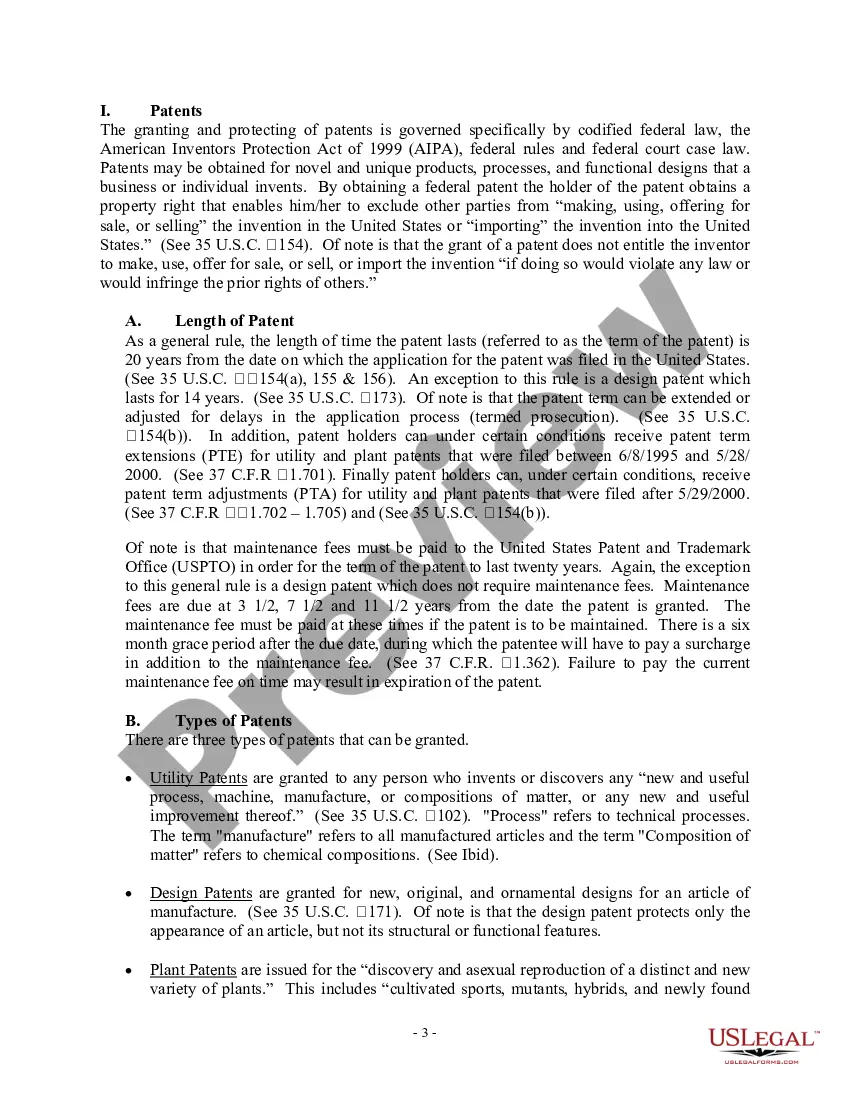
Patents protect inventions which involve an inventive step and are industrially applicable. A patent may protect a product, a process or an industrial application. Patent Certificates offer protection for 20 years and are issued for inventions which involve an inventive step and are industrially applicable.
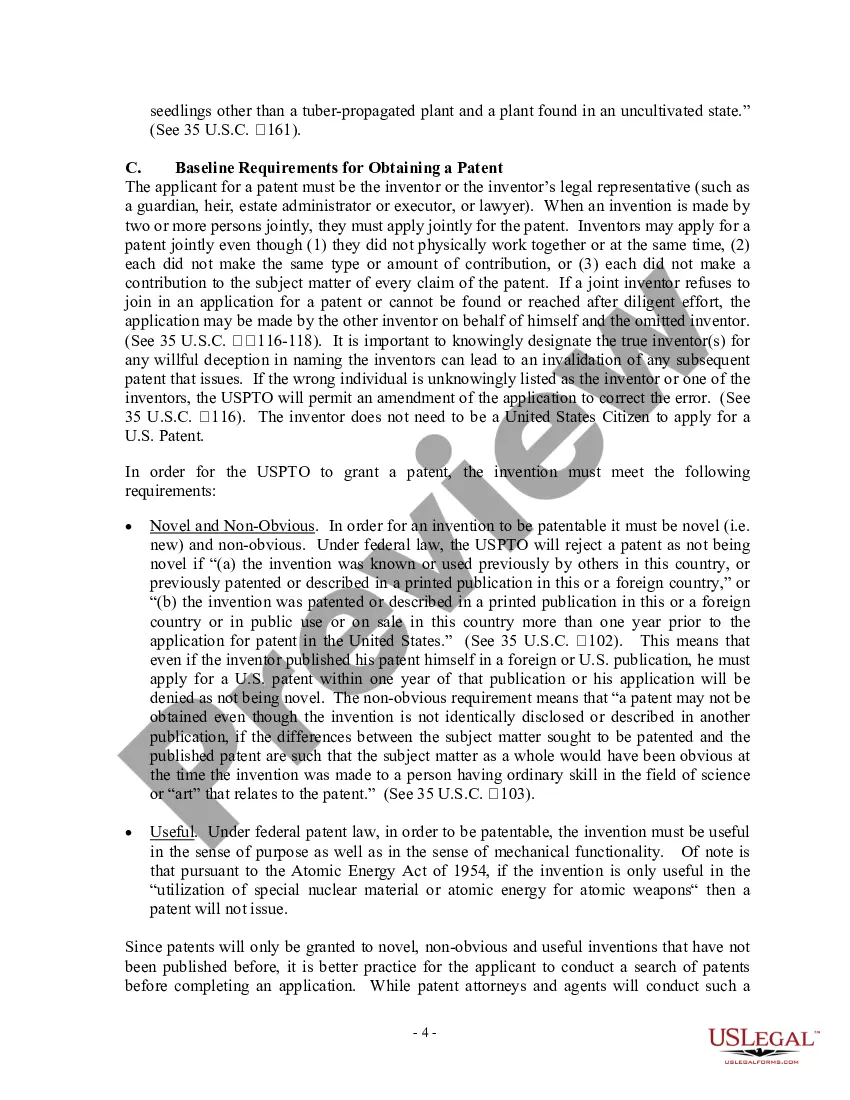
Patent applications: the three criteria Novelty. This means that your invention must not have been made public – not even by yourself – before the date of the application. Inventive step. This means that your product or process must be an inventive solution. Industrial applicability.
Here is the procedure on how to apply for patent in India: STEP 1: Invention Disclosure. STEP 2: Patentability Search. STEP 3: Filing an Application for a Patent. STEP 4: Patent Drafting. STEP 5: Filing the Patent Application. STEP 6: Request for Examination. STEP 7: Responding to Objections (if any) ... STEP 8: Grant of Patent.
So, if any of the following three things happen with your invention, then you cannot apply for a patent: It is on sale. It is in public use. It has a printed publication one year before the application date.
The five primary requirements for patentability are: (1) patentable subject matter; (2) utility; (3) novelty; (4) non-obviousness; and (5) enablement. Like trademarks, patents are territorial, meaning they are enforceable in a specific geographic area.
Gravelle says there are three main criteria for a patent to be granted: The invention must be new. There can't be anything like it elsewhere in the world. The invention must be useful. To meet the criteria of utility, there needs to be economic value. An invention should not be obvious.
A U.S. patent gives you, the inventor, the right to “exclude others from making, using, offering for sale, or selling” an invention or “importing” it into the U.S. A plant patent gives you additional rights on the “parts” of plants (e.g., a plant patent on an apple variety would include rights on the apples from the ...
How to Apply and File a Patent in India? STEP 1: Invention Disclosure. STEP 2: Patentability Search. STEP 3: Filing an Application for a Patent. STEP 4: Patent Drafting. STEP 5: Filing the Patent Application. STEP 6: Request for Examination. STEP 7: Responding to Objections (if any) ... STEP 8: Grant of Patent.
