Patent And Paper In Harris
Description



Get your form ready online
Our built-in tools help you complete, sign, share, and store your documents in one place.
Make edits, fill in missing information, and update formatting in US Legal Forms—just like you would in MS Word.
Download a copy, print it, send it by email, or mail it via USPS—whatever works best for your next step.
Sign and collect signatures with our SignNow integration. Send to multiple recipients, set reminders, and more. Go Premium to unlock E-Sign.
If this form requires notarization, complete it online through a secure video call—no need to meet a notary in person or wait for an appointment.
We protect your documents and personal data by following strict security and privacy standards.

Make edits, fill in missing information, and update formatting in US Legal Forms—just like you would in MS Word.

Download a copy, print it, send it by email, or mail it via USPS—whatever works best for your next step.

Sign and collect signatures with our SignNow integration. Send to multiple recipients, set reminders, and more. Go Premium to unlock E-Sign.

If this form requires notarization, complete it online through a secure video call—no need to meet a notary in person or wait for an appointment.

We protect your documents and personal data by following strict security and privacy standards.
Looking for another form?








Form popularity
FAQ
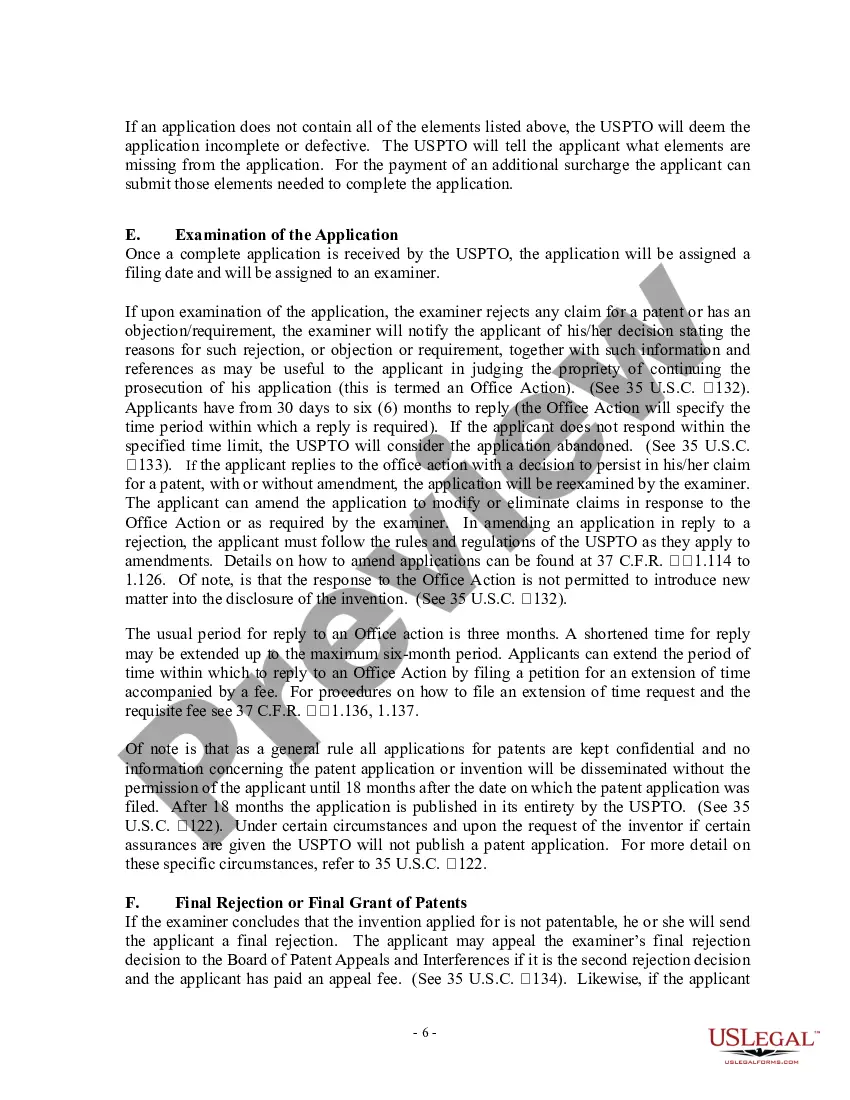
To file a patent in Brazil, it must be processed in The Brazilian entity of patents is the National Institute of Industrial Property (INPI). This is the official government body responsible for Industrial Property rights in Brazil being a federal autarchy of the Ministry of Industry, Foreign Trade and Services.
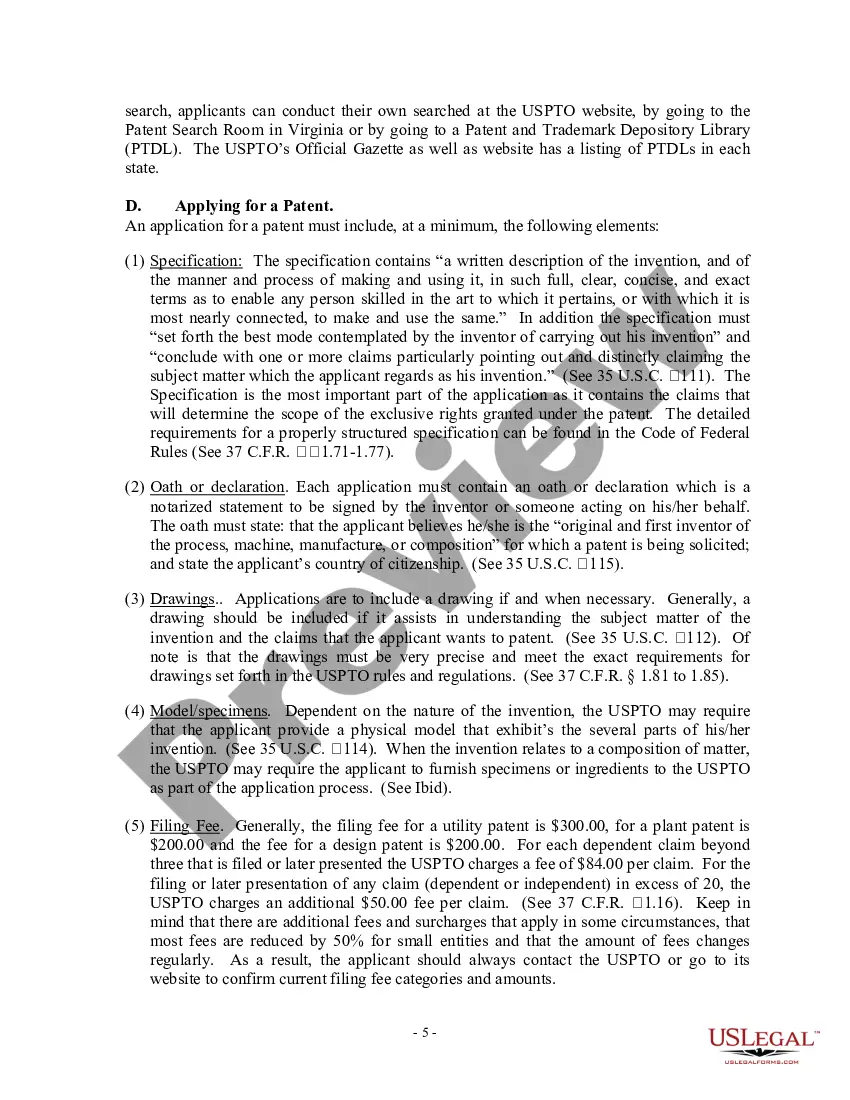
Format of a Patent Application The Specification. The Title. The Description. The Claims. The Drawings. The Abstract. Sample Specifications. Minimum Requirements for a Filing Date.
A patent application often includes the following primary sections: Invention Title. The title's objective is to provide a clear understanding of the invention or idea. Prior Art: Context and Novelty. Invention Summary. Drawings and Descriptions. Detailed Description. Claims. Scope. Characteristics.
Format of a Patent Application The Specification. The Title. The Description. The Claims. The Drawings. The Abstract. Sample Specifications. Minimum Requirements for a Filing Date.
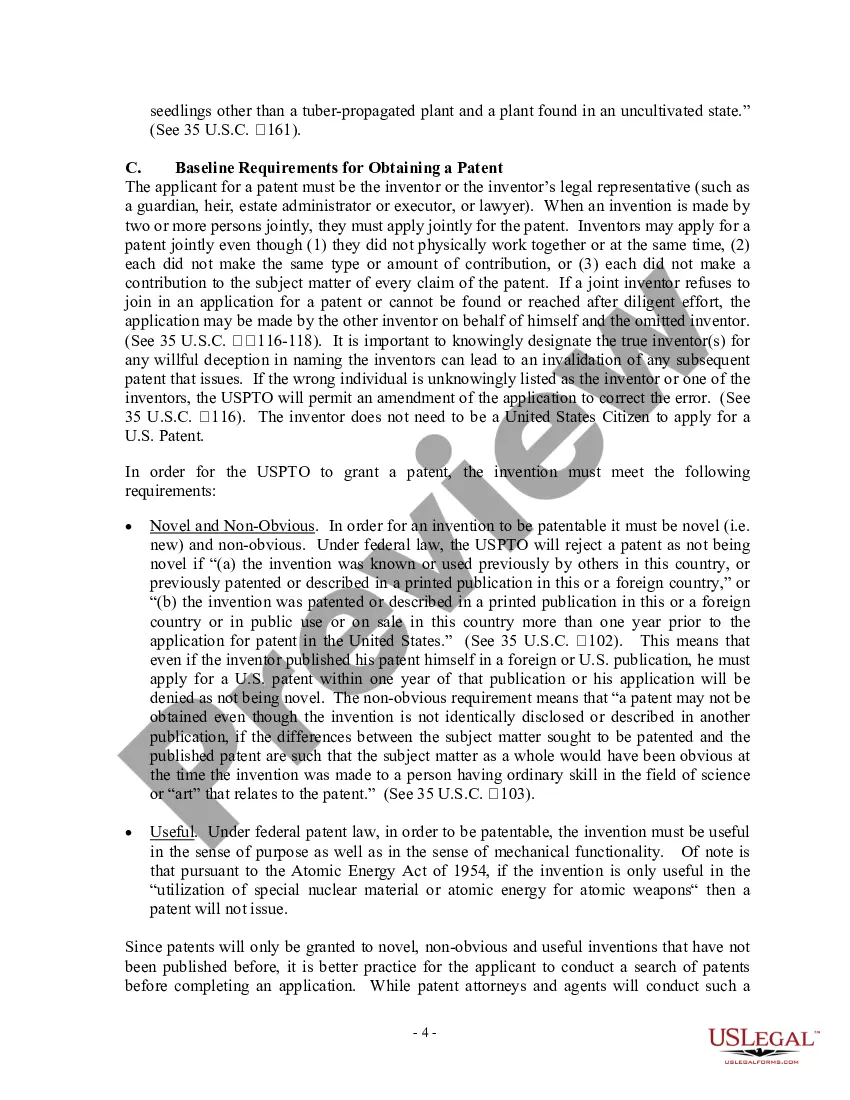
Utility patent application: may be filed by anyone who invents or discovers any new and useful process, machine, manufacture, or composition of matter, or any new and useful improvement thereof.
A patent application often includes the following primary sections: Invention Title. The title's objective is to provide a clear understanding of the invention or idea. Prior Art: Context and Novelty. Invention Summary. Drawings and Descriptions. Detailed Description. Claims. Scope. Characteristics.
General Format: Inventor1, Inventor2, et al. Title of patent. Patent number (include country code, the word “Patent”, and patent number with retained commas), date of filing (format Month Date, Year), and issued date of publication (format Month Date, Year).
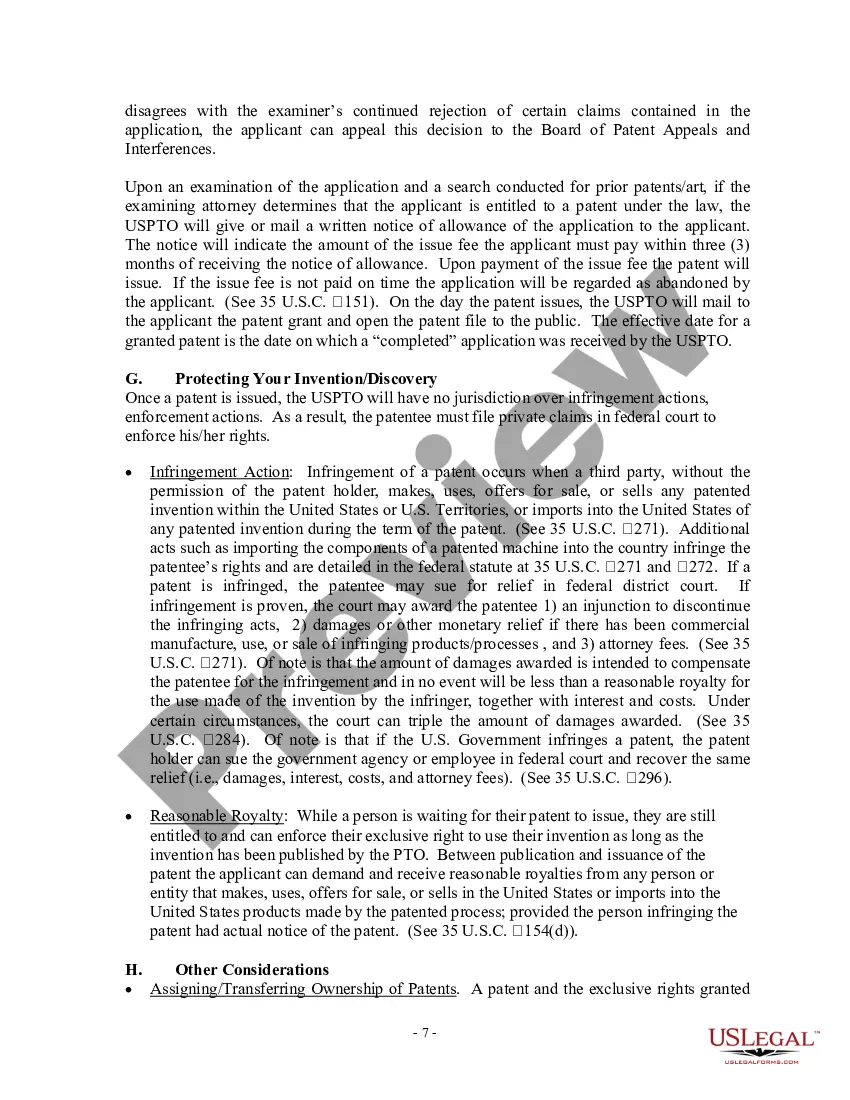
The findings described in a paper are public property, but the technology described in a patent specification is private property, intellectual property. So, a patent has the concept of "infringement," whereas a paper does not.
Once the invention becomes public, competitors may find ways to improve the invention and file a patent based on those improvements! Therefore, scientists must ensure they file a patent application first and then publish it in an academic journal.
Patents are legal documents used to prevent other people from commercializing the process or devices they describe. Research papers typically report results of a scientific process, whether experimental or not, while patents describe processes and devices along with their respective intended applications.
