Patent Trademark Meaning In Arizona
Description

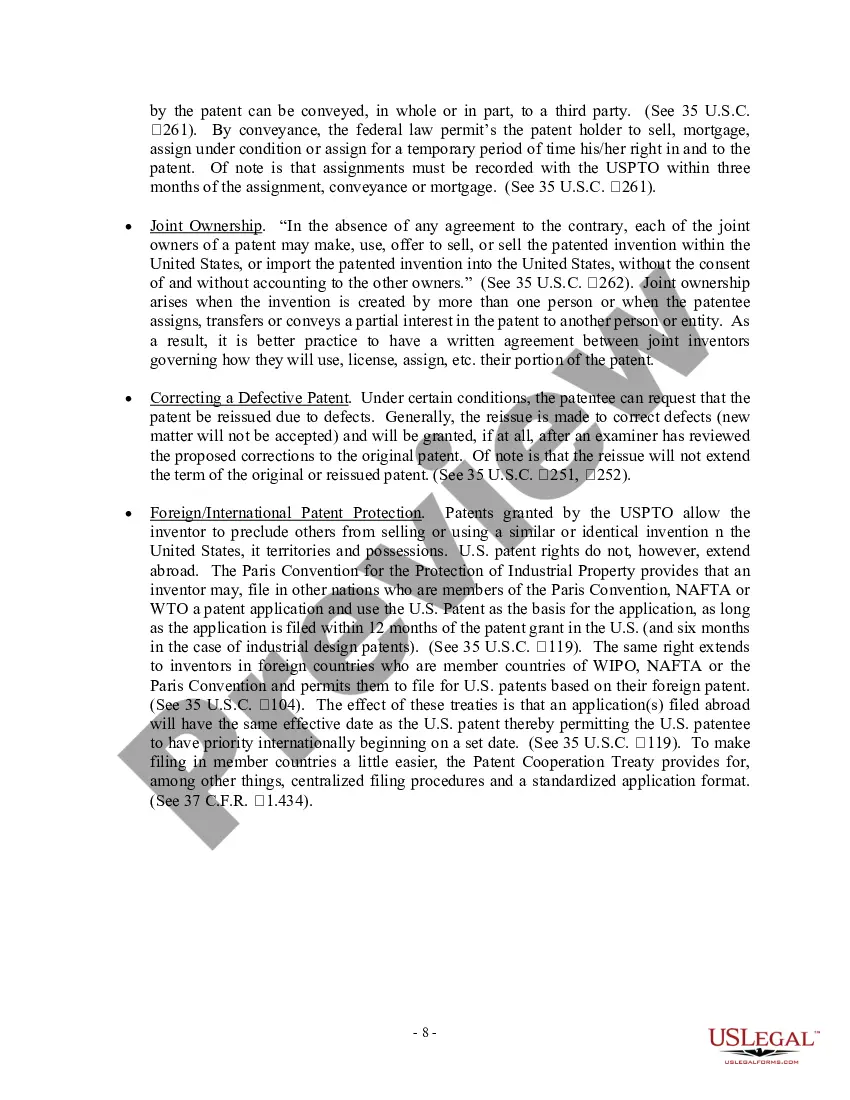



Get your form ready online
Our built-in tools help you complete, sign, share, and store your documents in one place.
Make edits, fill in missing information, and update formatting in US Legal Forms—just like you would in MS Word.
Download a copy, print it, send it by email, or mail it via USPS—whatever works best for your next step.
Sign and collect signatures with our SignNow integration. Send to multiple recipients, set reminders, and more. Go Premium to unlock E-Sign.
If this form requires notarization, complete it online through a secure video call—no need to meet a notary in person or wait for an appointment.
We protect your documents and personal data by following strict security and privacy standards.

Make edits, fill in missing information, and update formatting in US Legal Forms—just like you would in MS Word.

Download a copy, print it, send it by email, or mail it via USPS—whatever works best for your next step.

Sign and collect signatures with our SignNow integration. Send to multiple recipients, set reminders, and more. Go Premium to unlock E-Sign.

If this form requires notarization, complete it online through a secure video call—no need to meet a notary in person or wait for an appointment.

We protect your documents and personal data by following strict security and privacy standards.
Looking for another form?





Form popularity
FAQ
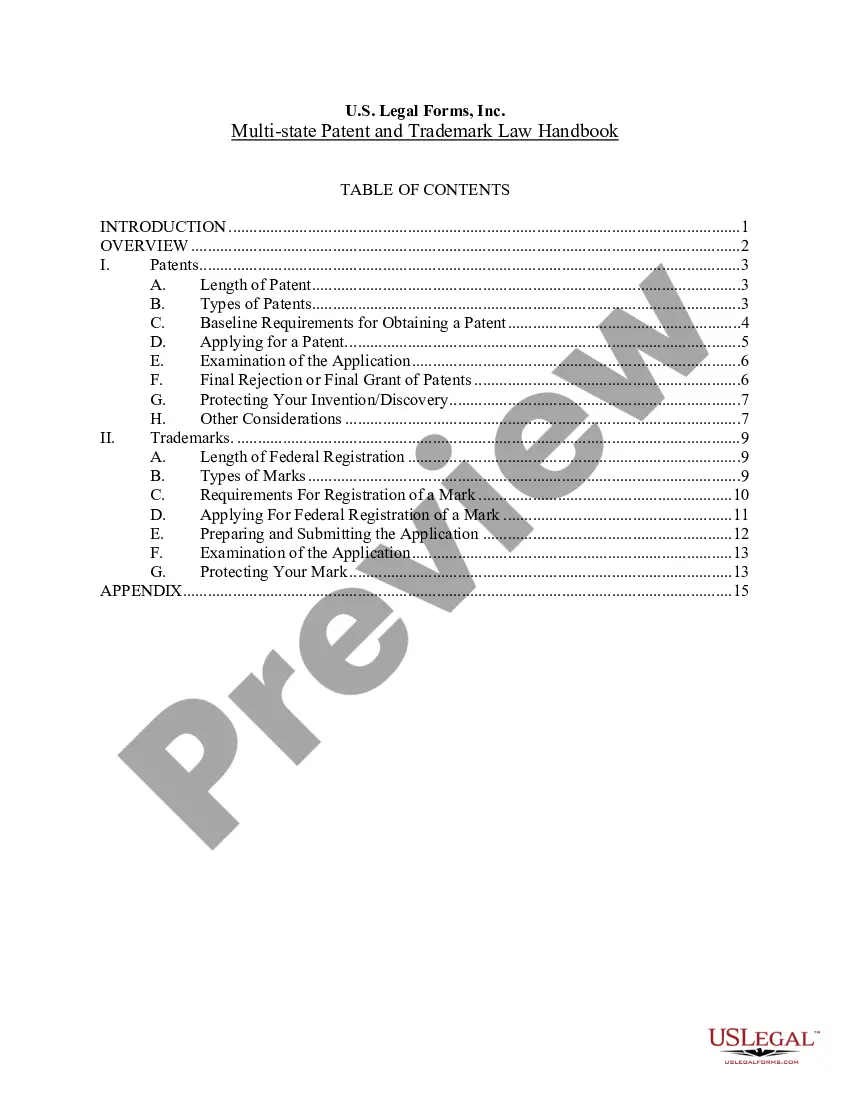
Though there is often a misconception that trademarks and patents both work the same, they cannot be used interchangeably. A trademark is a word, phrase, or design that is used in connection to goods or services in commerce. Trademarks do not have to be registered to start earning common law trademark rights.
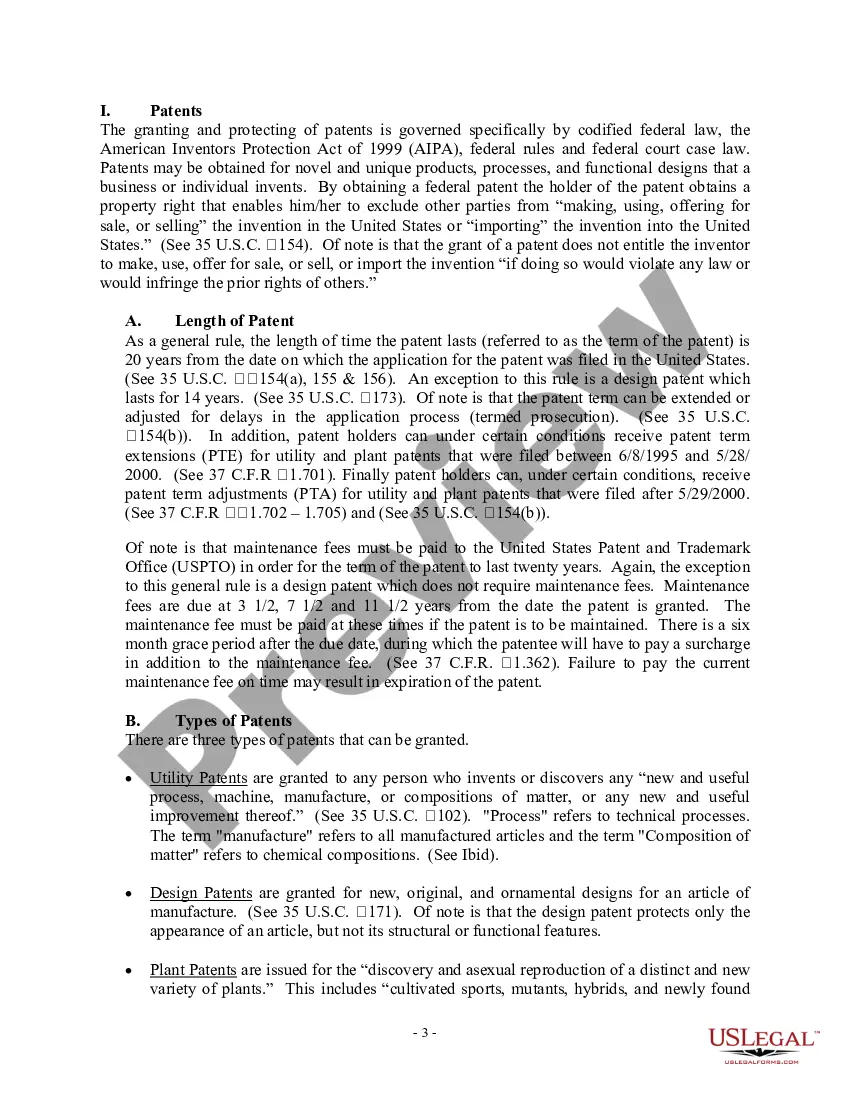
A patent allows the creator of certain kinds of inventions that contain new ideas to keep others from making commercial use of those ideas without the creator's permission. Trademarks, on the other hand, are not concerned with how a new technology is used.
The difference between trade marks and patents lies at the core of what they protect. Trade marks protect a brand, while patents protect inventions. Understanding these differences is crucial to avoid risks and losses.
The Coca-Cola Corp owns the trademark to the name Coca-Cola, as well as the trademark on the bottle shape, and the graphic representation of their name. These are all things that help distinguish them from other cola brands and define their individual product. Coca-Cola also owns the patent on their formula.
Assuming that a patent is available for the subject matter of your concept, that's the way to prevent others from pursuing the same product concept. A trademark, however, is useful—and often crucial—when you are building a brand for your product or service.
A patent allows the creator of certain kinds of inventions that contain new ideas to keep others from making commercial use of those ideas without the creator's permission. Trademarks, on the other hand, are not concerned with how a new technology is used.
There are three most common types of trademarks: word marks, design marks, and composite marks. Legal challenges for famous trademarks include dilution by blurring and tarnishment, piracy, and varying international laws.
In addition, you acknowledge that the Site itself is protected by copyright law. You further acknowledge that Coca Cola owns the trademarks “Coca Cola”, “Coke” and all associated Coca Cola trade names, service marks and logos. All other trademarks used on the Site are the property of their respective owners.
The McDonald's golden arches design is an example of a registered trademark in special form format. The company Nike registered this trademark in special form format, combining the stylized word Nike with their swoosh logo. The format of the trademark you apply to register affects your application filing requirements.
No, It Isn't Possible to Patent a Name Patents are only issued for inventions, ornamental designs of goods, or plants, not names. To protect your brand name and logo, you will need to utilize the trademark registration service.
