Acknowledgement Of Receipt Letter Example Format In Suffolk
Description
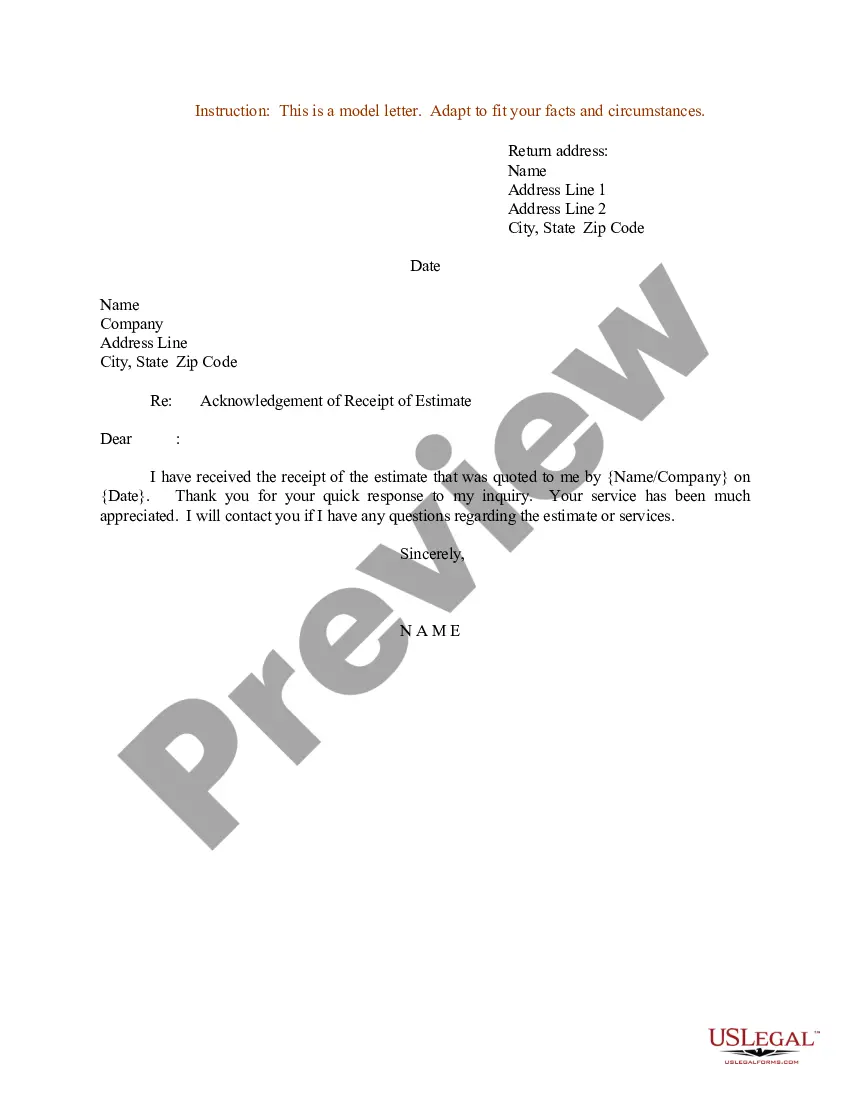




Get your form ready online
Our built-in tools help you complete, sign, share, and store your documents in one place.
Make edits, fill in missing information, and update formatting in US Legal Forms—just like you would in MS Word.
Download a copy, print it, send it by email, or mail it via USPS—whatever works best for your next step.
Sign and collect signatures with our SignNow integration. Send to multiple recipients, set reminders, and more. Go Premium to unlock E-Sign.
If this form requires notarization, complete it online through a secure video call—no need to meet a notary in person or wait for an appointment.
We protect your documents and personal data by following strict security and privacy standards.

Make edits, fill in missing information, and update formatting in US Legal Forms—just like you would in MS Word.

Download a copy, print it, send it by email, or mail it via USPS—whatever works best for your next step.

Sign and collect signatures with our SignNow integration. Send to multiple recipients, set reminders, and more. Go Premium to unlock E-Sign.

If this form requires notarization, complete it online through a secure video call—no need to meet a notary in person or wait for an appointment.

We protect your documents and personal data by following strict security and privacy standards.
Looking for another form?










Form popularity
FAQ
The purpose of letters of acknowledgment is to provide proof that you have received specific documents or a specific type of request. Letters of acknowledgment are often used for anything involved in a legal process.
A letter of acknowledgement aims to intimate the concerned party that the documents or items requested in a previous communication have been received. The acknowledgement letter is a professional courtesy extended by businesses to maintain professional relationships.
Be clear and specific: Make sure that you include the name of the individual and company sending the item or document as well as the name of the receiving party. Clearly list the purpose of the receipt and include the name of the items or documents you're distributing and the date.
For example, if your friend said something that hurt you, you might say, “I just want some acknowledgement from him that he shouldn't have said that.” Another common use of acknowledgement is to describe an expression of gratitude, recognition, or appreciation.
The very act of acknowledgement has been defined as the “recognition of the importance or quality of something”. When you identify and recognize the importance or quality of someone's efforts, that person subsequently feels seen, heard and understood.
The purpose of an acknowledgment is for a signer, whose identity has been verified, to declare to a Notary or notarial officer that he or she has willingly signed a document.

