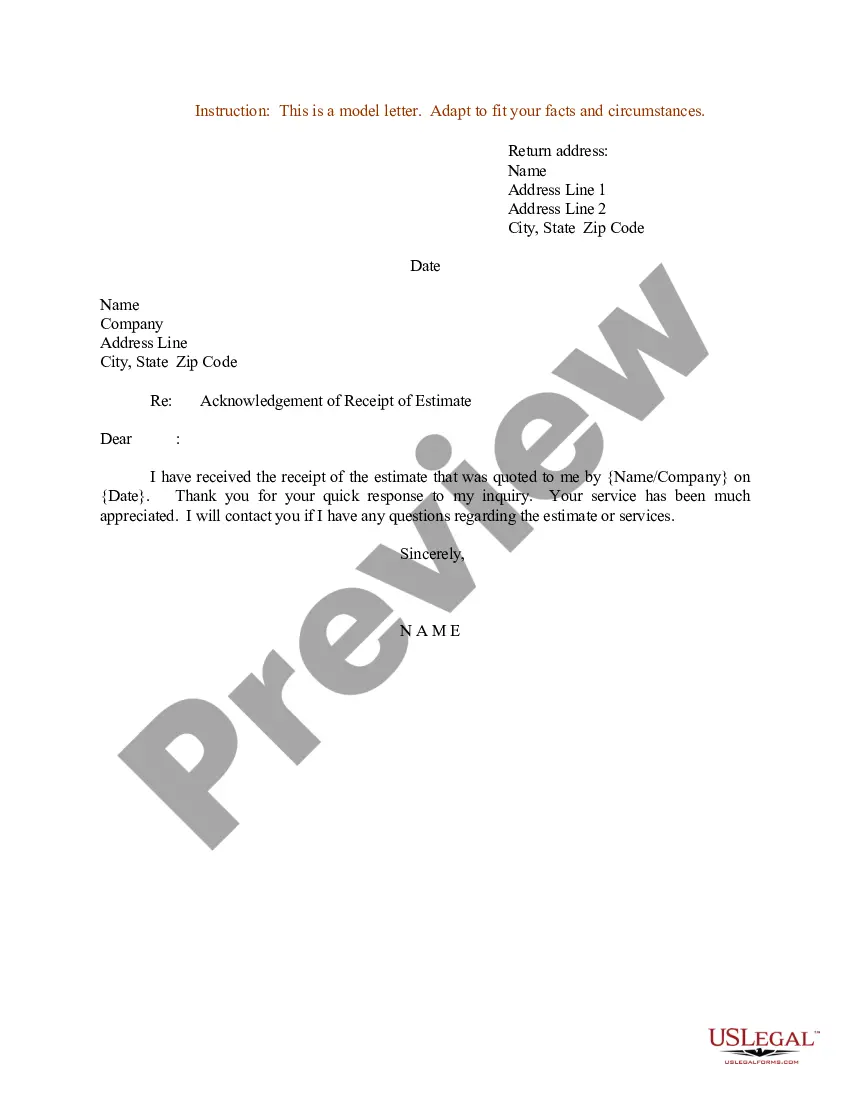
Acknowledgement Letter Receipt Of Cheque In Fairfax
Description



Get your form ready online
Our built-in tools help you complete, sign, share, and store your documents in one place.
Make edits, fill in missing information, and update formatting in US Legal Forms—just like you would in MS Word.
Download a copy, print it, send it by email, or mail it via USPS—whatever works best for your next step.
Sign and collect signatures with our SignNow integration. Send to multiple recipients, set reminders, and more. Go Premium to unlock E-Sign.
If this form requires notarization, complete it online through a secure video call—no need to meet a notary in person or wait for an appointment.
We protect your documents and personal data by following strict security and privacy standards.

Make edits, fill in missing information, and update formatting in US Legal Forms—just like you would in MS Word.

Download a copy, print it, send it by email, or mail it via USPS—whatever works best for your next step.

Sign and collect signatures with our SignNow integration. Send to multiple recipients, set reminders, and more. Go Premium to unlock E-Sign.

If this form requires notarization, complete it online through a secure video call—no need to meet a notary in person or wait for an appointment.

We protect your documents and personal data by following strict security and privacy standards.
Looking for another form?




Form popularity
FAQ
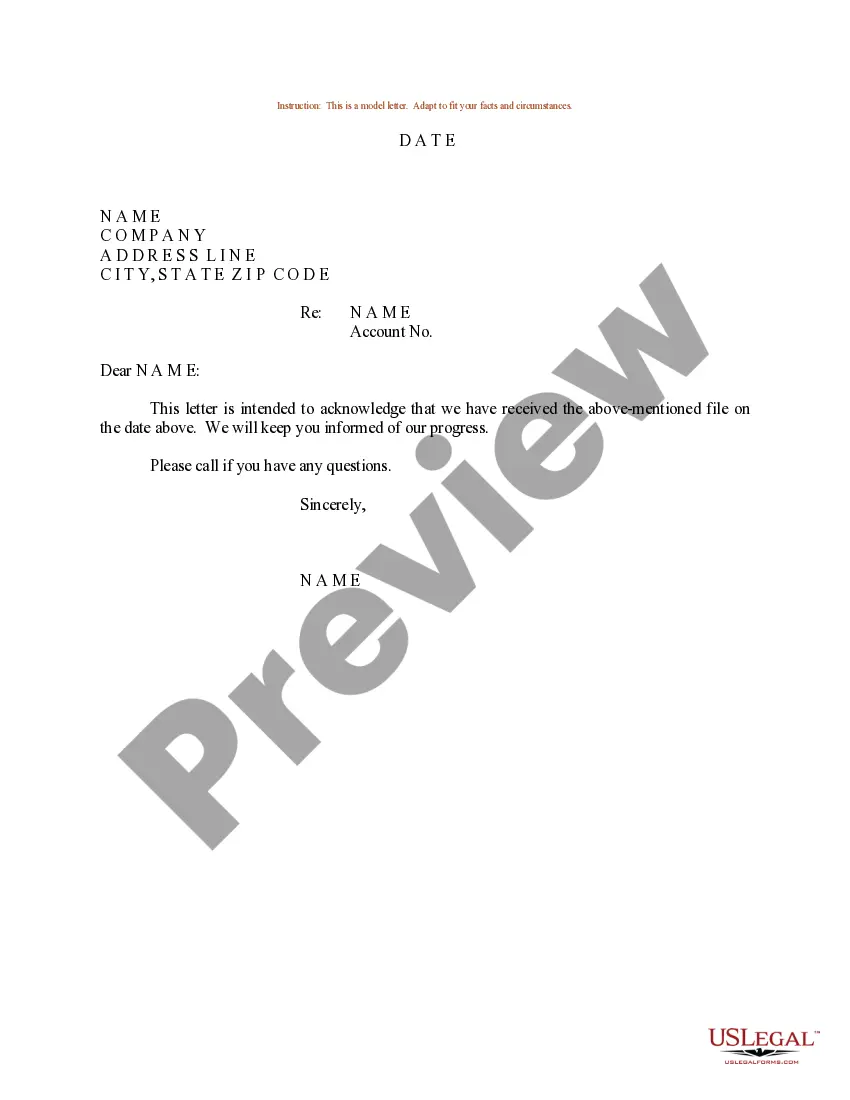
This letter is known as an acknowledgment letter. It can also be called an acknowledging receipt or a confirmation of receipt letter. An acknowledgment letter basically informs the sender that the received items are securely in your possession.
How to write an acknowledging receipt Begin with a professional letterhead or logo. You can begin by including the letterhead or logo of your employer. Include the acknowledgment statement. Sign the document. Describe what to do next. Add your contact information. Proofread and edit.
Your acknowledgment receipt should contain the names of the issuing party and the person receiving the document. A description, with the name of each document being issued, date of the issue and the purpose of the document should be clear.
There are three types of General District Court cases: Civil cases for lawsuits involving up to $25,000. Criminal cases in which a person is charged with a misdemeanor. Traffic cases in which a person is charged with a traffic offense, usually an infraction, which is generally punishable by a fine of not more than $250 ...
Outside of the Supreme Court, always use “The Honorable (full name)” in your correspondence. STATE COURTS Note: States may vary on titles of judges.
CCRFOIA@fairfaxcounty - Strictly for FOIA use. Any non-FOIA related communications will not be responded to from this account.
Each division in the Fairfax County General District Court accepts certain types of documents for email filing at our public email address, GDCMail@fairfaxcounty. The goal is to provide a more convenient alternative to in-person filing for all users of the Court for certain types of filings.
You can email us at GDCMail@fairfaxcounty.

