Account Estate Bank Withdrawal In Wayne
Description




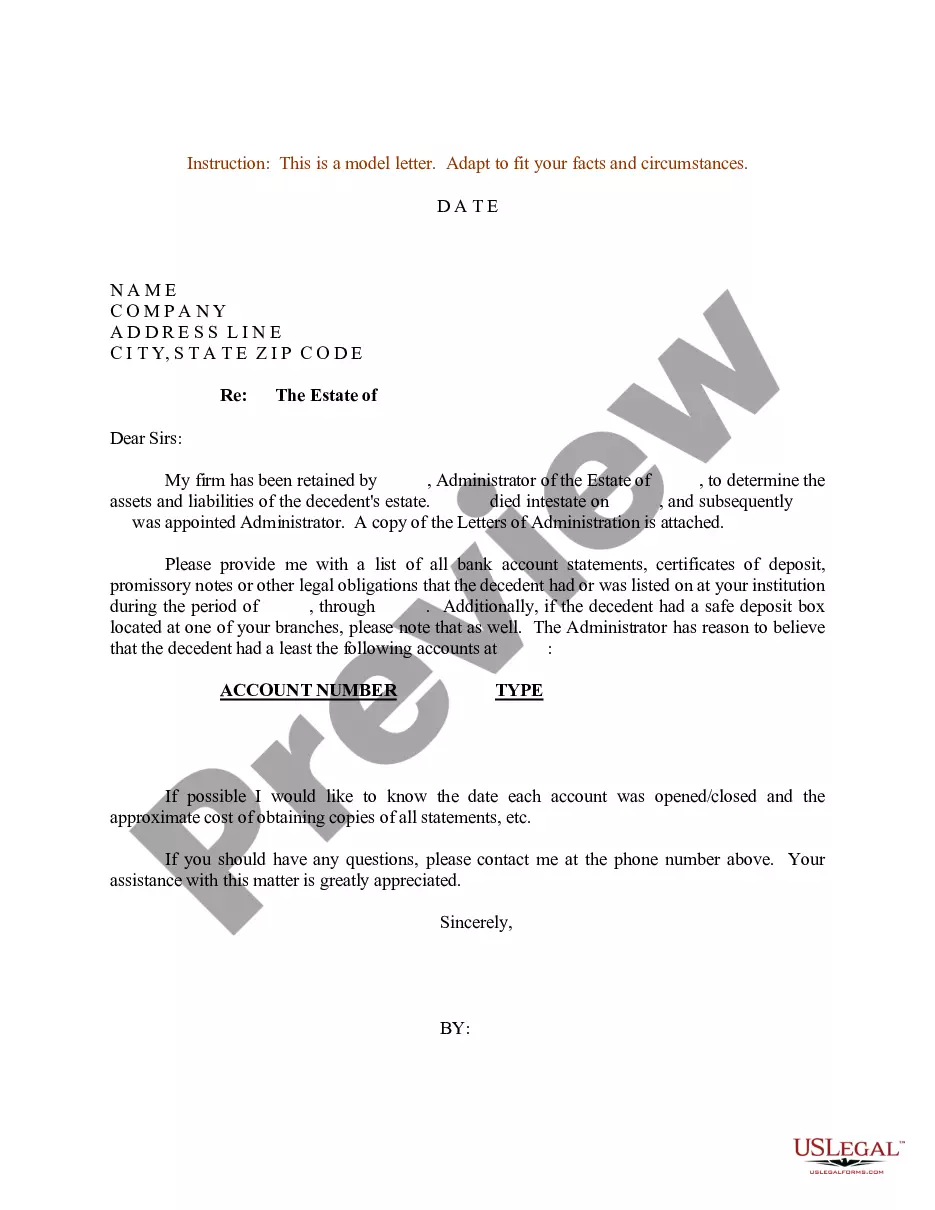
Get your form ready online
Our built-in tools help you complete, sign, share, and store your documents in one place.
Make edits, fill in missing information, and update formatting in US Legal Forms—just like you would in MS Word.
Download a copy, print it, send it by email, or mail it via USPS—whatever works best for your next step.
Sign and collect signatures with our SignNow integration. Send to multiple recipients, set reminders, and more. Go Premium to unlock E-Sign.
If this form requires notarization, complete it online through a secure video call—no need to meet a notary in person or wait for an appointment.
We protect your documents and personal data by following strict security and privacy standards.

Make edits, fill in missing information, and update formatting in US Legal Forms—just like you would in MS Word.

Download a copy, print it, send it by email, or mail it via USPS—whatever works best for your next step.

Sign and collect signatures with our SignNow integration. Send to multiple recipients, set reminders, and more. Go Premium to unlock E-Sign.

If this form requires notarization, complete it online through a secure video call—no need to meet a notary in person or wait for an appointment.

We protect your documents and personal data by following strict security and privacy standards.
Looking for another form?




Form popularity
FAQ
As a community bank, Wayne Bank is an integral part of both the local community and economy. Each year, the Bank contributes to hundreds of organizations throughout Pennsylvania and New York and Bank employees are passionate about helping their communities through event participation and service to local charities.
Bottom Line. Beneficiaries are named people who take ownership of a financial account after you die. If you die without naming a beneficiary, your bank account will transfer through your will and through probate law, as appropriate.
The bank account will be frozen until the probate process is complete.
After someone dies, a sole-owned bank account may go to a named beneficiary or be handled by the executor of the estate. Joint accounts typically have automatic rights of survivorship, but it's still important to check with your bank to ensure smooth access to funds.
The Federal Deposit Insurance Corp. continues to insure accounts for six months after an account holder dies, allowing the surviving account holder to redistribute funds to other accounts to keep them insured. Once the period elapses, FDIC coverage stops.
Understanding the Deceased Estate 3-Year Rule The core premise of the 3-year rule is that if the deceased's estate is not claimed or administered within three years of their death, the state or governing body may step in and take control of the distribution and management of the assets.
Estate of the Late account An executor/s will need to provide the last Will & Testament, a Grant of Probate or Letters of Administration, as well as meet our Identification Requirements, to open this account. Please contact your local branch for any enquiries about new or existing 'Estate of the Late' accounts.
The best banks to open an estate account Schwab One Estate Account. Fidelity Estate Account. Estate Services. USAA Survivor Relations.
To open an executor account, banks will require that applicants have a Grant of Representation or Grant of Probate if they are in England or Wales, or a Grant of Confirmation if they are in Scotland. A Grant of Representation may be applied for by the individual or through a solicitor.
