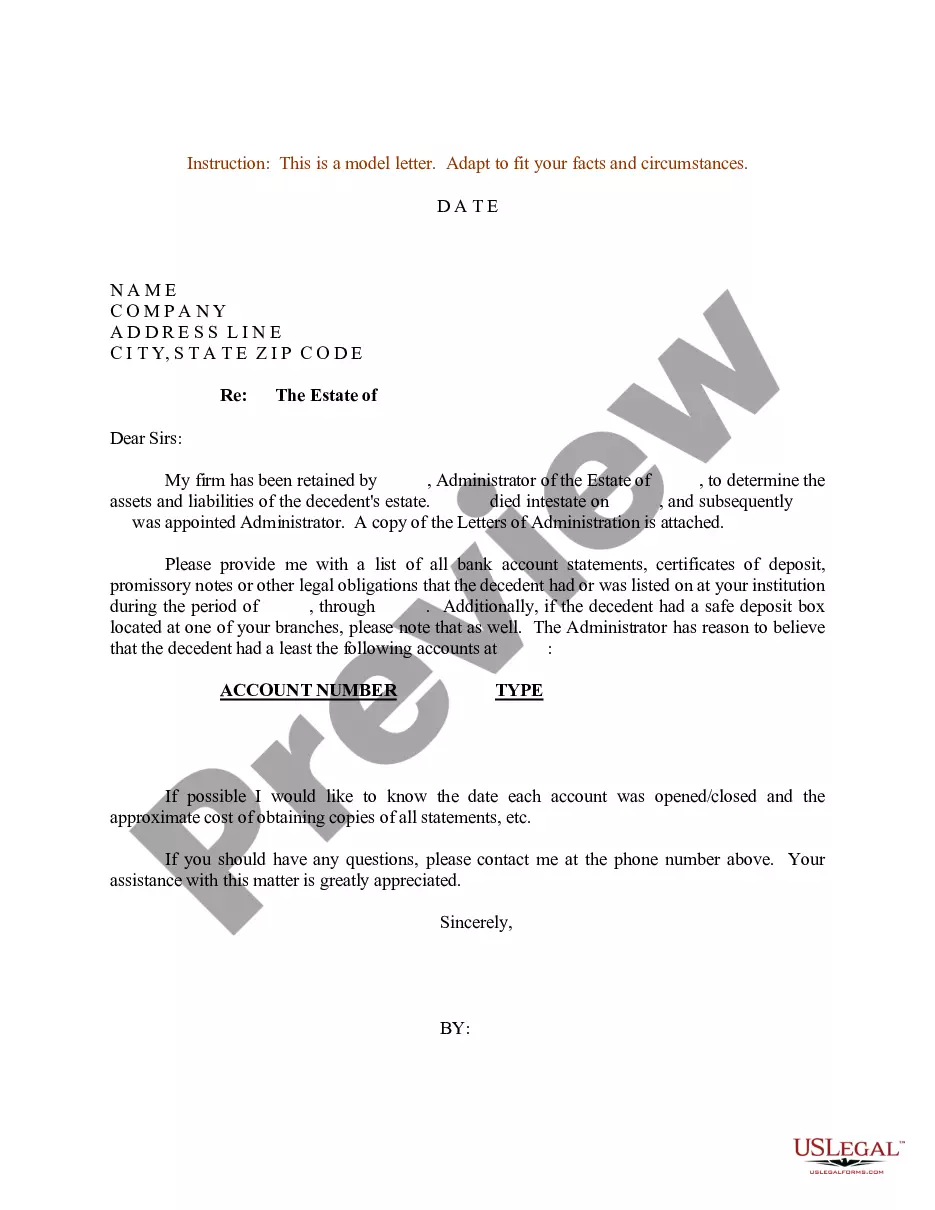
Sample Letter To Close Trust Account For Deceased Person In Texas
Description



Get your form ready online
Our built-in tools help you complete, sign, share, and store your documents in one place.
Make edits, fill in missing information, and update formatting in US Legal Forms—just like you would in MS Word.
Download a copy, print it, send it by email, or mail it via USPS—whatever works best for your next step.
Sign and collect signatures with our SignNow integration. Send to multiple recipients, set reminders, and more. Go Premium to unlock E-Sign.
If this form requires notarization, complete it online through a secure video call—no need to meet a notary in person or wait for an appointment.
We protect your documents and personal data by following strict security and privacy standards.

Make edits, fill in missing information, and update formatting in US Legal Forms—just like you would in MS Word.

Download a copy, print it, send it by email, or mail it via USPS—whatever works best for your next step.

Sign and collect signatures with our SignNow integration. Send to multiple recipients, set reminders, and more. Go Premium to unlock E-Sign.

If this form requires notarization, complete it online through a secure video call—no need to meet a notary in person or wait for an appointment.

We protect your documents and personal data by following strict security and privacy standards.
Looking for another form?



Form popularity
FAQ
A good letter of instruction should contain the following information: A complete list of all assets. The whereabouts of any tangible assets that are not readily accessible. Necessary information about all liquid assets, including bank, brokerage, retirement, and investment accounts.
Steps to Closing Out a Trust After Death Step 1: Notify Beneficiaries and Creditors. The first task for the successor trustee is to notify both the beneficiaries and creditors. Step 2: Inventory and Value Assets. Step 3: Settle Debts and Taxes. Step 4: Distribute Assets to Beneficiaries. Step 5: Dissolve the Trust.
Seeking Legal Counsel The trustee should have a trust lawyer to guide them through how to dissolve a trust after the grantor's death. Your trust lawyer can help to identify any dissolving trust tax implications. A trust lawyer can help you understand can a trustee revoke a revocable trust.
The dissolution document should be signed, dated, witnessed and notarized. If the trust being dissolved was registered with a specific court, the dissolution document should be filed with the same court. Otherwise, you can just attach it to your trust papers and store it with your will or new trust documents.
In terms of content, an Estate distribution letter should include: the deceased's personal details; a detailed and complete list of all assets and liabilities; the Beneficiary names and the details of their respective inheritances; any details on debt settlement and creditor communication;
There are four main approaches: Vesting. The easiest way to dissolve a trust is to have a vesting date. Revoked. A trust may contain a provision which allows for the trustee or settlor to revoke the deed. Consent. In some instances, a trust can be dissolved upon the consent of the beneficiaries. Court Termination.
To revoke and/or terminate an irrevocable trust, the settlor and all beneficiaries must express consent. If one party seeks modification of the trust against the interest of another party, the petition will need to be brought before a court to decide.
To close a trust after death, the successor trustee must settle and terminate the trust by diligently distributing its assets as per the trust's terms. This involves inventorying assets, paying debts, and ensuring beneficiaries receive their rightful shares, effectively bringing the trust to a timely conclusion.
After the grantor of an irrevocable trust dies, the trust continues to exist until the successor trustee distributes all the assets. The successor trustee is also responsible for managing the assets left to a minor, with the assets going into the child's sub-trust.
