Sample Letter To Close Trustee Accounting For Beneficiary In San Bernardino
Description




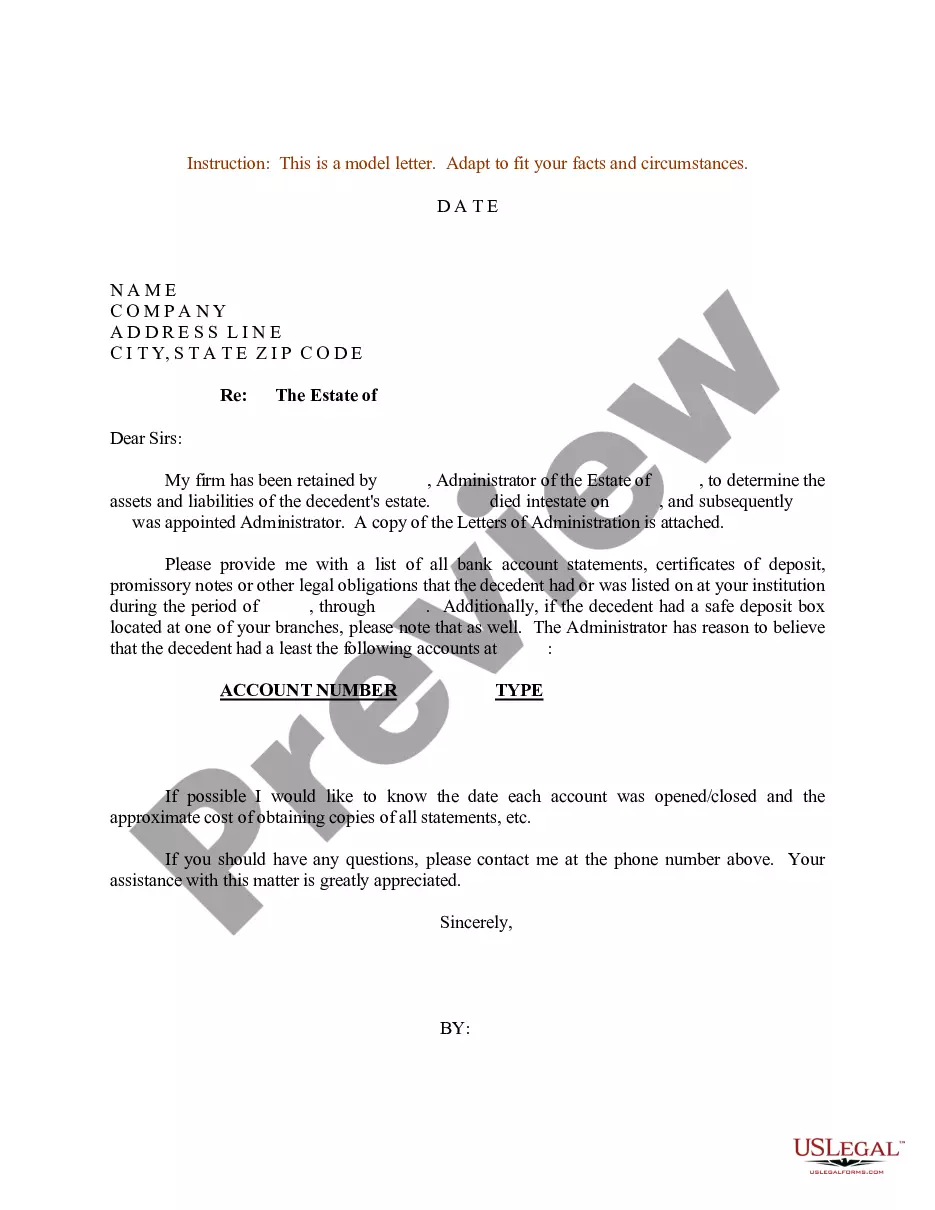
Get your form ready online
Our built-in tools help you complete, sign, share, and store your documents in one place.
Make edits, fill in missing information, and update formatting in US Legal Forms—just like you would in MS Word.
Download a copy, print it, send it by email, or mail it via USPS—whatever works best for your next step.
Sign and collect signatures with our SignNow integration. Send to multiple recipients, set reminders, and more. Go Premium to unlock E-Sign.
If this form requires notarization, complete it online through a secure video call—no need to meet a notary in person or wait for an appointment.
We protect your documents and personal data by following strict security and privacy standards.

Make edits, fill in missing information, and update formatting in US Legal Forms—just like you would in MS Word.

Download a copy, print it, send it by email, or mail it via USPS—whatever works best for your next step.

Sign and collect signatures with our SignNow integration. Send to multiple recipients, set reminders, and more. Go Premium to unlock E-Sign.

If this form requires notarization, complete it online through a secure video call—no need to meet a notary in person or wait for an appointment.

We protect your documents and personal data by following strict security and privacy standards.
Looking for another form?


Form popularity
FAQ
Here are some things to consider when drafting a letter to your executor or trustee. Your thoughts about wealth. Describe key players in the family. What matters to you? ... Give your trustee the power to make decisions, even when that means saying no.
Can a Trustee Change the Beneficiary? Trustees generally do not have the power to change the beneficiary of a trust. The right to add and remove beneficiaries is a power reserved for the settlor of the trust; when the grantor dies, their trust will usually become irrevocable.
Here are some things to consider when drafting a letter to your executor or trustee. Your thoughts about wealth. Describe key players in the family. What matters to you? ... Give your trustee the power to make decisions, even when that means saying no.
A petition for removal of a trustee can be filed by either a co-trustee or a beneficiary. The petition may also seek financial damages from the trustee. Sufficient evidence needs to be submitted to show the court that the trustee violated the terms of the trust agreement or their fiduciary duty.
Trustee letters are documents written by the trustee of a trust that provide important information to beneficiaries and other interested parties. Trustee letters are an important tool for communicating with beneficiaries and facilitating transparency in the administration of a trust.
You need to highlight your professional skills and expertise and show what you will bring to the board. A trustee board should ideally have a mix of different skills, mindsets and experience to show diversity and ensure balance. You need to show in your cover letter what skills you have.
In most cases, a trustee cannot remove a beneficiary from a trust. An irrevocable trust is intended to be unchangeable, ensuring that the beneficiaries of the trust receive what the creators of the trust intended.
A trustee can be an individual, such as a family member, friend, or trusted advisor (e.g., lawyer or accountant) or an institution, such as a bank or trust company. Each type of trustee has strengths and weaknesses which should be carefully weighed by the donor (see below).
Trustee's Discretionary Powers: The trustee may have the authority to remove a beneficiary, but this must be clearly stated in the trust deed. If the deed allows, the trustee can remove a beneficiary from a trust without their consent, provided they follow the process outlined in the deed.
