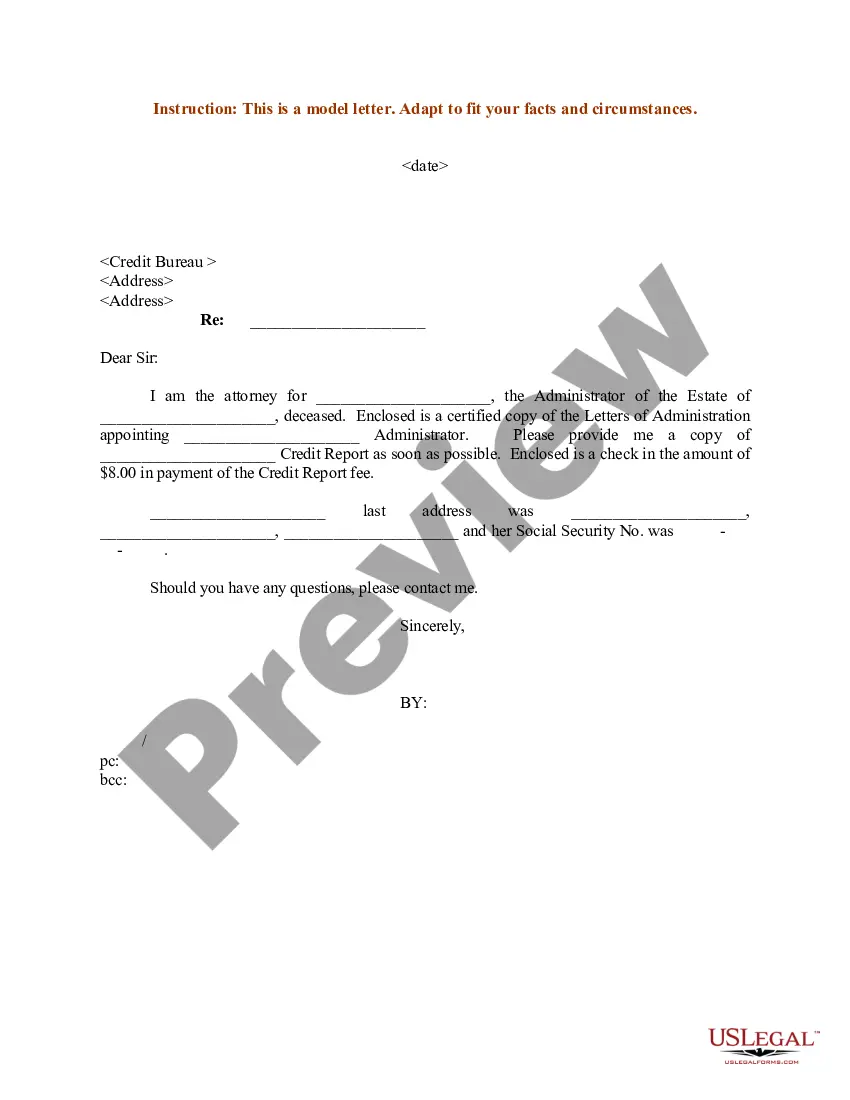
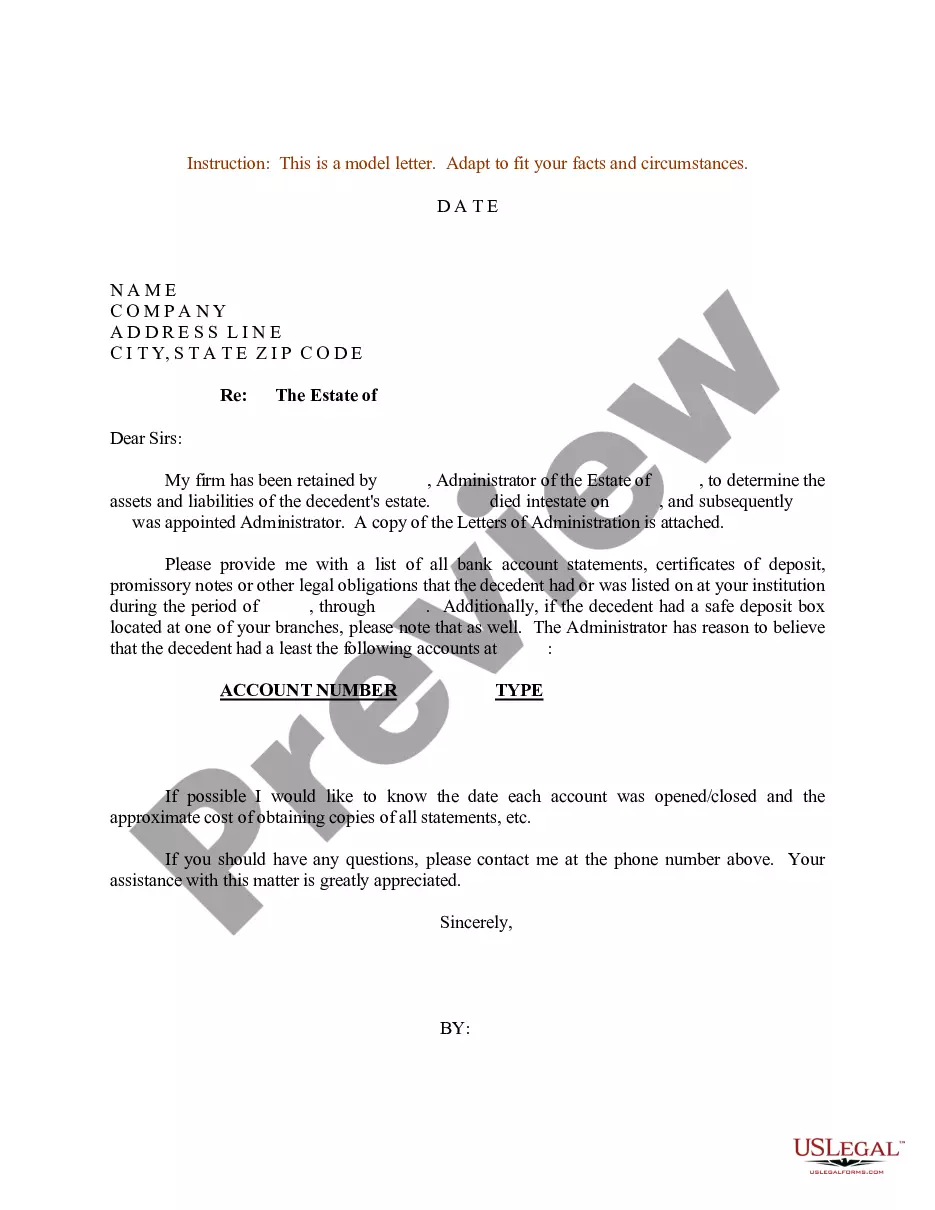
Sample Letter To Close Trust Account For Deceased Person In Queens
Description



Get your form ready online
Our built-in tools help you complete, sign, share, and store your documents in one place.
Make edits, fill in missing information, and update formatting in US Legal Forms—just like you would in MS Word.
Download a copy, print it, send it by email, or mail it via USPS—whatever works best for your next step.
Sign and collect signatures with our SignNow integration. Send to multiple recipients, set reminders, and more. Go Premium to unlock E-Sign.
If this form requires notarization, complete it online through a secure video call—no need to meet a notary in person or wait for an appointment.
We protect your documents and personal data by following strict security and privacy standards.

Make edits, fill in missing information, and update formatting in US Legal Forms—just like you would in MS Word.

Download a copy, print it, send it by email, or mail it via USPS—whatever works best for your next step.

Sign and collect signatures with our SignNow integration. Send to multiple recipients, set reminders, and more. Go Premium to unlock E-Sign.

If this form requires notarization, complete it online through a secure video call—no need to meet a notary in person or wait for an appointment.

We protect your documents and personal data by following strict security and privacy standards.
Looking for another form?


Form popularity
FAQ
Typically 3 months. In the best-case scenario, getting your letters testamentary will take just 2 months.
How do I get a letter of testamentary in California? Obtain the deceased person's will and death certificate. Submit a Petition for Probate in the Superior Court in the county where the decedent live by filing Form DE-111, a copy of the will, and your personal identification.
How to obtain Letters of Testamentary in New York. To obtain a letter of testamentary in New York, you will first need to file a petition for probate to the Surrogate's Court in the county where the deceased resided.
A probate court can only give letters of testamentary to the executor of a will. In New York, a person seeking letters of testamentary as an executor must prove their eligibility as governed by the Surrogate's Court Procedure Act.
Typically, the process of obtaining letters testamentary can take several weeks to several months, depending on the circumstances. The executor or personal representative must file a petition with the probate court, which will schedule a hearing to appoint the executor and issue the legal document.
The process of obtaining letters testamentary from the New York Surrogate's Court can take from a couple of months, if no issues are contested, to a year or longer, if a family member or potential beneficiary challenges the validity of the will.
The Surrogate's Court hears cases involving the affairs of decedents, including the probate of wills and the administration of estates.
Clients are often shocked to learn that it may take between 8 months and 2 years before a probate proceeding is completed from start to finish in New York State. Having a general knowledge of the factors that contribute to the timeline may be beneficial.
Probate is the only legal way to transfer the assets of someone who has died. Without probate, titled assets like homes and cars remain in the deceased's name indefinitely. You won't be able to sell them or keep registrations current because you won't have access to the individual's signature and consent.
Getting started with probate in New York New York does not have a deadline for this, as other states do, but it is helpful to take this action as soon as possible to begin the process, especially if you will be going through full probate.
