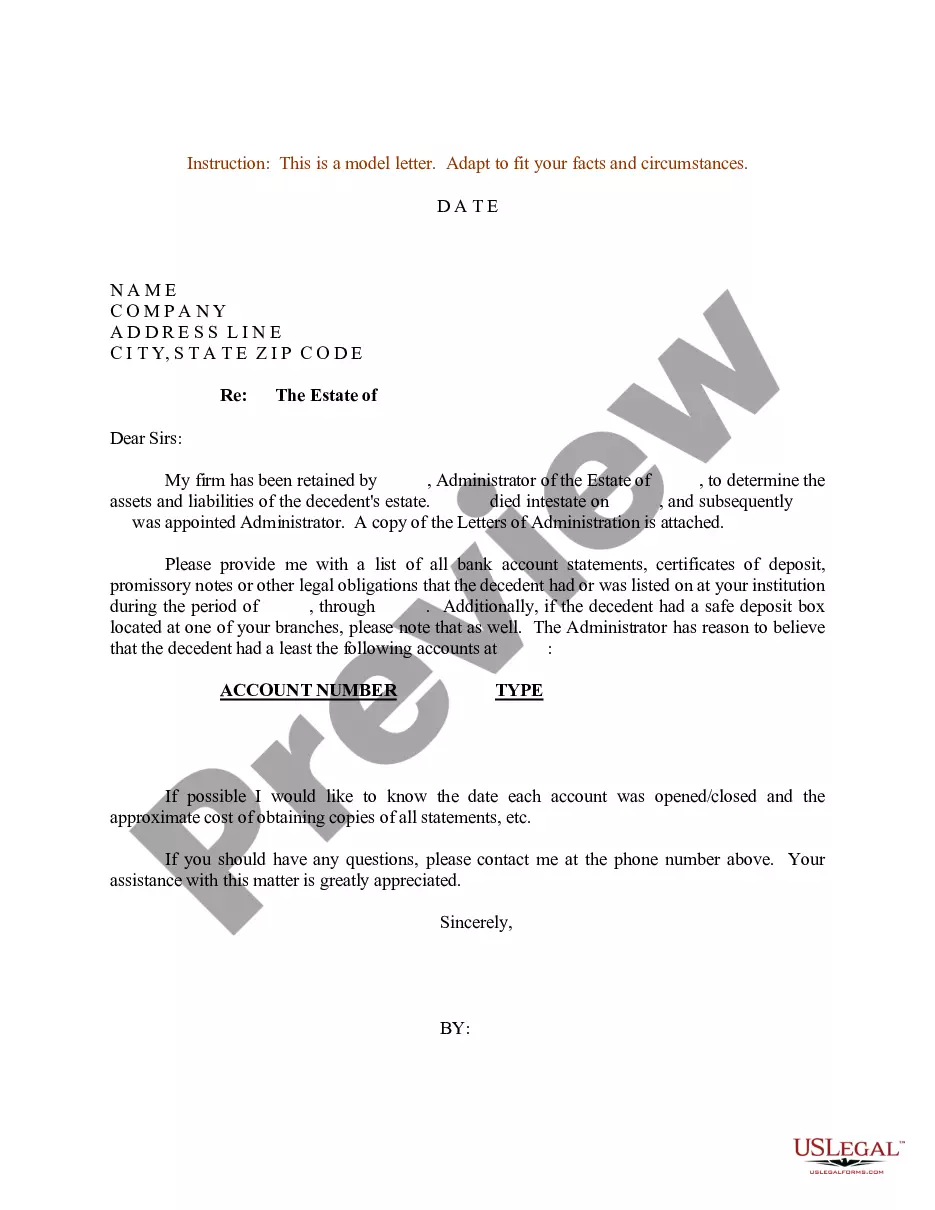
Decedent Account Bank Forgot In Phoenix
Description




Get your form ready online
Our built-in tools help you complete, sign, share, and store your documents in one place.
Make edits, fill in missing information, and update formatting in US Legal Forms—just like you would in MS Word.
Download a copy, print it, send it by email, or mail it via USPS—whatever works best for your next step.
Sign and collect signatures with our SignNow integration. Send to multiple recipients, set reminders, and more. Go Premium to unlock E-Sign.
If this form requires notarization, complete it online through a secure video call—no need to meet a notary in person or wait for an appointment.
We protect your documents and personal data by following strict security and privacy standards.

Make edits, fill in missing information, and update formatting in US Legal Forms—just like you would in MS Word.

Download a copy, print it, send it by email, or mail it via USPS—whatever works best for your next step.

Sign and collect signatures with our SignNow integration. Send to multiple recipients, set reminders, and more. Go Premium to unlock E-Sign.

If this form requires notarization, complete it online through a secure video call—no need to meet a notary in person or wait for an appointment.

We protect your documents and personal data by following strict security and privacy standards.
Looking for another form?







Form popularity
FAQ
If you're not sure which banks the deceased person had accounts with, you can search for unclaimed property records in the state where they lived. The state treasurer's office typically maintains these records, which may include funds from closed bank accounts.
7 Steps to Finding a Deceased Person's Assets #1 Search Your Loved One's House. #2 Look Through Their Computer. #3 Ask the Decedent's Friends and Family Members. #4 Contact Financial Institutions. #5 Talk to Your Loved One's Employer. #6 Reach Out to the Local Probate Court. #7 Contact Their Estate Planning Attorney.
How to Find the Bank Accounts of a Deceased Person Search Their Home and Mail. Visit Banks in Their Area. Call Their Employer. Search Online Databases. Consult With an Experienced Probate Attorney.
Since payable-on-death accounts (PODs) and transfer-on-death accounts (TODs) must designate a beneficiary, they are not subject to the California probate process. The payable-on-death beneficiary can claim the bank account proceeds by going to the bank with a copy of the death certificate and proof of identification.
By having the names of any pension companies and banks, you can then use a service such as the Death Notification Service, or you could contact the companies directly to let them know about the death and request details of any pension pots/ bank balances.
A deceased person's bank account is inaccessible unless you're a joint owner, a beneficiary of the account or the estate executor. Because joint ownership and beneficiaries can make a difference in how your bank account funds are distributed, planning is key.
How to Find the Bank Accounts of a Deceased Person Search Their Home and Mail. Visit Banks in Their Area. Call Their Employer. Search Online Databases. Consult With an Experienced Probate Attorney.
If the decedent died without a will, it may be necessary for you to do some detective work to track down their bank accounts. Search Their Home and Mail. Visit Banks in Their Area. Call Their Employer. Search Online Databases. Consult With an Experienced Probate Attorney.
