Account Estate Bank With In Nassau
Description




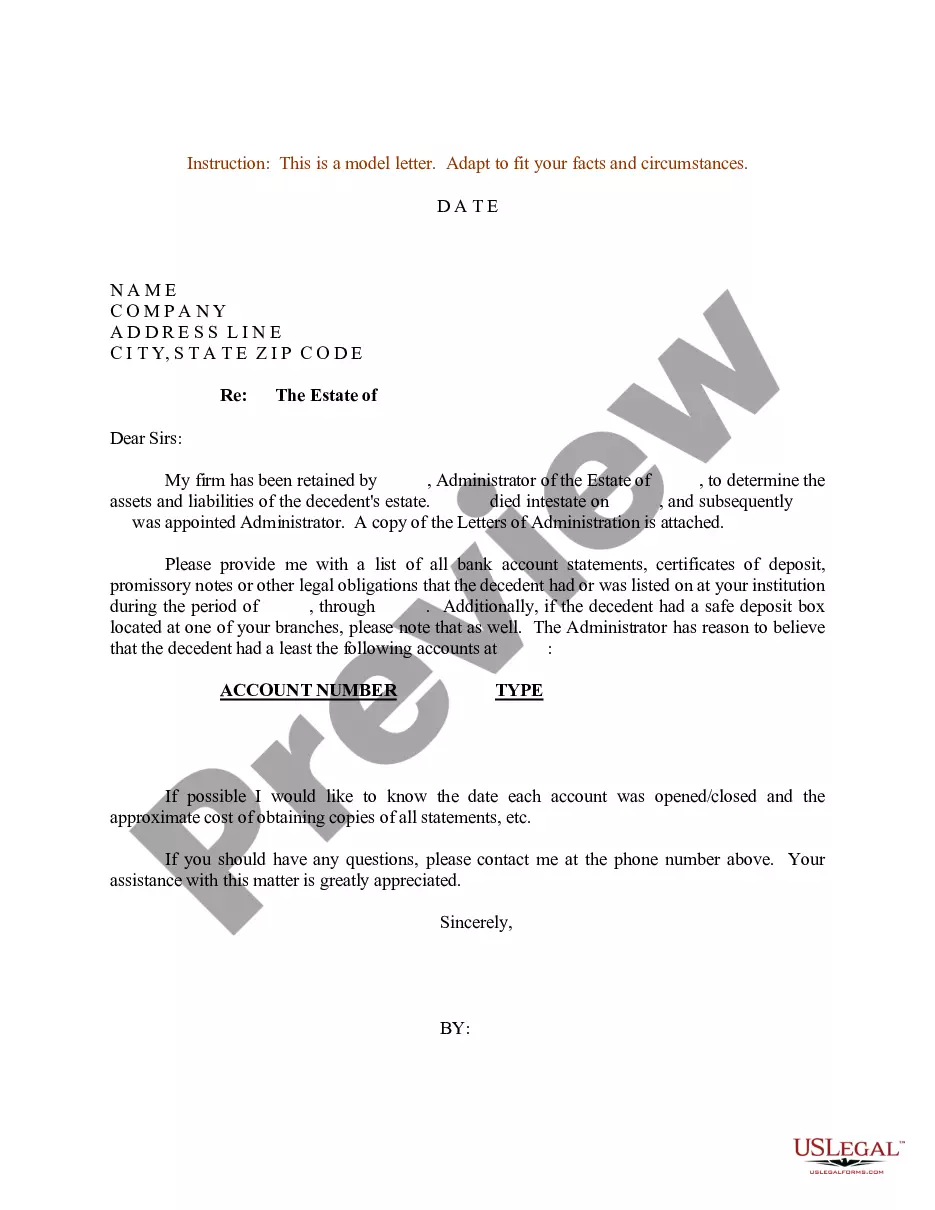
Get your form ready online
Our built-in tools help you complete, sign, share, and store your documents in one place.
Make edits, fill in missing information, and update formatting in US Legal Forms—just like you would in MS Word.
Download a copy, print it, send it by email, or mail it via USPS—whatever works best for your next step.
Sign and collect signatures with our SignNow integration. Send to multiple recipients, set reminders, and more. Go Premium to unlock E-Sign.
If this form requires notarization, complete it online through a secure video call—no need to meet a notary in person or wait for an appointment.
We protect your documents and personal data by following strict security and privacy standards.

Make edits, fill in missing information, and update formatting in US Legal Forms—just like you would in MS Word.

Download a copy, print it, send it by email, or mail it via USPS—whatever works best for your next step.

Sign and collect signatures with our SignNow integration. Send to multiple recipients, set reminders, and more. Go Premium to unlock E-Sign.

If this form requires notarization, complete it online through a secure video call—no need to meet a notary in person or wait for an appointment.

We protect your documents and personal data by following strict security and privacy standards.
Looking for another form?

Form popularity
FAQ
Something that often catches a newly appointed personal representative off guard is the requirement to open and manage an estate banking account. Typically, the account is a basic checking account and is often named “Estate of Deceased's Name, Executor's Name, Executor”.
To open an estate bank account, the fiduciary will need the EIN, certified letters testamentary (or letters of administration), and a certified copy of the death certificate. Some bank institutions will accept a regular copy of the death certificate.
Something that often catches a newly appointed personal representative off guard is the requirement to open and manage an estate banking account. Typically, the account is a basic checking account and is often named “Estate of Deceased's Name, Executor's Name, Executor”.
Once you've been appointed executor or personal representative by the probate court, you'll probably want to open a bank account in the name of the estate. Usually, an account for an estate is registered in this or a similar way: "Estate of Gerald S. Smith, Deceased, Pamela S. Smith, executor."
How Do I Prepare an Accounting? Preparing an estate accounting involves several steps: Gather Financial Documents: Collect all relevant financial records, including bank statements, receipts, and invoices. Track Transactions: Record all transactions related to the estate, including income, expenses, and distributions.
Simple estates might be settled within six months. Complex estates, those with a lot of assets or assets that are complex or hard to value can take several years to settle. If an estate tax return is required, the estate might not be closed until the IRS indicates its acceptance of the estate tax return.
To officially become an executor, you must petition the Surrogate's Court for letters of testamentary. This section will guide you through preparing the necessary documents, including the death certificate and the original will, and what to expect during the court proceedings.
State laws typically govern the specific timeframe for keeping an estate open after death, but the average is about two years. The duration an estate remains open depends on how fast it goes through the probate process, how quickly the executor can fulfill their responsibilities, and the complexity of the estate.
CLOSING THE ESTATE: FORM 207.42 must be prepared and executed by the fiduciary and the attorney and filed after 7 months or by the end of 2 years from the date of fiduciary appointment. RELEASES from all beneficiaries of the estate must be executed and filed at this time, if not already filed.
