Letter To Close Account After Death Without Will In King
Description




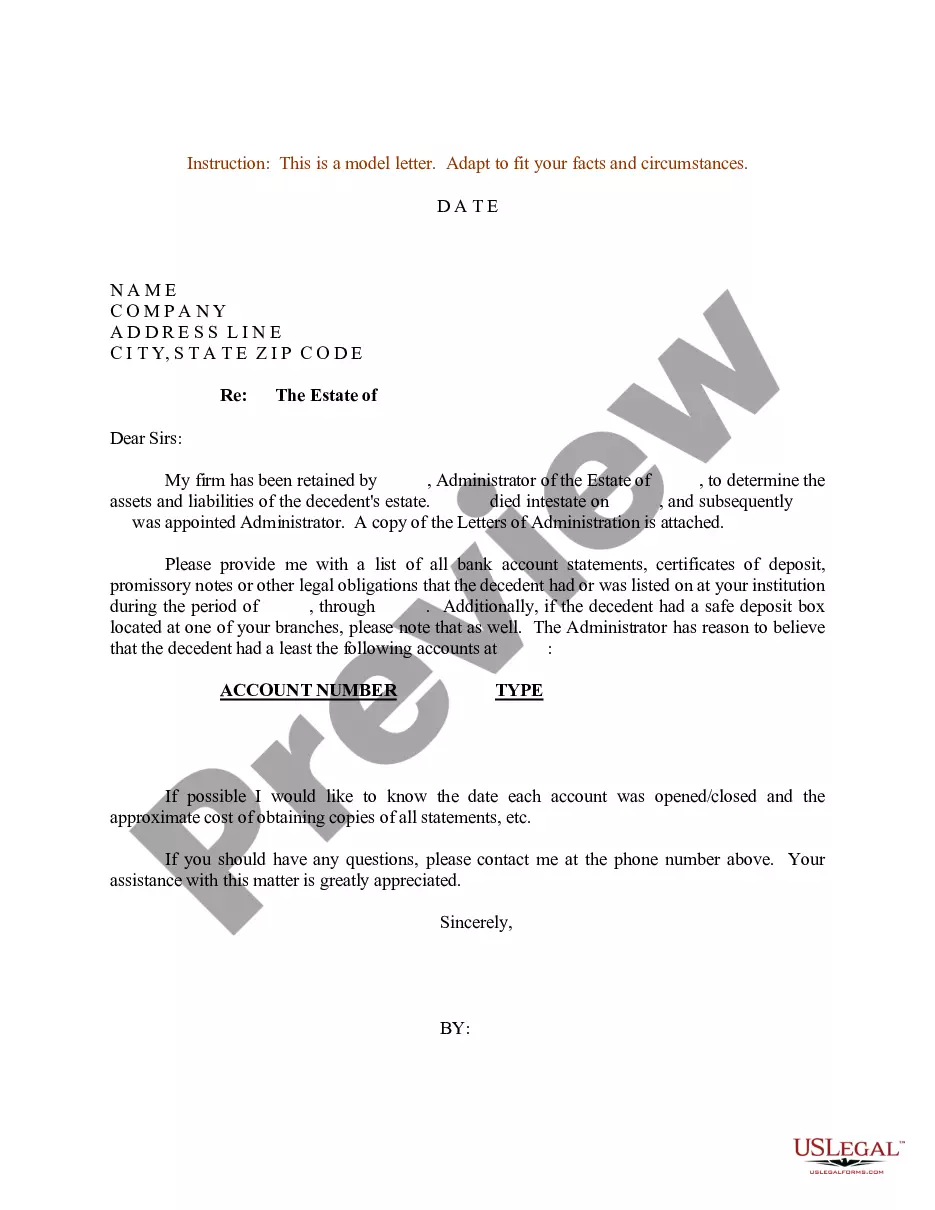
Get your form ready online
Our built-in tools help you complete, sign, share, and store your documents in one place.
Make edits, fill in missing information, and update formatting in US Legal Forms—just like you would in MS Word.
Download a copy, print it, send it by email, or mail it via USPS—whatever works best for your next step.
Sign and collect signatures with our SignNow integration. Send to multiple recipients, set reminders, and more. Go Premium to unlock E-Sign.
If this form requires notarization, complete it online through a secure video call—no need to meet a notary in person or wait for an appointment.
We protect your documents and personal data by following strict security and privacy standards.

Make edits, fill in missing information, and update formatting in US Legal Forms—just like you would in MS Word.

Download a copy, print it, send it by email, or mail it via USPS—whatever works best for your next step.

Sign and collect signatures with our SignNow integration. Send to multiple recipients, set reminders, and more. Go Premium to unlock E-Sign.

If this form requires notarization, complete it online through a secure video call—no need to meet a notary in person or wait for an appointment.

We protect your documents and personal data by following strict security and privacy standards.
Looking for another form?




Form popularity
FAQ
The terms “administrator and “executor” are often used interchangeably, but there's a subtle difference. An administrator can refer to anyone appointed to manage the affairs of a deceased person. An executor is a specific type of administrator named in a person's will to manage their estate after they pass away.
Depending on the amounts involved, it's possible to close an account without probate (the legal right to deal with someone's estate when they die). Each financial institution has its own limit and so you need to contact them to see what their process is.
How To File for Executor of Estate Without Will? Find out your place in line. Obtain waivers from other family members. Contact the court. File your administration petition. Go to the probate hearing. Get a probate bond.
If there's no will or no executor named in the will: If there is no will or the person who should handle the estate is not named in the will, a relative or legal representative must request permission from the probate court to close the account.
File an application with the probate court to be appointed administrator. In most cases, you will need to be at least 18 years of age, a U.S. citizen, and not have a felony record. Attend a hearing at which the probate judge reviews your application.
Respected Sir/Madam, I am writing to you with a heavy heart to inform you of the demise of my husband, Mr. Rajeev Singh, who had a savings account in your esteemed bank. It is a difficult time for our family, and I need to settle his financial affairs.
Often this requires providing evidence such as birth certificates or marriage documents. What's more, you may need to provide proof that no will exists, which could take quite some time if all family members cannot be located quickly or if relatives disagree over who should apply for the letters.
Dependent on the jurisdiction, administrators hold the power to both sell and lease a decedent's real and personal property. For instance, a decedent may request the deed of their apartment building be transferred to their surviving spouse.
If there's no will or no executor named in the will: If there is no will or the person who should handle the estate is not named in the will, a relative or legal representative must request permission from the probate court to close the account.
