Sample Letter To Close Trust Account With Attorney In Florida
Description




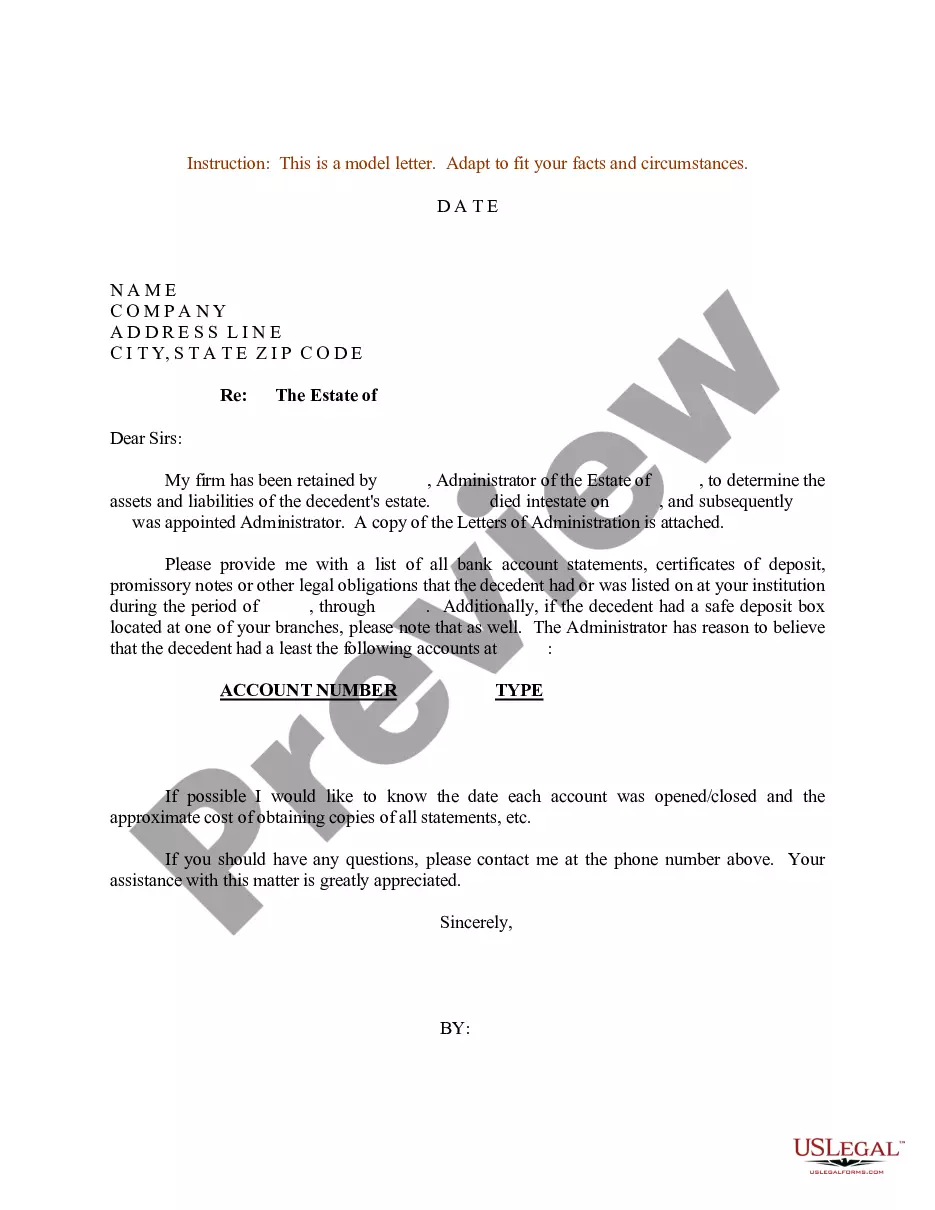
Get your form ready online
Our built-in tools help you complete, sign, share, and store your documents in one place.
Make edits, fill in missing information, and update formatting in US Legal Forms—just like you would in MS Word.
Download a copy, print it, send it by email, or mail it via USPS—whatever works best for your next step.
Sign and collect signatures with our SignNow integration. Send to multiple recipients, set reminders, and more. Go Premium to unlock E-Sign.
If this form requires notarization, complete it online through a secure video call—no need to meet a notary in person or wait for an appointment.
We protect your documents and personal data by following strict security and privacy standards.

Make edits, fill in missing information, and update formatting in US Legal Forms—just like you would in MS Word.

Download a copy, print it, send it by email, or mail it via USPS—whatever works best for your next step.

Sign and collect signatures with our SignNow integration. Send to multiple recipients, set reminders, and more. Go Premium to unlock E-Sign.

If this form requires notarization, complete it online through a secure video call—no need to meet a notary in person or wait for an appointment.

We protect your documents and personal data by following strict security and privacy standards.
Looking for another form?









Form popularity
FAQ
Interest earned on trust accounts generally must be transferred to a state body or used for public interest, not kept by the agent or office.
I am writing to officially notify you that I am terminating your services immediately. This is because {reason(s) for terminating the representation}. You do not have permission to send any demands on my behalf and I am advising the insurance company that you no longer represent me for this personal injury claim.
Unlike a traditional bank account, however, a trust account is set up by a grantor (someone with a legal title or ownership of the respective assets) on behalf of beneficiaries.
Almost all lawyers in private practice are required to maintain a firm trust account under their state's attorney trust account rules. The rules in various states might be written differently, but the concepts are the same.
If all else fails and you need to fire your attorney, you'll need to draft a termination letter. Here are some tips to keep in mind: Always terminate the relationship in writing. Even if you fire your attorney in a verbal exchange, you should follow up by sending a written termination letter.
A closing letter is a written communication to the client confirming the conclusion of legal services in connection with a specific engagement. In other words, a closing letter informs the client that the matter for which the lawyer was engaged to perform legal services has been completed.
1. Terminating Your Current Attorney: You can terminate your attorney-client relationship at any time. However, it is crucial to do so in writing. A formal letter stating your intention to end the relationship should be sent to your attorney. This letter serves as a record of your decision and its date. 2.
One of the teaching points is to end correspondence with “Yours sincerely” or a similar phrase when writing to someone by name. “Yours sincerely”, “Sincerely yours” and “Sincerely” are all possible. “Yours sincerely” is the most common. “Sincerely” is one often used by lawyers.
I am writing to officially notify you that I am terminating your services immediately. This is because {reason(s) for terminating the representation}. You do not have permission to send any demands on my behalf and I am advising the insurance company that you no longer represent me for this personal injury claim.
Writing a closing letter to your clients is more than just a formality; it's an essential step that ensures a positive, professional end to the attorney-client relationship. This letter wraps up the case or matter, provides key information clients need moving forward, and leaves the door open for future engagement.
