Decedent Account Bank With Or In Contra Costa
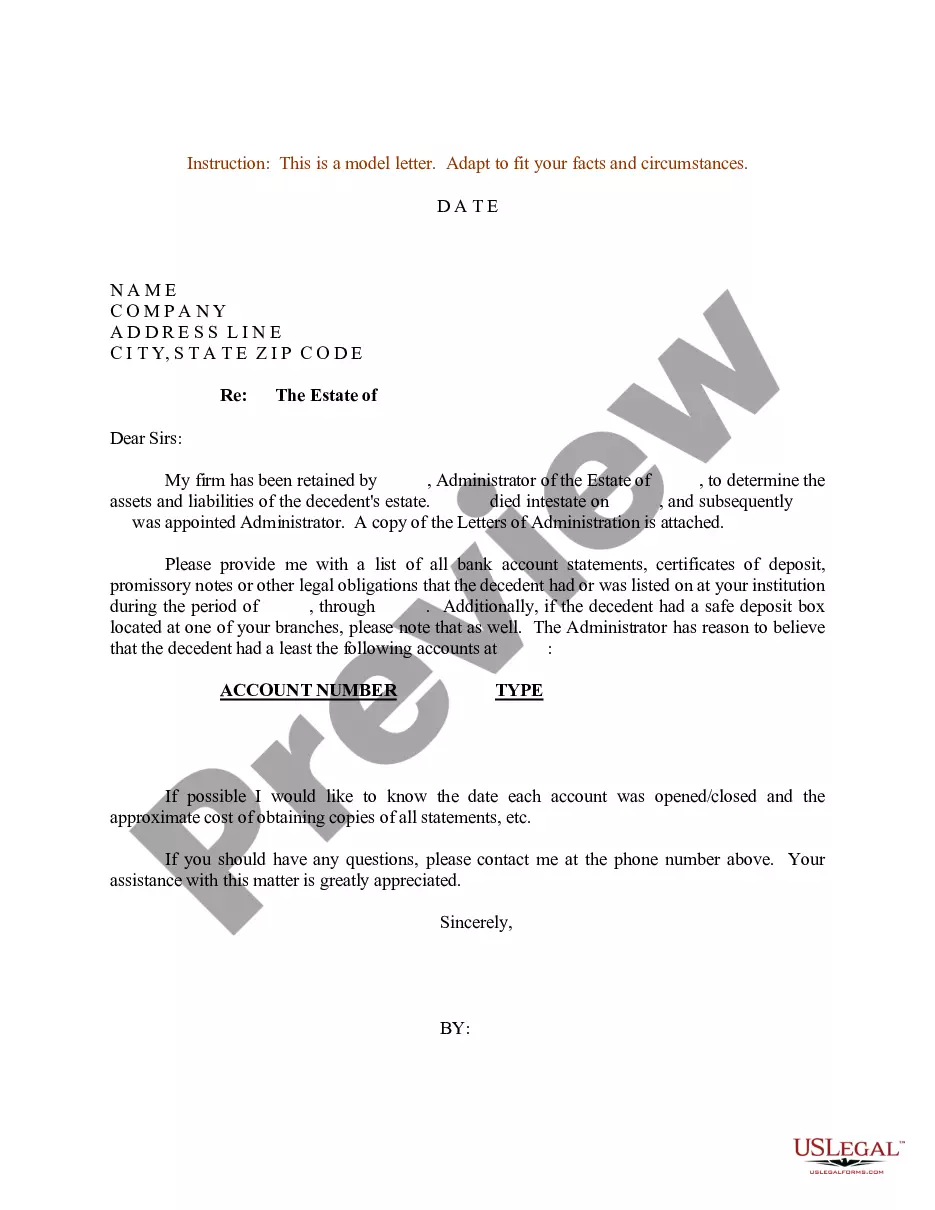
Description





Form popularity
FAQ
Any bank can handle an estate account. It isn't exactly rocket science, the main difference being the signer on the account was court-approved. Pick your favorite bank and go there.
When a person passes away, their assets are distributed in ance with either their estate plan or California's intestate succession laws. However, certain assets, including most bank accounts, can pass directly to beneficiaries, without the need for probate or the court's intervention.
Avoiding the probate process Joint tenancy ownership — If you have assets such as bank accounts or a home or vehicle, adding one or more names to the account or title will allow that individual (or those individuals) to take full ownership of the asset after your death without having to undergo probate.
How to open an estate account Step 1: Begin the probate process. The steps for beginning this process depend on the state in which the deceased person resided. Step 2: Obtain a tax ID number for the estate account. Step 3: Bring all required documents to the bank. Step 4: Open the estate account.
After becoming the personal representative of a family member's or friend's estate, one of the first steps of estate administration is establishing a separate checking account for the estate.
How to open an estate account Step 1: Begin the probate process. The steps for beginning this process depend on the state in which the deceased person resided. Step 2: Obtain a tax ID number for the estate account. Step 3: Bring all required documents to the bank. Step 4: Open the estate account.
If there's a will without a named executor, the court will issue a Letter of Testamentary; if there's no will, the court will issue a Letter of Administration. Present either of these letters to the bank along with the death certificate to close the account.
If the account becomes part of the owner's estate, the legally designated executor can collect the funds and place them into an estate account. The joint owner, beneficiary or executor must provide a copy of the death certificate when taking action on the owner's account.
Typically, a beneficiary can claim the proceeds from a payable-on-death account—sometimes called a “POD” account—by going to the bank with a death certificate and proof of identification.
How to access online assets Request certified copies of the death certificate. Contact the state's office or the county clerk where the person died for records. Check for access rules. Contact the company or service. Gather other files and identification. Obtain a letter of testamentary.
