1031 Exchange Agreement Form With United States In Massachusetts
Description

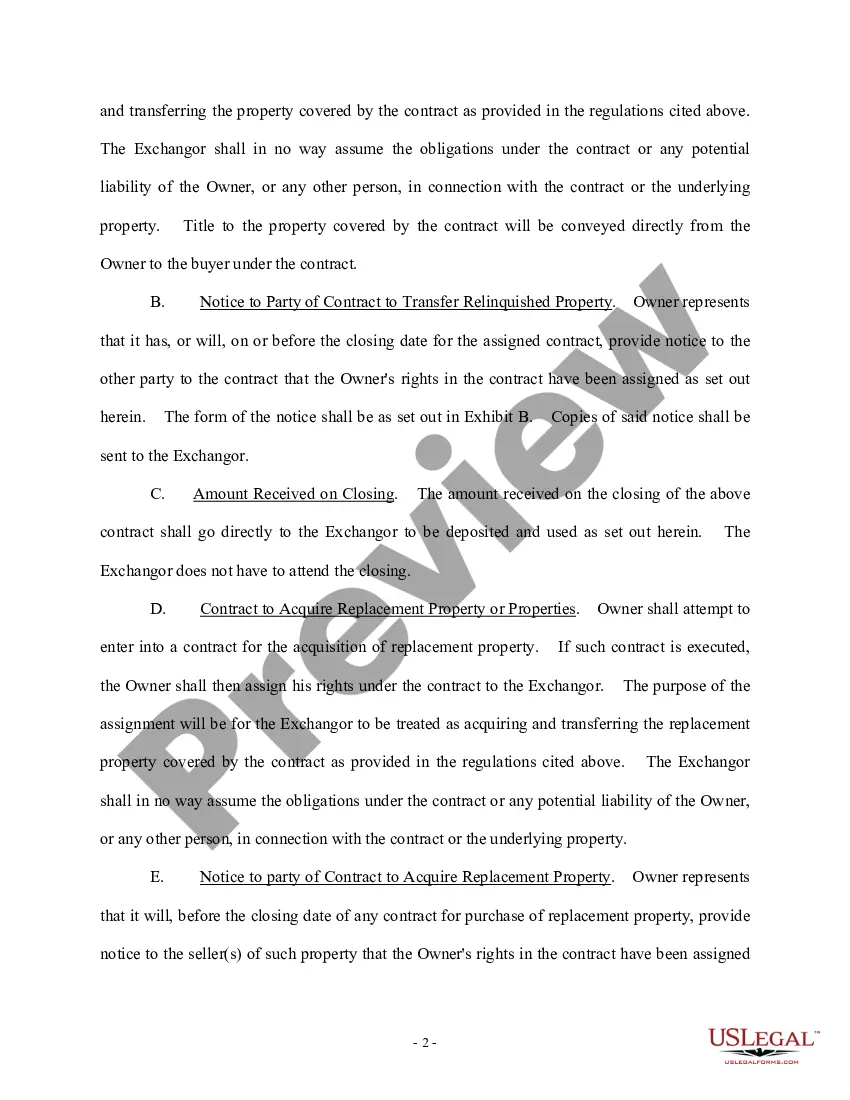
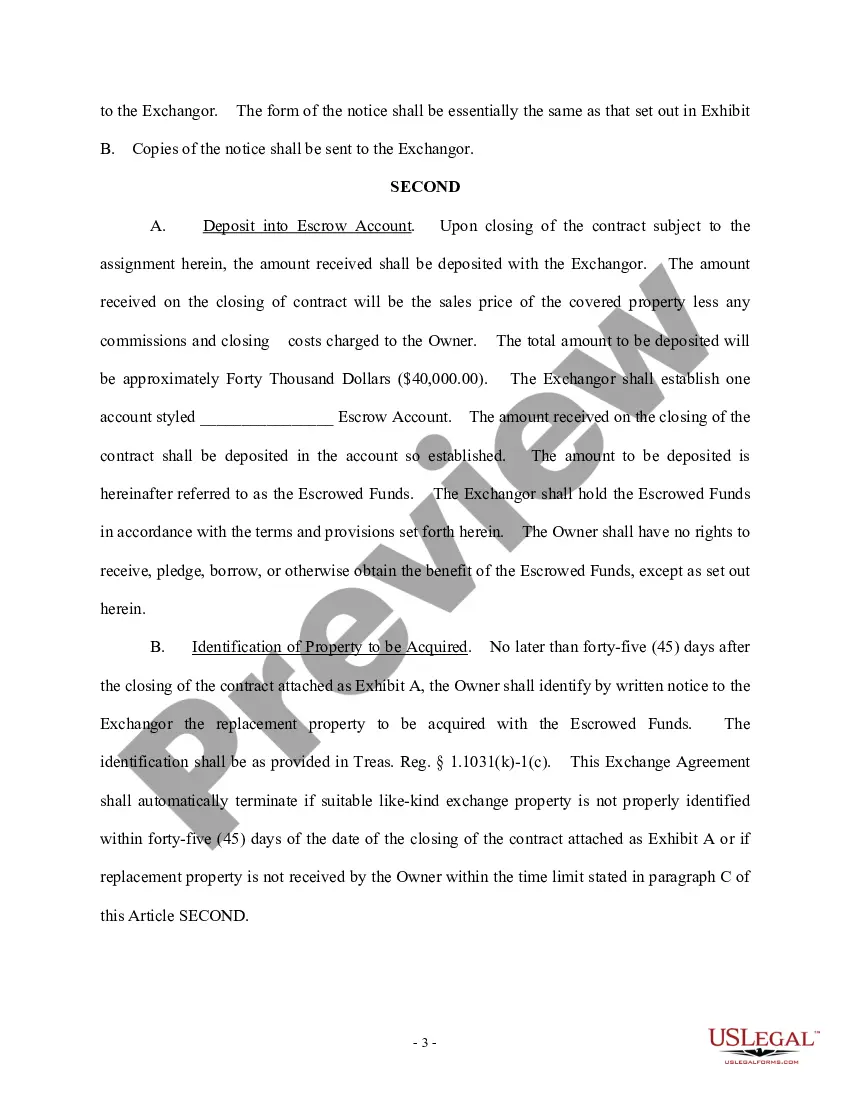
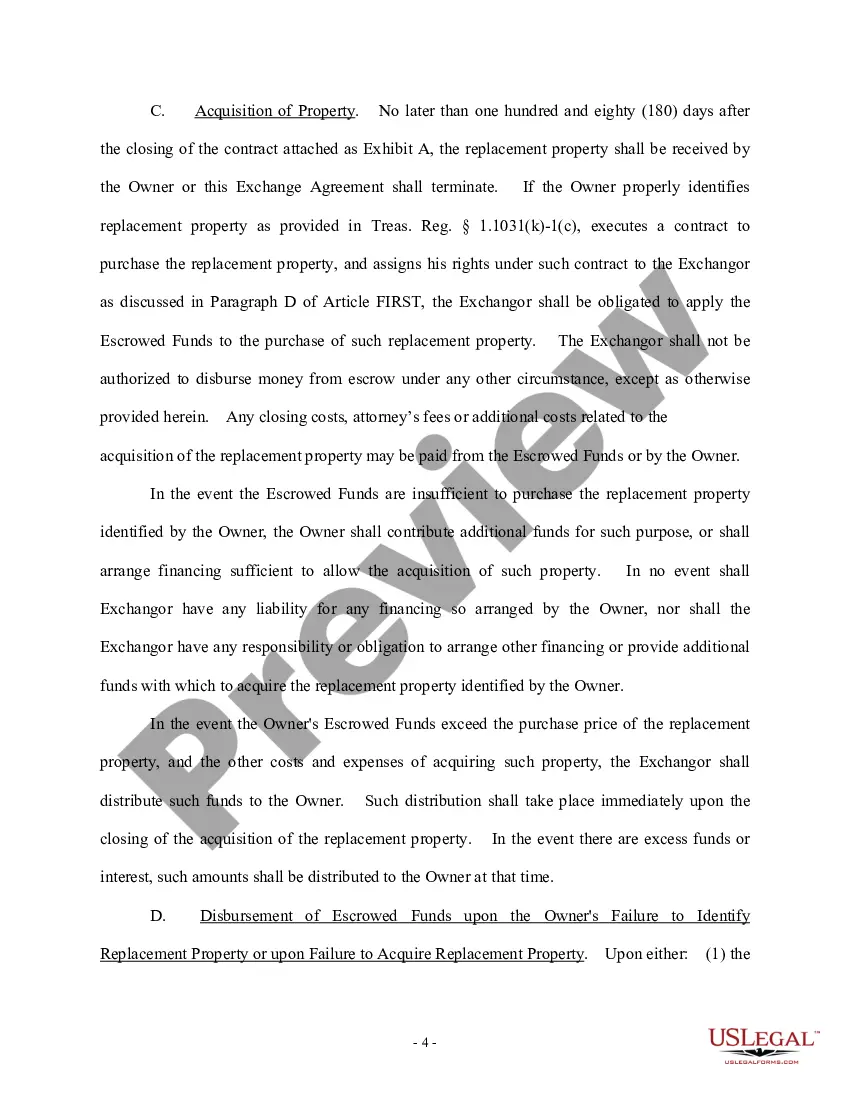
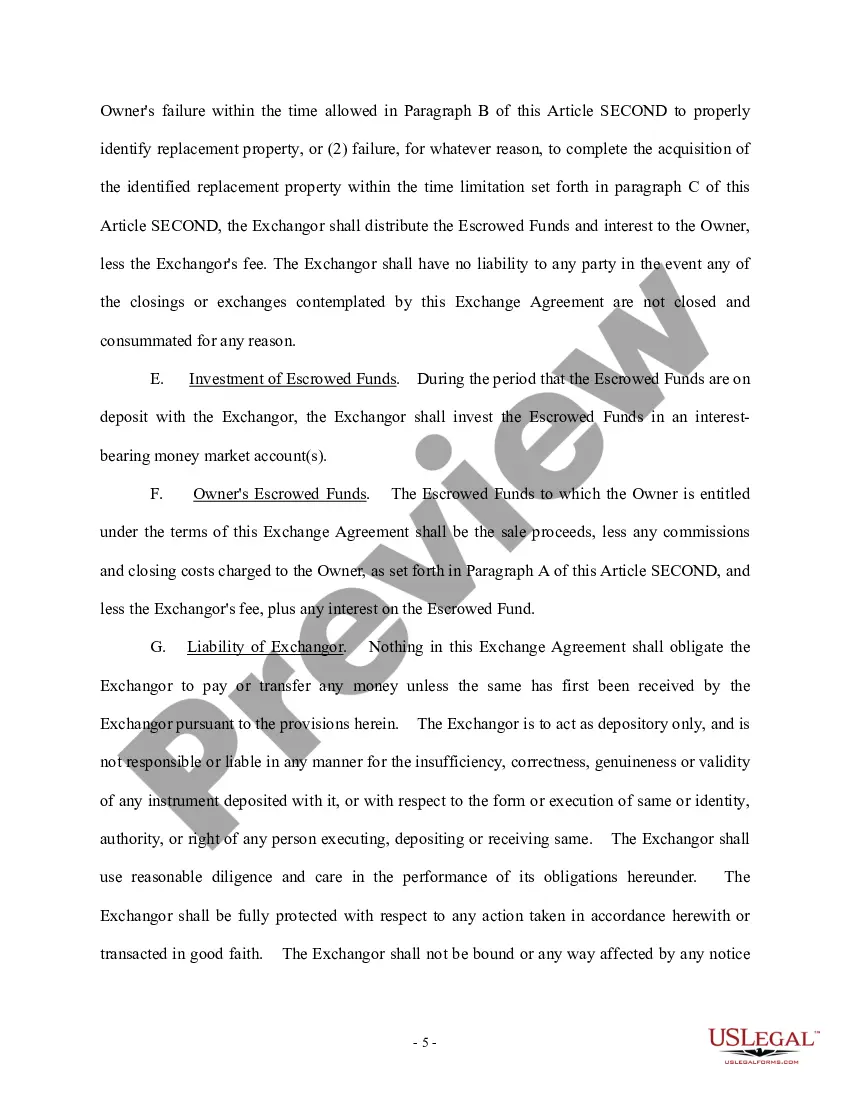
Get your form ready online
Our built-in tools help you complete, sign, share, and store your documents in one place.
Make edits, fill in missing information, and update formatting in US Legal Forms—just like you would in MS Word.
Download a copy, print it, send it by email, or mail it via USPS—whatever works best for your next step.
Sign and collect signatures with our SignNow integration. Send to multiple recipients, set reminders, and more. Go Premium to unlock E-Sign.
If this form requires notarization, complete it online through a secure video call—no need to meet a notary in person or wait for an appointment.
We protect your documents and personal data by following strict security and privacy standards.

Make edits, fill in missing information, and update formatting in US Legal Forms—just like you would in MS Word.

Download a copy, print it, send it by email, or mail it via USPS—whatever works best for your next step.

Sign and collect signatures with our SignNow integration. Send to multiple recipients, set reminders, and more. Go Premium to unlock E-Sign.

If this form requires notarization, complete it online through a secure video call—no need to meet a notary in person or wait for an appointment.

We protect your documents and personal data by following strict security and privacy standards.
Looking for another form?










Form popularity
FAQ
States like Florida, Texas, and Nevada are great options for 1031 exchanges due to their lack of state income tax and strong real estate markets. On the other hand, states like California, New York, and Oregon can be less attractive due to their high state income tax rates and strict real estate laws.
An easy rule to remember is that the taxpayer's basis in the replacement property is the value of the replacement property less the amount of gain deferred in the exchange (or plus the amount of unrecognized loss).
Steps to Complete a Massachusetts 1031 Exchange CONSULT. Speak with your tax and financial advisors before selling your property to make sure a 1031 exchange is right for you. FIND A QUALIFIED INTERMEDIARY (QI) ... CHOOSE REPLACEMENT PROPERTY. DEBT OR NO DEBT? ... PROCESSING & PAYMENT. RECEIVE DISTRIBUTION.
While foreign property is not of a like kind with domestic property, foreign properties are considered like-kind with one another. You can perform a 1031 exchange with foreign properties, so long as your relinquished and replacement properties are both located outside the United States.
A 1031 exchange allows for both consolidation and diversification within an investment portfolio, allowing real estate investors to tailor their portfolios to meet evolving investment goals. This may mean focusing on fewer, higher-value properties or spreading risk across multiple investments.
You can perform a 1031 exchange with foreign properties, so long as your relinquished and replacement properties are both located outside the United States.
DSTs can also be one of the easiest 1031 replacement property options to access because the real estate already has been acquired by the DST sponsor company and in turn may typically be closed on by the investor within three to five business days.
A frequently asked question connected to the 1031 exchange is, “Can you execute a 1031 exchange between states?” At the federal level, the answer is a definitive “yes.” Internal Revenue Code 26 U.S. Code § 1031 – “Exchange of Real Property Held for Productive Use or Investment” – falls under federal tax legislation.
