1031 Exchange Agreement With Qualified Intermediary In Fulton
Description

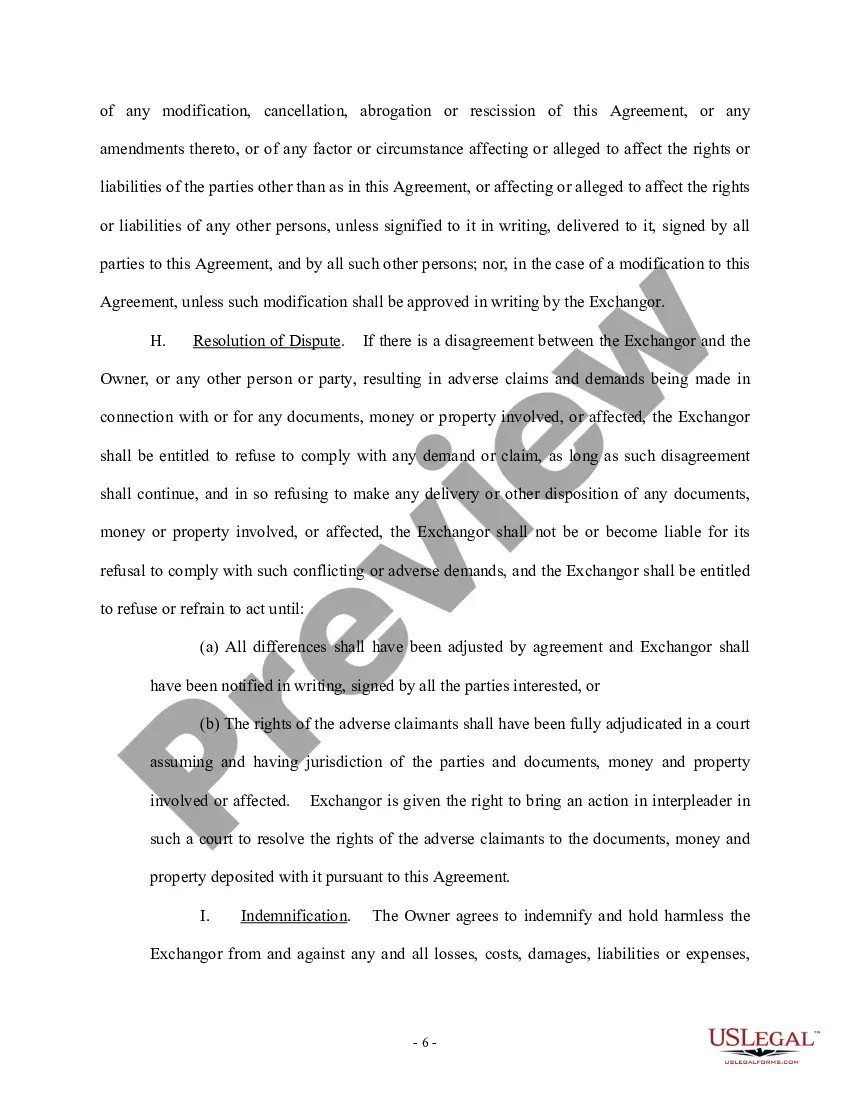
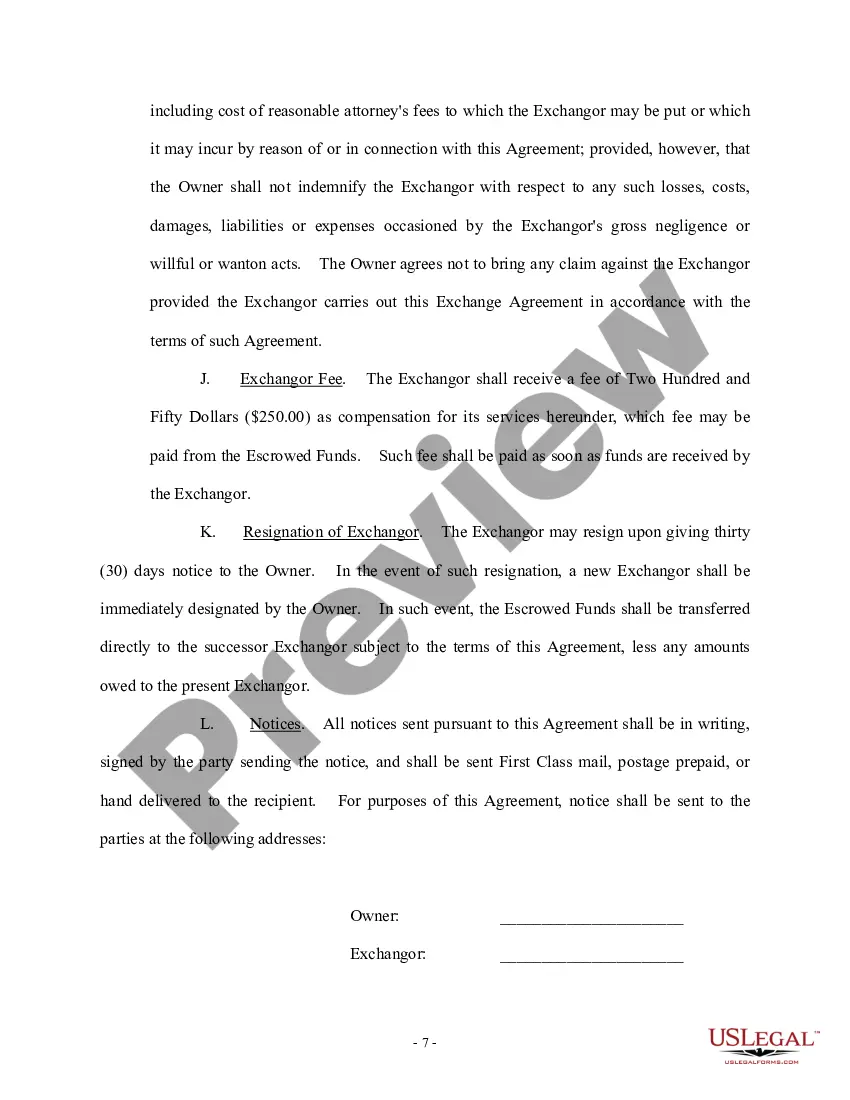
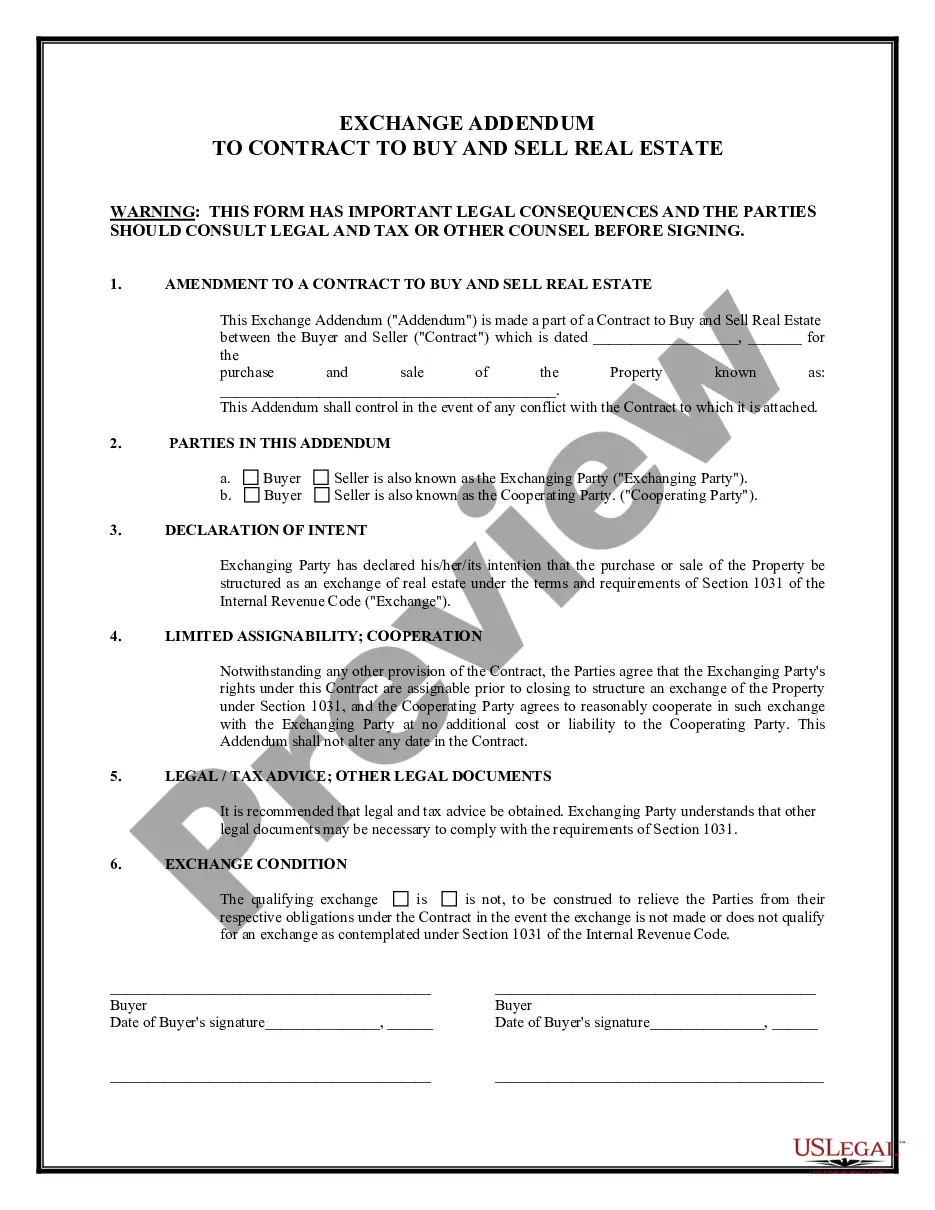
Get your form ready online
Our built-in tools help you complete, sign, share, and store your documents in one place.
Make edits, fill in missing information, and update formatting in US Legal Forms—just like you would in MS Word.
Download a copy, print it, send it by email, or mail it via USPS—whatever works best for your next step.
Sign and collect signatures with our SignNow integration. Send to multiple recipients, set reminders, and more. Go Premium to unlock E-Sign.
If this form requires notarization, complete it online through a secure video call—no need to meet a notary in person or wait for an appointment.
We protect your documents and personal data by following strict security and privacy standards.

Make edits, fill in missing information, and update formatting in US Legal Forms—just like you would in MS Word.

Download a copy, print it, send it by email, or mail it via USPS—whatever works best for your next step.

Sign and collect signatures with our SignNow integration. Send to multiple recipients, set reminders, and more. Go Premium to unlock E-Sign.

If this form requires notarization, complete it online through a secure video call—no need to meet a notary in person or wait for an appointment.

We protect your documents and personal data by following strict security and privacy standards.
Looking for another form?








Form popularity
FAQ
A qualified intermediary (QI) is any foreign intermediary (or foreign branch of a U.S. intermediary) that has entered into a qualified intermediary withholding agreement with the IRS.
Why I Like IPX1031. IPX1031 markets itself as the nation's largest qualified intermediary for 1031 like-kind exchanges. As a customer, this means you'll get industry-leading expertise with peace of mind knowing that your transaction will be completed promptly in ance with all tax rules and regulatory requirements ...
IRS Approval: QIs have undergone a stringent approval process by the IRS, demonstrating their compliance with all relevant regulations and requirements. NQIs, on the other hand, do not have this official approval and may operate under different sets of rules, potentially exposing investors to higher risks.
Those who have acted as the taxpayer's employee, attorney, accountant, investment banker or broker, or real estate agent or broker within the two-year period ending on the date of transfer of the first of the relinquished properties.
Can't my own attorney or CPA serve as my Qualified Intermediary? No. A Qualified Intermediary must remain completely independent and cannot have been your agent in the past 2 years.
A qualified intermediary (QI) or accommodator is a person or business who enters into a written exchange agreement with a taxpayer to: Acquire and transfer property given up, and. Acquire replacement property and transfer it to the taxpayer.
How to Do a 1031 Exchange Choose a qualified intermediary to coordinate the exchange. Sell your current real estate property. You have 45 days to identify potential replacement properties. You have 180 days to close on a replacement property. File IRS Form 8824.
The Qualified Intermediary (QI) Program administers agreements between foreign entities, or foreign branches of certain U.S. entities, and the IRS regarding tax withholding and reporting requirements for certain U.S. source income.
Unlike with a 1031 exchange, another benefit to a QOF is that, long or short-term, you can invest capital gains realized from any type of capital asset sale, into a QOF, i.e., capital gains from the sale of stock. With a 1031 exchange, you can only reinvest net proceeds from the sale of real estate.
