1031 Exchange Agreement Form With United States In Florida
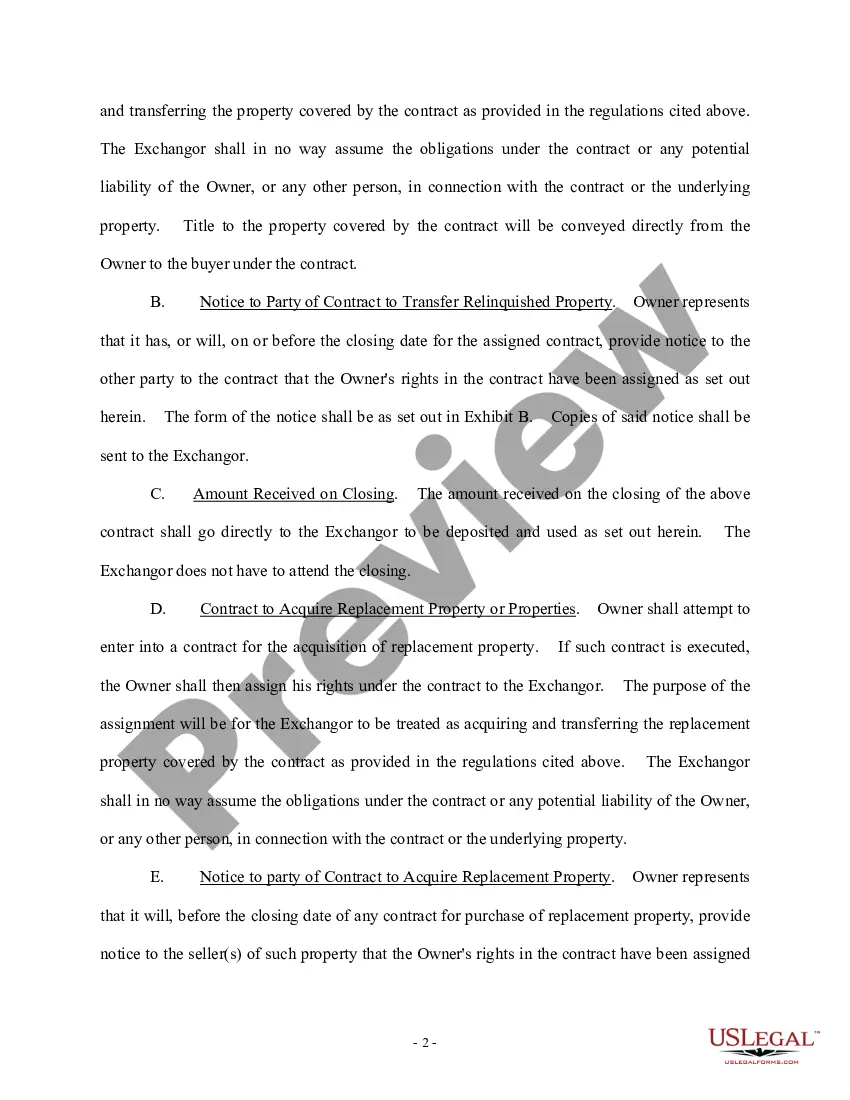
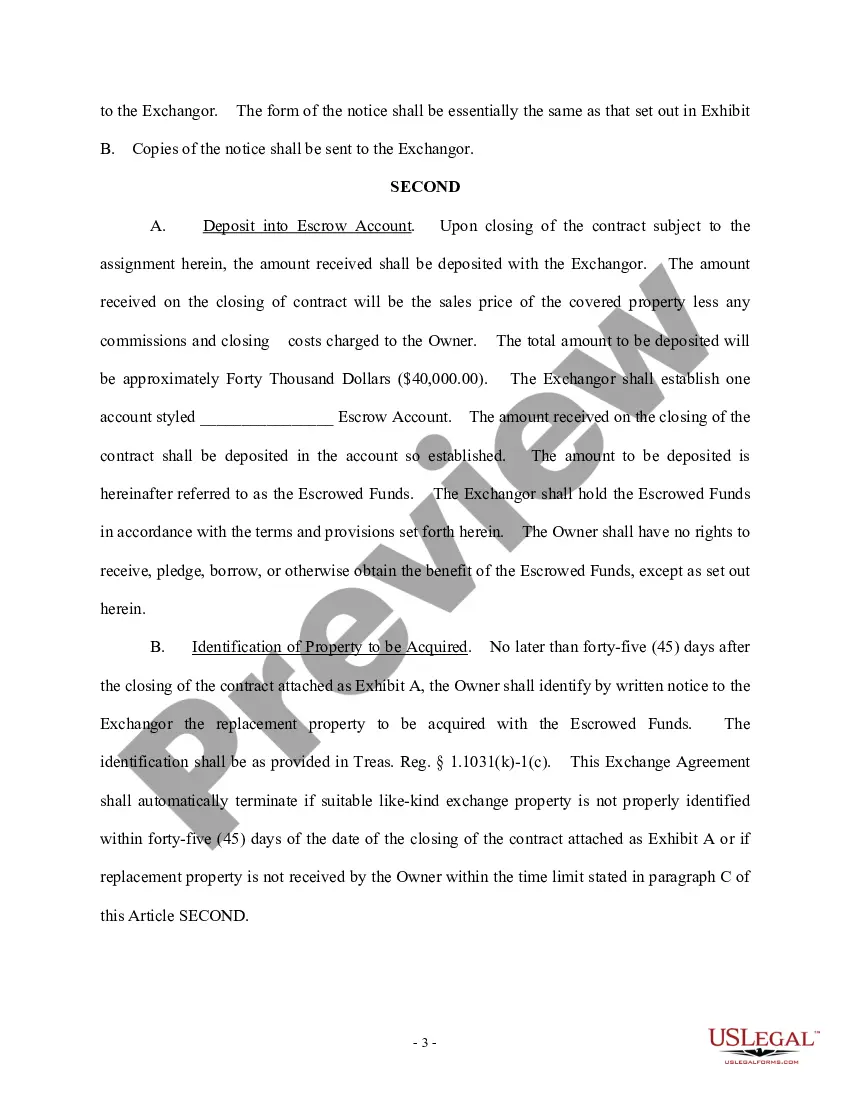
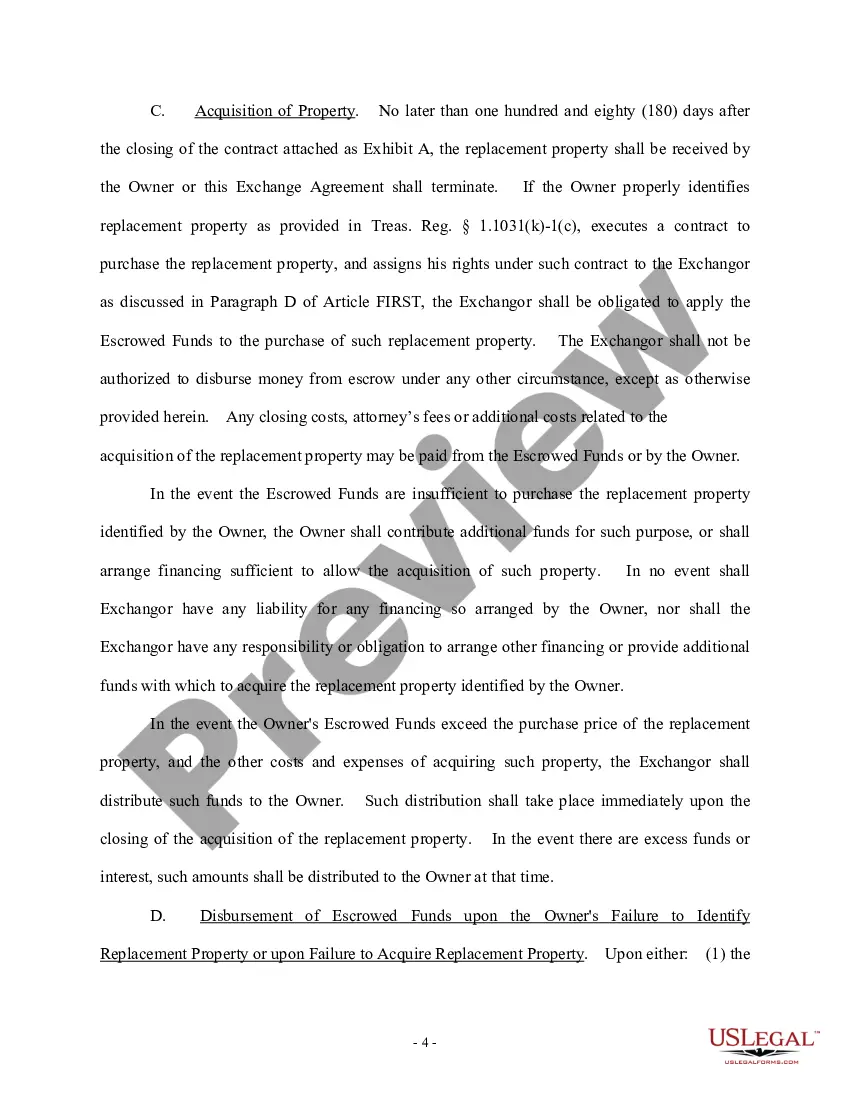
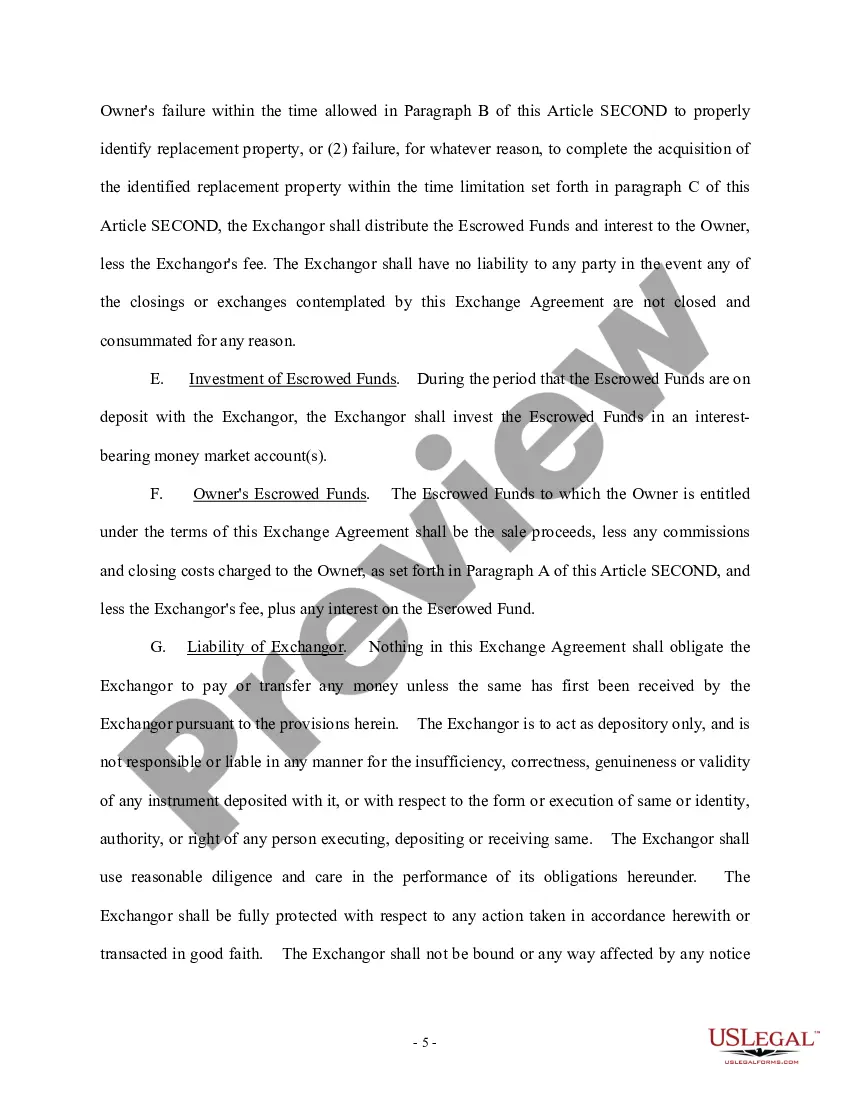
Description

Get your form ready online
Our built-in tools help you complete, sign, share, and store your documents in one place.
Make edits, fill in missing information, and update formatting in US Legal Forms—just like you would in MS Word.
Download a copy, print it, send it by email, or mail it via USPS—whatever works best for your next step.
Sign and collect signatures with our SignNow integration. Send to multiple recipients, set reminders, and more. Go Premium to unlock E-Sign.
If this form requires notarization, complete it online through a secure video call—no need to meet a notary in person or wait for an appointment.
We protect your documents and personal data by following strict security and privacy standards.

Make edits, fill in missing information, and update formatting in US Legal Forms—just like you would in MS Word.

Download a copy, print it, send it by email, or mail it via USPS—whatever works best for your next step.

Sign and collect signatures with our SignNow integration. Send to multiple recipients, set reminders, and more. Go Premium to unlock E-Sign.

If this form requires notarization, complete it online through a secure video call—no need to meet a notary in person or wait for an appointment.

We protect your documents and personal data by following strict security and privacy standards.
Looking for another form?







Form popularity
FAQ
While the IRS doesn't set a strict holding period for a 1031 exchange, many tax experts or legal advisors recommend holding the property for at least one year, with two years being the solid, safer length of time. This timeframe aligns with the tax treatment of capital gains and helps establish a clearer intent.
Navigating the 1031 Exchange Process in Florida Step 1: Plan and Consult. Before selling your property, assess your investment objectives. Step 2: Sale of Relinquished Property. Step 3: Identify Replacement Property. Step 4: Buy the Replacement Property. Step 5: Reporting and Compliance.
A primary residence usually does not qualify for an exchange because it is not used in trade or business or investment. That said, that portion of the primary residence that is used in a trade or business or for investment may qualify for a 1031 Exchange.
Without the help of a Qualified Intermediary, you run the risk of nullifying the 1031 exchange and incurring a large tax burden.
The good news is that there is no limit to the number of times you can complete a 1031 Exchange for real estate. You can do it over and over again, as long as you follow the rules.
TIMELINE REQUIREMENTS Measured from when the relinquished property closes, the Exchangor has 45 days to nominate (identify) potential replacement properties and 180 days to acquire the replacement property. The exchange is completed in 180 days, not 45 days plus 180 days.
While foreign property is not of a like kind with domestic property, foreign properties are considered like-kind with one another. You can perform a 1031 exchange with foreign properties, so long as your relinquished and replacement properties are both located outside the United States.
Here is how it works. First, sell your investment property and acquire a future primary residence, second home or personal vacation property as the Replacement Property in a 1031 Exchange. Second, rent the property for at least 14 days during each of the first two 12 month periods after the exchange.
