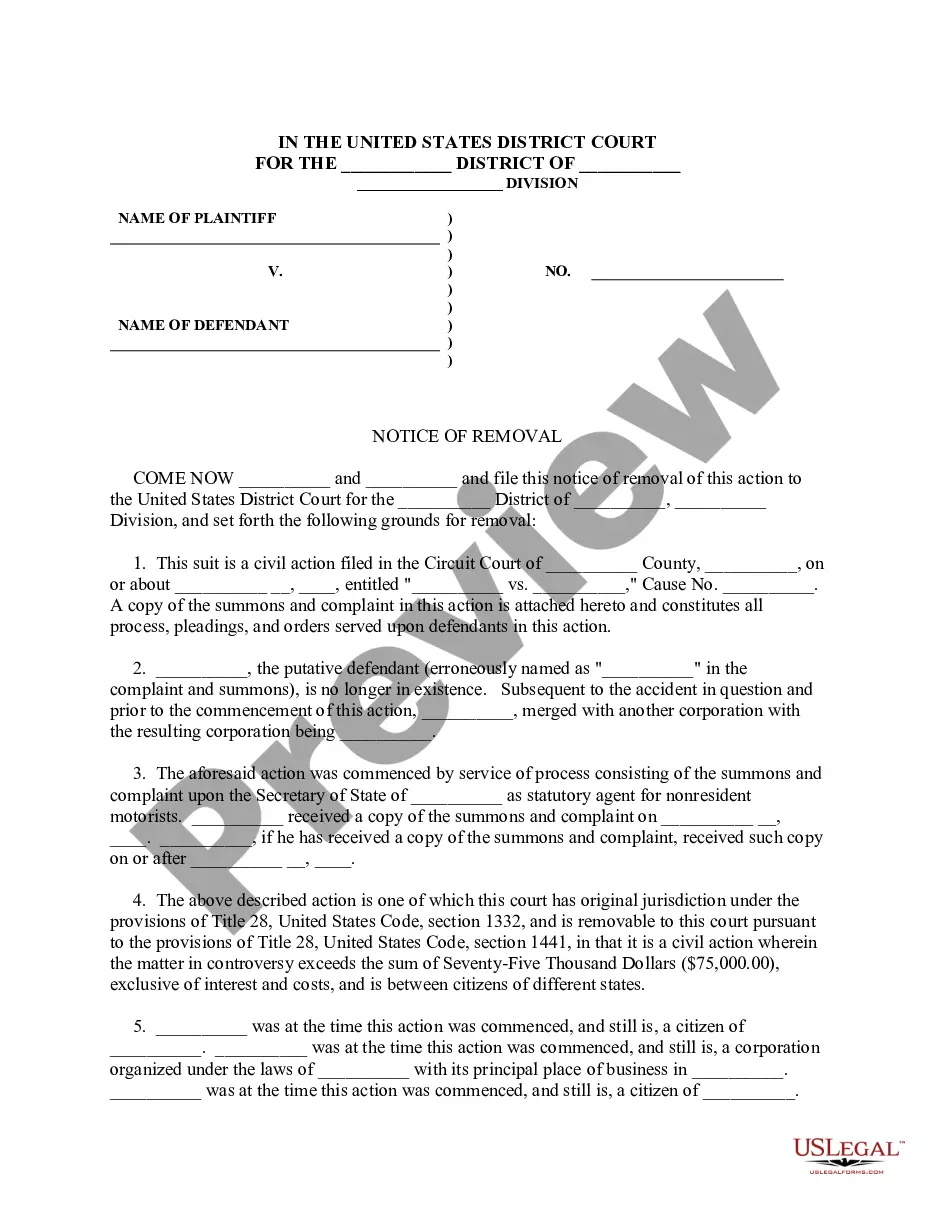
Notice Of Removal Template With The Roll In Queens
Description
Get your form ready online
Our built-in tools help you complete, sign, share, and store your documents in one place.
Make edits, fill in missing information, and update formatting in US Legal Forms—just like you would in MS Word.
Download a copy, print it, send it by email, or mail it via USPS—whatever works best for your next step.
Sign and collect signatures with our SignNow integration. Send to multiple recipients, set reminders, and more. Go Premium to unlock E-Sign.
If this form requires notarization, complete it online through a secure video call—no need to meet a notary in person or wait for an appointment.
We protect your documents and personal data by following strict security and privacy standards.

Make edits, fill in missing information, and update formatting in US Legal Forms—just like you would in MS Word.

Download a copy, print it, send it by email, or mail it via USPS—whatever works best for your next step.

Sign and collect signatures with our SignNow integration. Send to multiple recipients, set reminders, and more. Go Premium to unlock E-Sign.

If this form requires notarization, complete it online through a secure video call—no need to meet a notary in person or wait for an appointment.

We protect your documents and personal data by following strict security and privacy standards.
Looking for another form?
Form popularity
FAQ
An Order to Show Cause is a way to present to a judge the reasons why the court should order relief to a party.
It is mandatory that a Show Cause Notice (SCN) is issued if the department contemplates any action prejudicial to the assessee. The SCN would detail the provisions of law allegedly violated and ask the noticee to show cause why action should not be initiated against him under the relevant provisions of the Act/Rules.
WHAT IS AN ORDER TO SHOW CAUSE? The Court may issue an Order to Show Cause to tell you that you did not follow the Court's rules, directions, or deadlines and/or to instruct you to file one or more documents by a certain date.
After a summons with notice is served, the defendant will demand that the plaintiff serve a complaint. The plaintiff must then have the complaint served within 20 days after being served with the demand, or the case may be dismissed.
Order to Show Cause forms are available at the courthouse, and a judge can set the terms, such as when it will be heard in court, how it will be served on the other side and any conditions or requirements in order to obtain a stay of enforcement of an order or judgment pending the hearing.
How to Fill Out an Order to Show Cause Write the county name. Write the Article for your case type. Write the name(s) of the petitioner(s). Write the name(s) of the respondent(s). Write the docket number, if it exists. Write your name. Write the date you signed the affidavit. Write the month you signed the affidavit.
In New York State, an eviction of a tenant is lawful only if an owner has brought a court proceeding and obtained a judgment of possession from the court. A sheriff, marshal or constable can carry out a court ordered eviction. An owner may not evict a tenant by use of force or unlawful means.
Notice of entry occurs when one party serves a copy of a court's order on the other parties in the case. CPLR § R2220(b); Smart Code. In New York state court, the court does not automatically send orders to all parties.
Serving “Notice of Entry” Once the judgment is entered, the winner should serve a copy of the judgment with “notice of entry” on the loser. This service starts the loser's time to appeal running.