Service Of Interrogatories In Suffolk
Description



Get your form ready online
Our built-in tools help you complete, sign, share, and store your documents in one place.
Make edits, fill in missing information, and update formatting in US Legal Forms—just like you would in MS Word.
Download a copy, print it, send it by email, or mail it via USPS—whatever works best for your next step.
Sign and collect signatures with our SignNow integration. Send to multiple recipients, set reminders, and more. Go Premium to unlock E-Sign.
If this form requires notarization, complete it online through a secure video call—no need to meet a notary in person or wait for an appointment.
We protect your documents and personal data by following strict security and privacy standards.

Make edits, fill in missing information, and update formatting in US Legal Forms—just like you would in MS Word.

Download a copy, print it, send it by email, or mail it via USPS—whatever works best for your next step.

Sign and collect signatures with our SignNow integration. Send to multiple recipients, set reminders, and more. Go Premium to unlock E-Sign.

If this form requires notarization, complete it online through a secure video call—no need to meet a notary in person or wait for an appointment.

We protect your documents and personal data by following strict security and privacy standards.
Looking for another form?








Form popularity
FAQ
How to fill out Form Interrogatories Fill in basic information at the top of the form. Provide basic information about your case. Select the questions. On Page 2, check the box next to each question you want to ask your spouse to answer. Make copies. Make 1 copy of the completed Form Interrogatories – Family Law.
Record Date and Time: Clearly state the exact date and time when the documents were served. Describe Service Method: Indicate how the documents were served (e.g., personal delivery, certified mail). Sign the Affidavit: The servicer must sign the affidavit in front of a notary public if required.
An affidavit for service must include the server's personal information (name, address, and contact details), the specifics of the service (date, time, and method of delivery), and a declaration of truth, swearing under oath that the information is accurate.
Service of interrogatories. After commencement of an action, any party may serve written interrogatories upon any other party. Interrogatories may not be served upon a defendant before that defendant's time for serving a responsive pleading has expired, except by leave of court granted with or without notice.
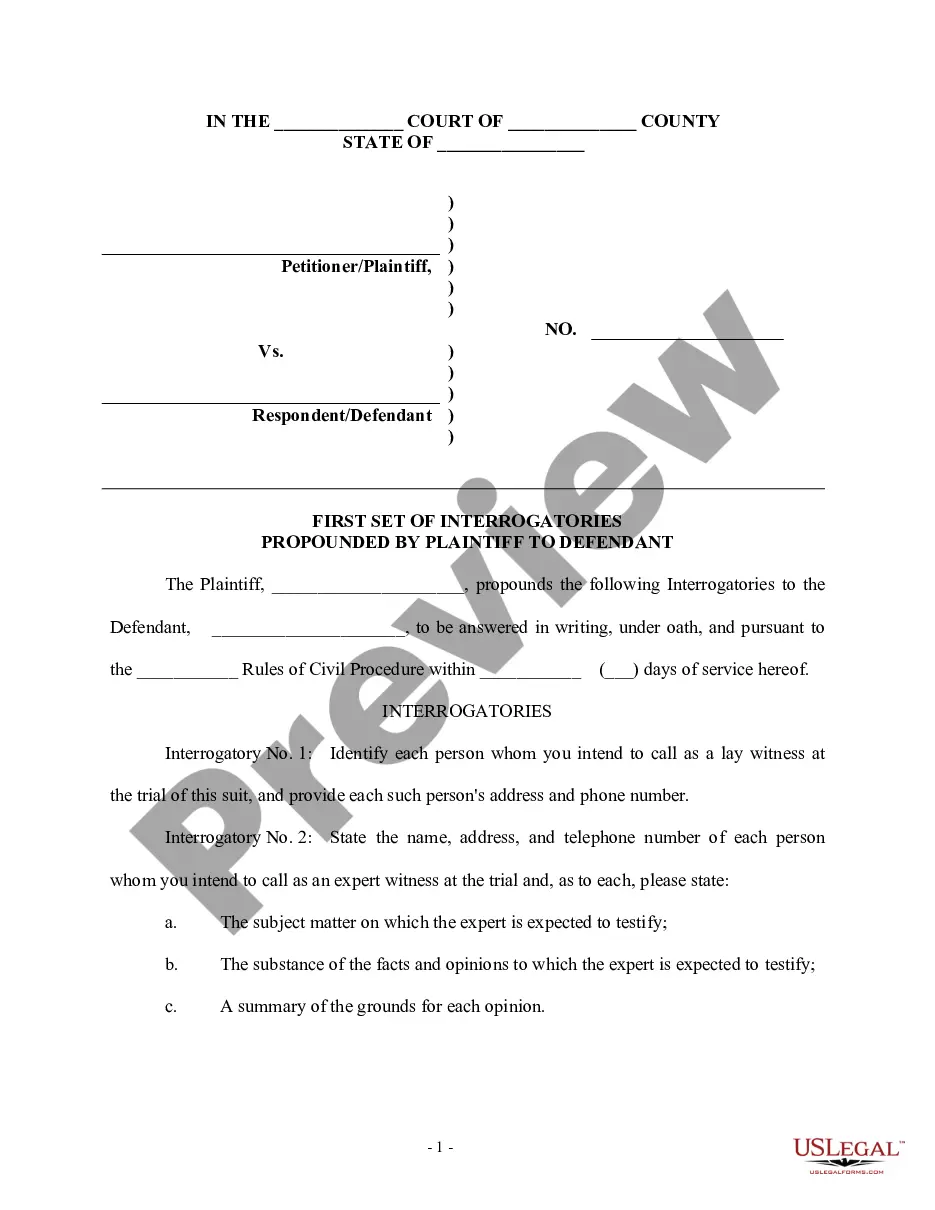
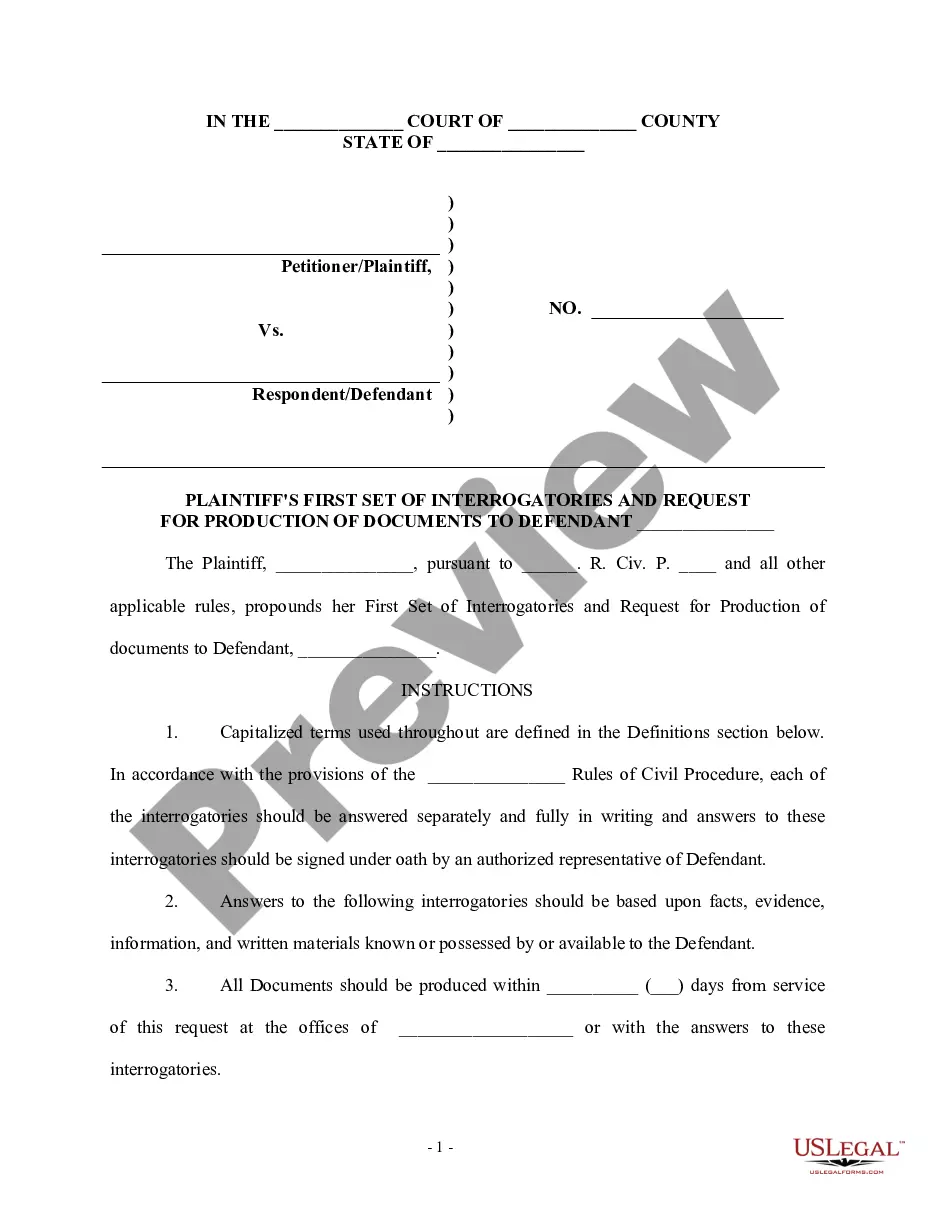
Interrogatories are a discovery device used by a party, usually a Defendant, to enable the individual to learn the facts that are the basis for, or support, a pleading with which he or she has been served by the opposing party.
Interrogatories are limited to 25 in number, including subparts, unless the court orders otherwise. This limit applies to consolidated actions as well.
Interrogatories are a discovery tool that the parties can use to have specific questions about a case answered before trial. Interrogatories are lists of questions sent to the other party that s/he must respond to in writing.
In civil procedure , an interrogatory is a list of written questions one party sends to another as part of the discovery process.
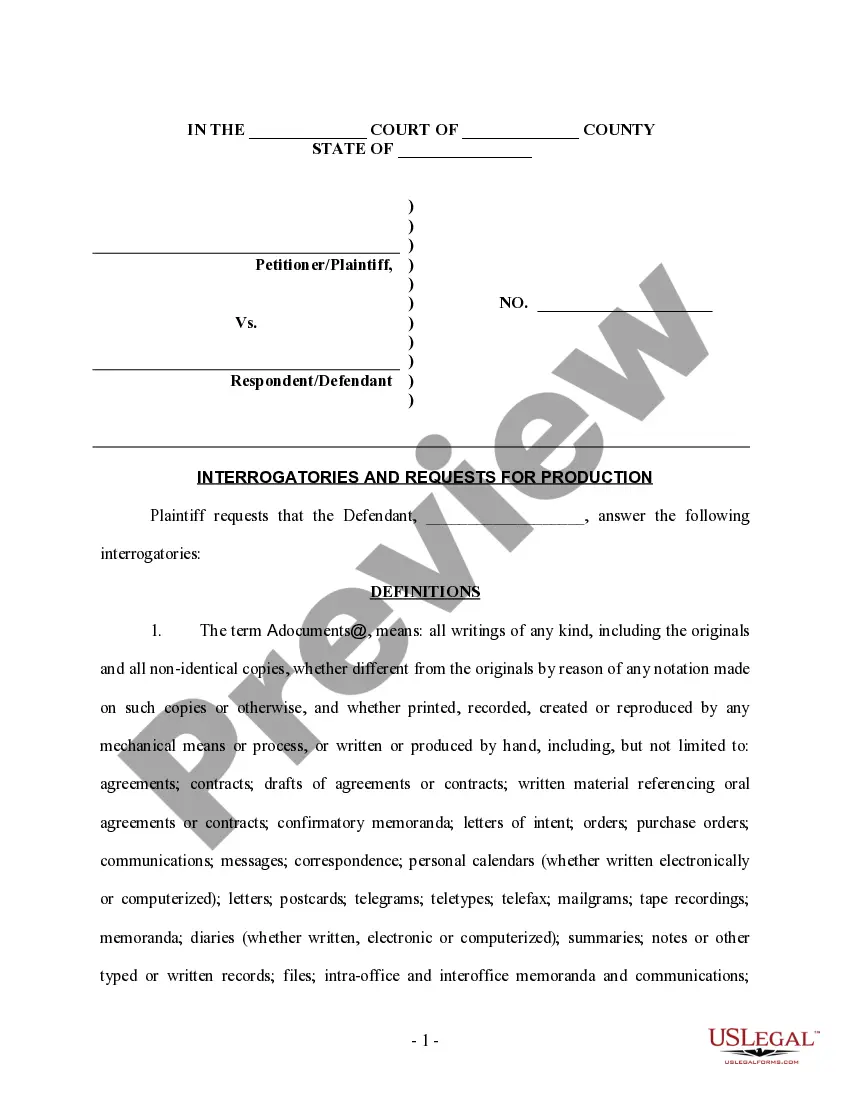
For interrogatories, action words such as “list,” “describe,” “identify,” or “state” are very useful. You may ask the other side to identify a document but you cannot use this form of discovery to get them to give it to you. Requesting documents requires a different kind of discovery process.