Service Of Interrogatories In Middlesex
Description



Get your form ready online
Our built-in tools help you complete, sign, share, and store your documents in one place.
Make edits, fill in missing information, and update formatting in US Legal Forms—just like you would in MS Word.
Download a copy, print it, send it by email, or mail it via USPS—whatever works best for your next step.
Sign and collect signatures with our SignNow integration. Send to multiple recipients, set reminders, and more. Go Premium to unlock E-Sign.
If this form requires notarization, complete it online through a secure video call—no need to meet a notary in person or wait for an appointment.
We protect your documents and personal data by following strict security and privacy standards.

Make edits, fill in missing information, and update formatting in US Legal Forms—just like you would in MS Word.

Download a copy, print it, send it by email, or mail it via USPS—whatever works best for your next step.

Sign and collect signatures with our SignNow integration. Send to multiple recipients, set reminders, and more. Go Premium to unlock E-Sign.

If this form requires notarization, complete it online through a secure video call—no need to meet a notary in person or wait for an appointment.

We protect your documents and personal data by following strict security and privacy standards.
Looking for another form?










Form popularity
FAQ
And R. -2. A court order is required to deposit funds into Court unless the funds deposited are unclaimed funds from an attorney trust account or are funds deposited into court in lieu of a construction lien claim.
You must complete and submit an original and two copies of the enclosed complaint form as well as the Civil Cover Sheet. You should also keep an additional copy of any document filed with the Court for your own records. All copies of the complaint must be identical to the original.
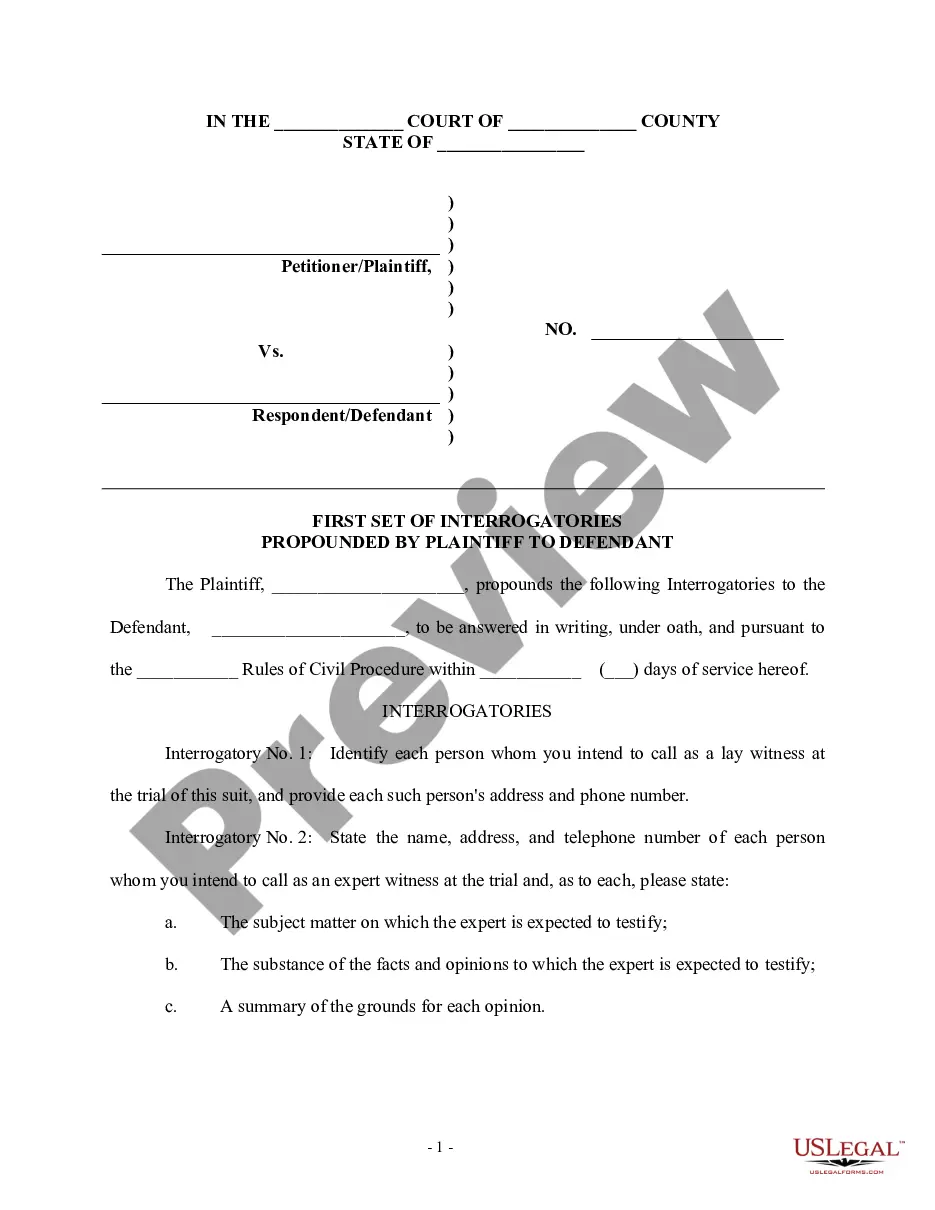
The requests can be sent to a plaintiff after the commencement of the suit or upon any other party with or after the service of the summons and complaint, with a copy to all other parties. The recipient of the interrogatories is to answer within 60 days of receipt.
Except as otherwise provided in this rule, interrogatories shall be answered in writing under oath by the party upon whom served, if an individual, or, if a public or private corporation, a partnership or association, or governmental agency, by an officer or agent who shall furnish all information available to the ...
As of July 1, 2022, the jurisdictional limit of Small Claims court was increased from $3,000 to $5,000. The jurisdictional limit for the Special Civil Part was increased from $15,000.00 to $20,000.00. Any claims of $20,000.01 or more will be filed in the Law Division.
Lawsuits for amounts up to $20,000 are called special civil cases. They are filed in Superior Court, in the special civil part of the civil division.
Conclusion: Going to small claims court may be worth it for $500, but it will determine how you weigh your costs versus benefits. At a minimum, it is worth it to send a demand letter.
In general, the statute of limitations for a contract action is 6 years and for a personal injury action is 2 years. You should be aware, however, that various factors may alter these time periods.
Except as otherwise provided by R. -1(b), the number of interrogatories or of sets of interrogatories to be served is not limited except as required to protect the party from annoyance, expense, embarrassment, or oppression.