Notice Of Serving Interrogatories Form In Collin
Description


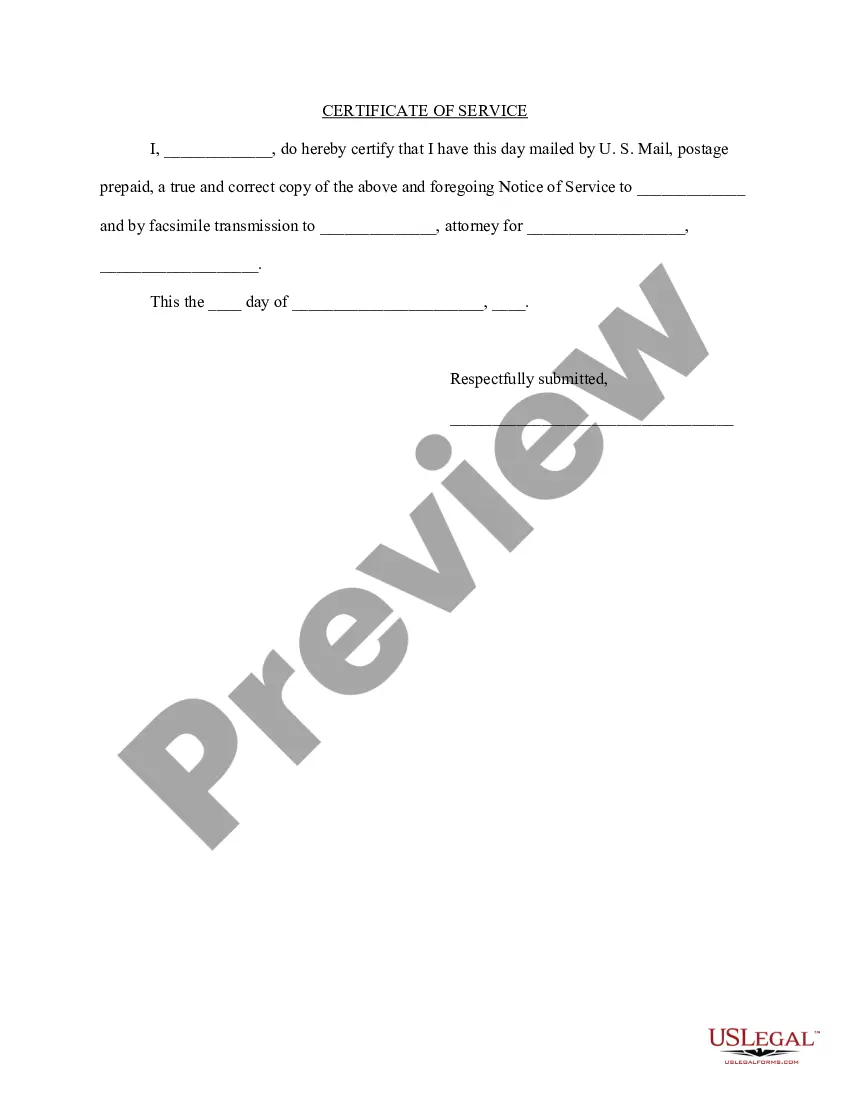
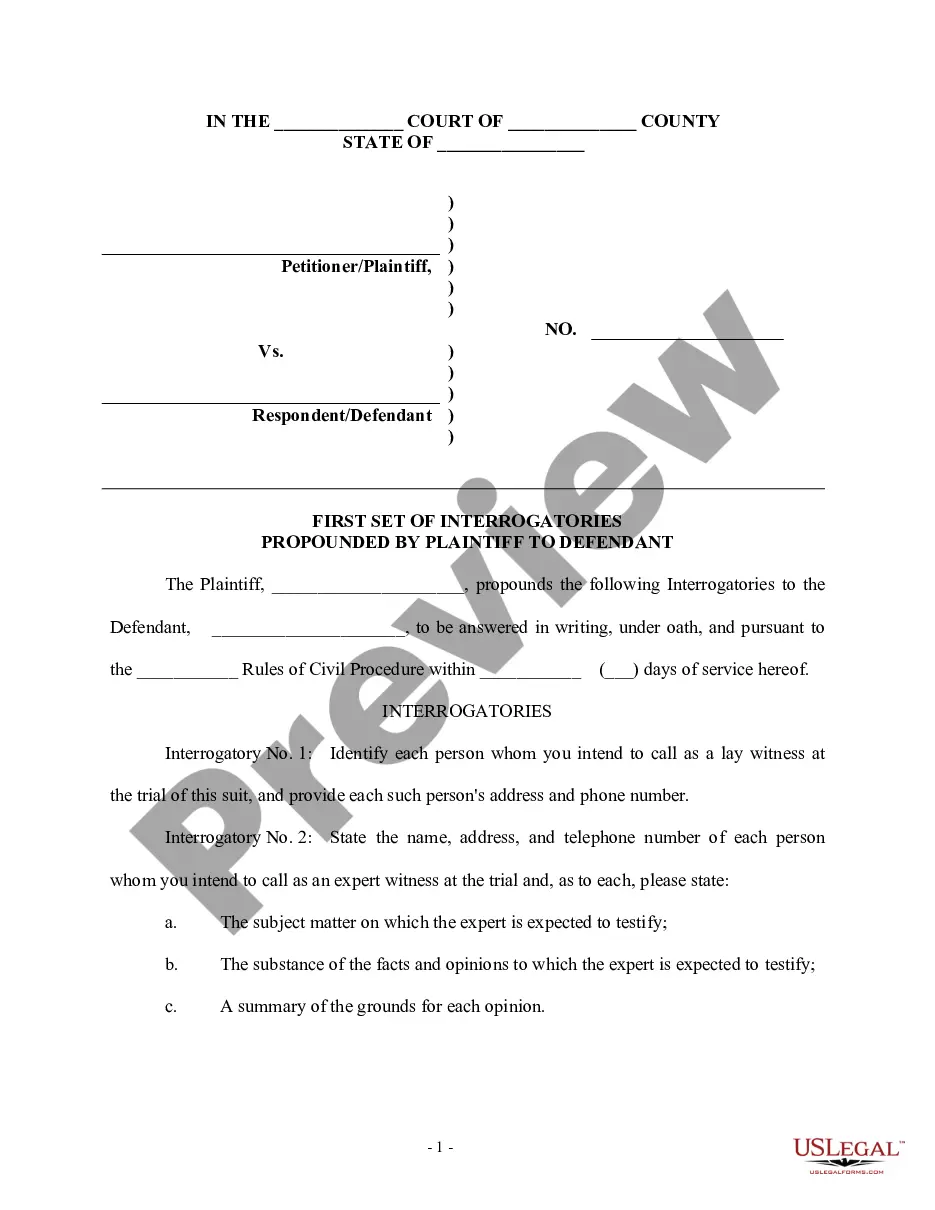

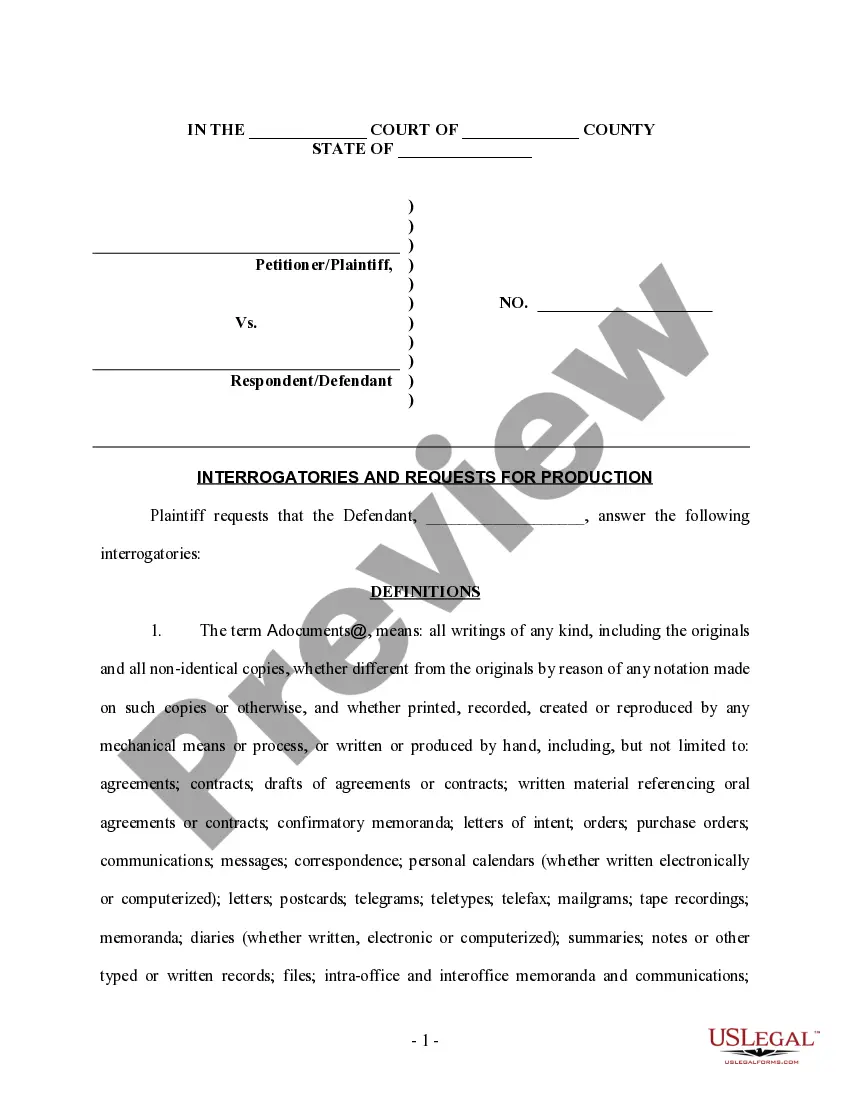





Form popularity
FAQ
Rule 192.2. Timing and Sequence of Discovery (2021) (a) Timing. Unless otherwise agreed to by the parties or ordered by the court, a party cannot serve discovery on another party until after the other party's initial disclosures are due.
When a party to a civil case needs to get information from the other side, she can serve the other side with written requests called “discovery requests.” These requests might include: Interrogatories, which are written questions about things that are relevant or important to the case. (NRCP 33; JCRCP 33)
(b) Except as provided in Section 2030.070, no party shall, as a matter of right, propound to any other party more than 35 specially prepared interrogatories. If the initial set of interrogatories does not exhaust this limit, the balance may be propounded in subsequent sets.
How to fill out Form Interrogatories Fill in basic information at the top of the form. Provide basic information about your case. Select the questions. On Page 2, check the box next to each question you want to ask your spouse to answer. Make copies. Make 1 copy of the completed Form Interrogatories – Family Law.
The original form interrogatories and signed proof of service should be retained for your records. If the other party does not respond to your requests, you may use these documents to support a motion to have the court compel responses.
How to respond to form interrogatories Download the blank response template and fill in basic information. Prepare the template for your responses. Read and answer the questions. Sign the document.
You have to respond to interrogatories in writing to the best of your ability. If you do not answer an interrogatory question, and then the other side learns that you did in fact know the answer, it could have a negative impact on your case at trial.
Rule 197.1. Interrogatories (1999) A party may serve on another party no later than 30 days before the end of the discovery period - written interrogatories to inquire about any matter within the scope of discovery except matters covered by Rule 195.
Read the question very carefully. Answer only the question that is asked, and avoid the temptation to over-explain your answer. If the question contains several parts, you may break your answer into parts as well. It is also possible that you might object to the question.
Draft Interrogatories Strategically Only ask specific questions that address the crux of the matter where possible. Avoid board or vague questions. The opposing party's legal team may simply file objections against these, citing irrelevance, wasting your time. Also, ask questions sequentially.