Board Resolution For Signing Rental Agreement In Washington
Description


Form popularity
FAQ
“RESOLVED FURTHER THAT, any one of the above officials of the Company/Bank/Cooperative Society/Trust/legal entity, be and is hereby authorized to do all such acts, deeds, things, sign all such papers, documents, power of attorneys, indemnities, correspondence and to do and perform all such acts, deeds and things and ...
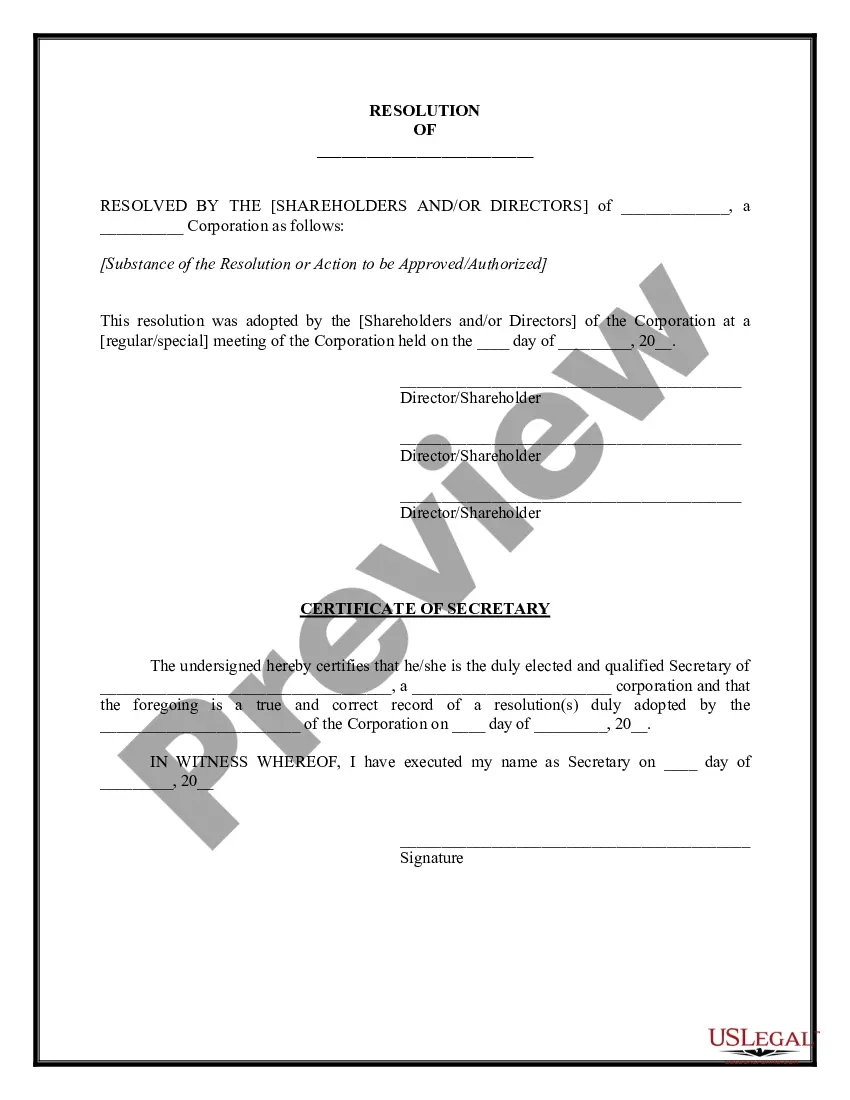
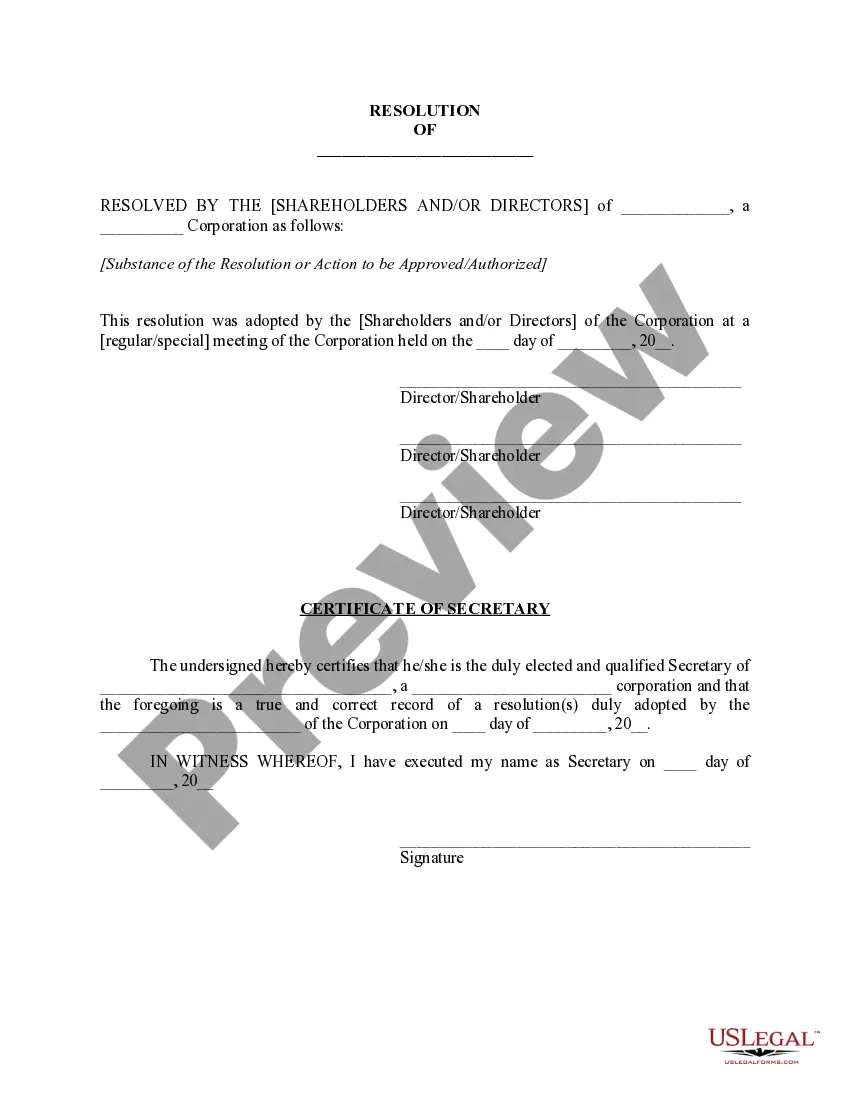
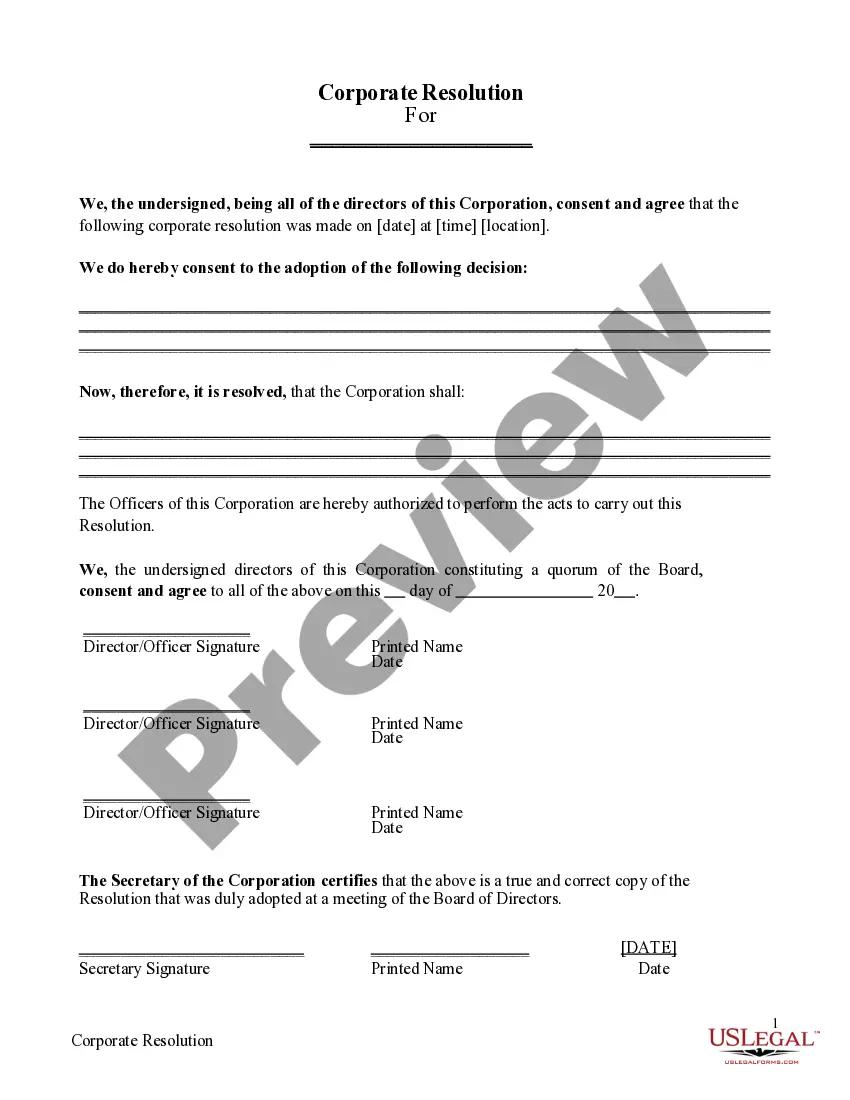
A board resolution formalizes — in writing — the critical decisions made by members in board meetings. Comparatively speaking, making decisions is often easier than writing a board resolution. Nonetheless, drafting them is far easier when your board understands its purpose and the components that go into writing them.
A written resolution is a document that describes a company decision (as a resolution) that can be circulated to the required audience (shareholders/directors), with them able to sign and return it – confirming their agreement.
NOW THEREFORE, BE IT RESOLVED that the Board of Directors of (legal name of your corporation) hereby authorizes (officer name{s} and officer title{s}) to act on behalf on (legal name of your corporation) in entering into any agreement with the City of Los Angeles; and to sign for and perform any and all ...
How to write a board resolution Put the date and resolution number at the top. Give the resolution a title that relates to the decision. Use formal language. Continue writing out each critical statement. Wrap up the heart of the resolution in the last statement.
Board Resolution Granting Signing Authority BE IT RESOLVED, that the board of directors hereunder authorizes Authorized Individual's Name, Position, to sign, execute, and endorse on behalf of Company Name for all financial transactions, legal documents, and other official agreements.
How to write a board resolution Put the date and resolution number at the top. Give the resolution a title that relates to the decision. Use formal language. Continue writing out each critical statement. Wrap up the heart of the resolution in the last statement.
Use formal language to record the resolutions. You will write your board resolutions using “whereas” and “resolved” clauses. “Whereas” statements show the reason for the resolution while “resolved” clauses state the action that will be taken. Your “whereas” statement should lead the reader to the “resolved” clause.
A written resolution, signed by all directors, has the same effect as if it had been adopted at a meeting of the board of directors duly convened and held. This resolution must be filed in the minute book of the board of directors, in the same manner as regular minutes.