Settlement Agreement Example In Hennepin
Description

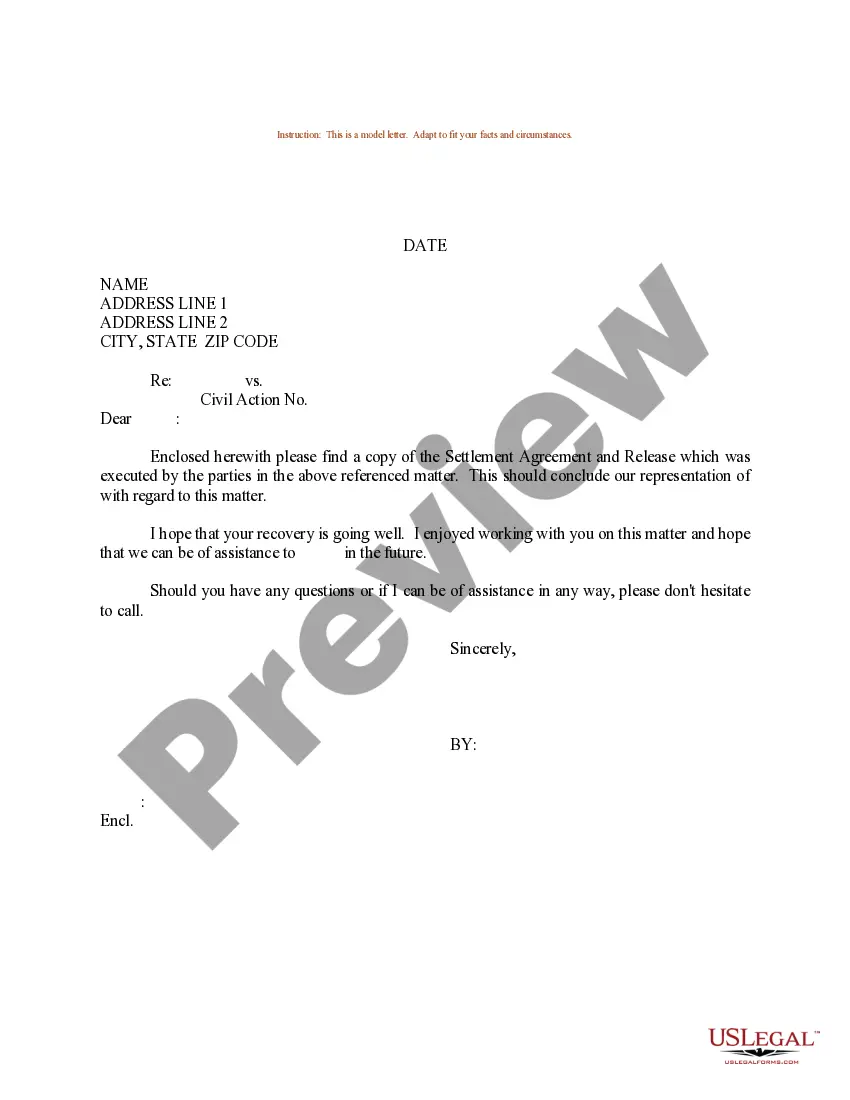
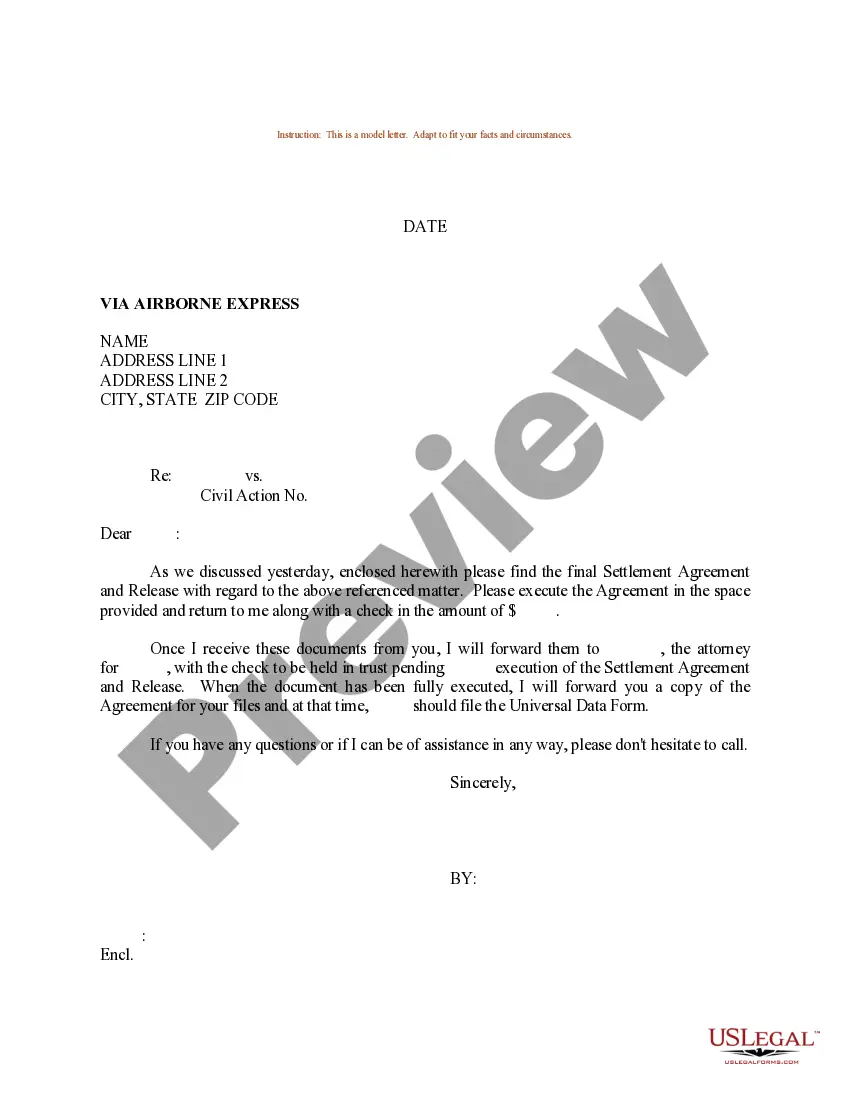
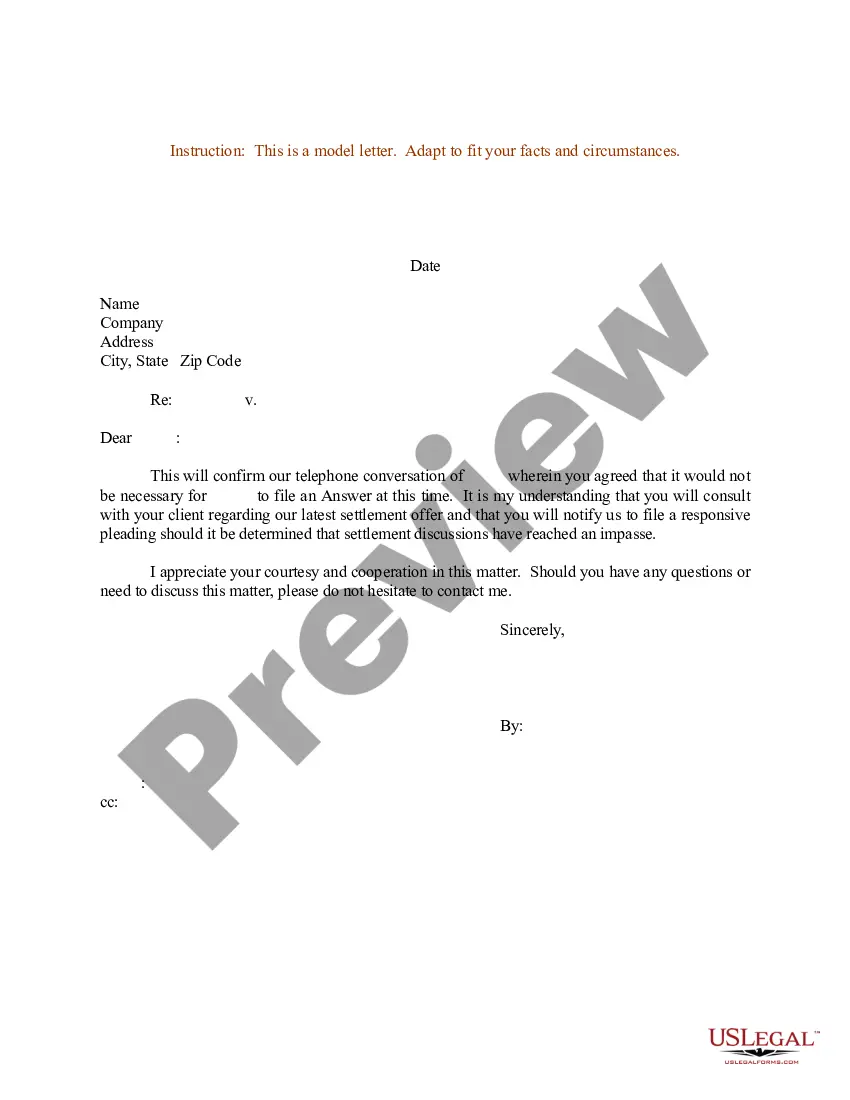
Get your form ready online
Our built-in tools help you complete, sign, share, and store your documents in one place.
Make edits, fill in missing information, and update formatting in US Legal Forms—just like you would in MS Word.
Download a copy, print it, send it by email, or mail it via USPS—whatever works best for your next step.
Sign and collect signatures with our SignNow integration. Send to multiple recipients, set reminders, and more. Go Premium to unlock E-Sign.
If this form requires notarization, complete it online through a secure video call—no need to meet a notary in person or wait for an appointment.
We protect your documents and personal data by following strict security and privacy standards.

Make edits, fill in missing information, and update formatting in US Legal Forms—just like you would in MS Word.

Download a copy, print it, send it by email, or mail it via USPS—whatever works best for your next step.

Sign and collect signatures with our SignNow integration. Send to multiple recipients, set reminders, and more. Go Premium to unlock E-Sign.

If this form requires notarization, complete it online through a secure video call—no need to meet a notary in person or wait for an appointment.

We protect your documents and personal data by following strict security and privacy standards.
Looking for another form?








Form popularity
FAQ
What Should Be Included in a Settlement Agreement? Identifying information for all involved parties. A description of the issue you're seeking to settle. An offer of resolutions that both parties agree to. Proof of valid consideration from both parties without coercion or duress. Legal purpose.
Stipulations for settlement must contain, if applicable, a brief statement of the admitted material facts, a statement of the matters in dispute, the positions of the parties and supporting documentation, the matters agreed upon, and where the agreement is not conclusively presumed reasonable under Minnesota Statutes, ...
A settlement agreement is always in writing, and both parties must agree to the provisions in the settlement agreement. Also, both parties must sign the settlement agreement for it to be legally binding. A settlement agreement will resolve a civil lawsuit.
It is generally a good idea to have a skilled attorney draft the settlement agreement, which will resolve your civil lawsuit.
Settlement agreements are contracts. Although the law presumes that settlement agreements are valid, they generally are subject to contract defenses, including mistake, unconscionability, duress, undue influence, and fraud.
Gather evidence: To have a chance at successfully overturning the agreement, you will need strong evidence to support your claims. This may include documentation, emails, text messages, or witness testimonies that prove fraud, misrepresentation, or coercion.
Settlement agreements are contracts. Although the law presumes that settlement agreements are valid, they generally are subject to contract defenses, including mistake, unconscionability, duress, undue influence, and fraud.
Plain copies of recent divorce records may be found using the Minnesota Court Records Online (MCRO). Certified copies of a divorce decree may be obtained from the county courthouse where the divorce was granted. Please see the MN Judicial Branch page, Copy Requests, for more information and links to request forms.
Instructions for filing a. Motion. in the Minnesota Court of Appeals. Step 1: Fill out the Motion form. Step 2: Fill out the Affidavit in Support of Motion form. Step 3: Serve your Motion and Affidavit on the opposing parties. Step 4: Proof of Service. Step 5: File the Motion, Affidavit, and Certificate of Service by Mail.
The maximum amount you may recover through conciliation court is $15,000. (The maximum for consumer credit transactions is $4,000.) You cannot file a claim in conciliation court that exceeds the monetary limit set by law. If you reduce your claim to the limit of conciliation court, you cannot claim more later.