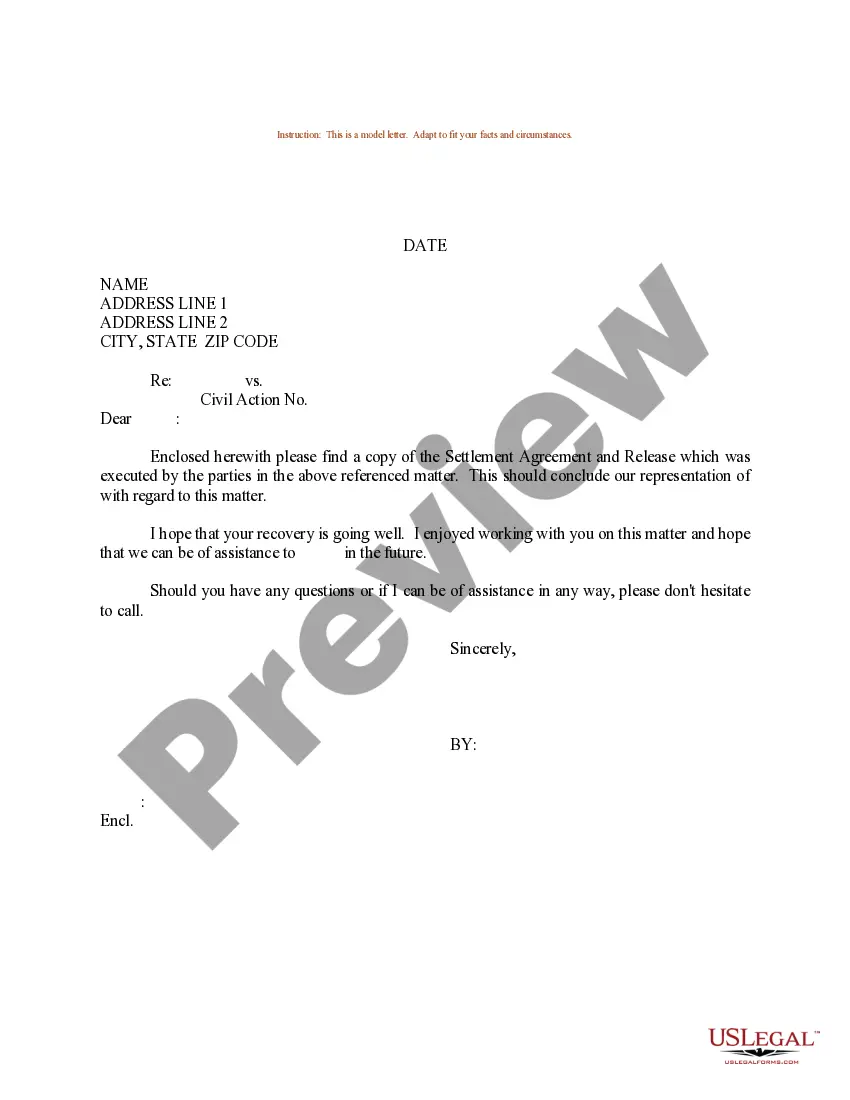
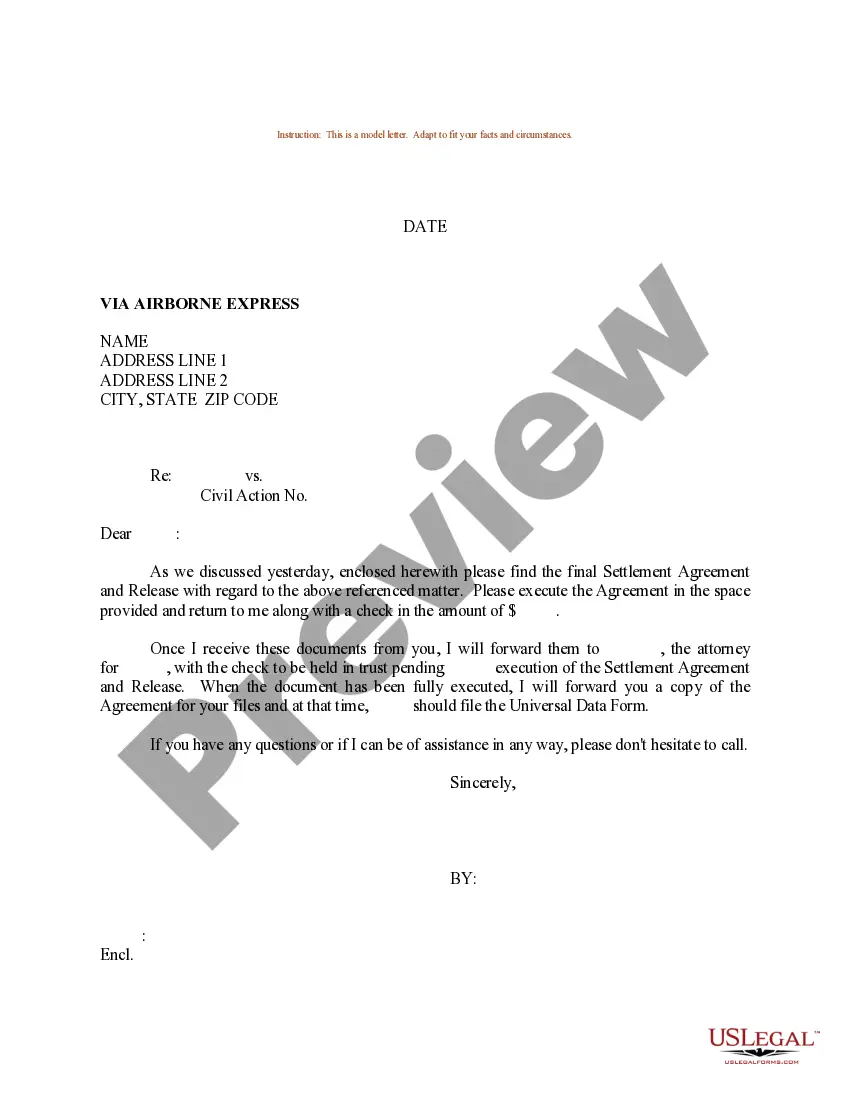
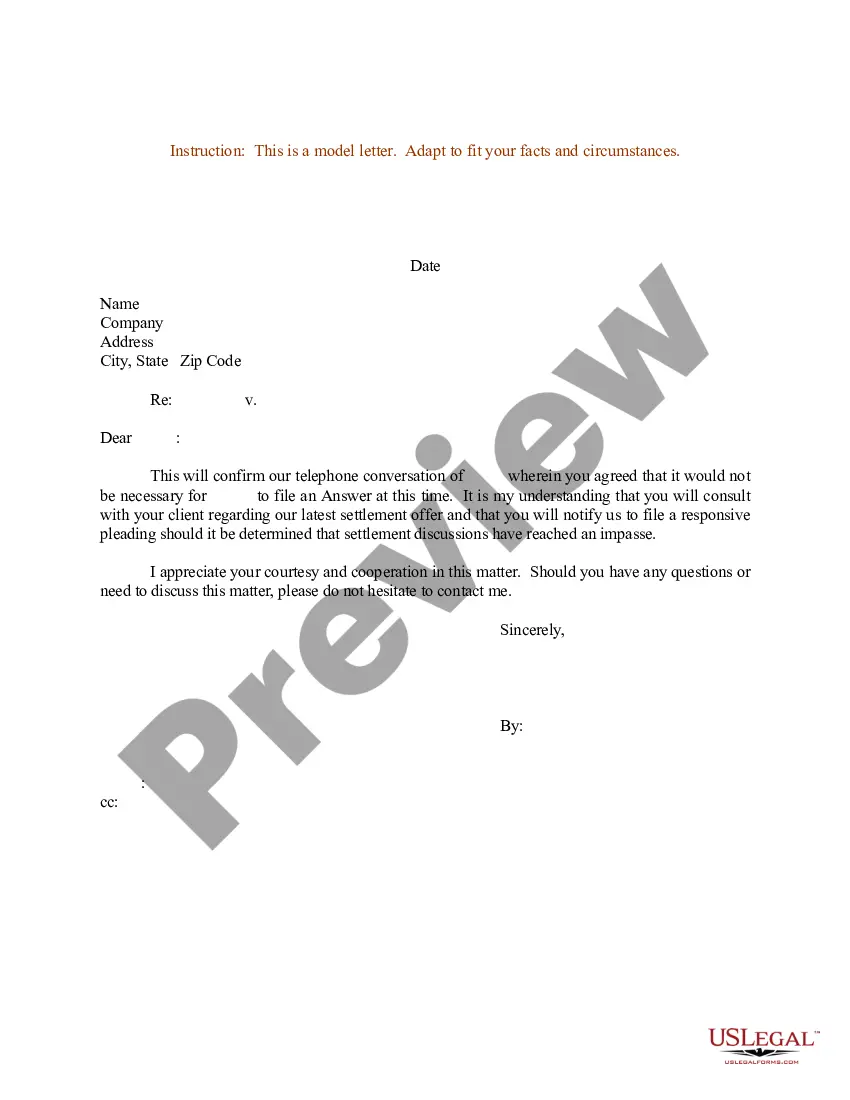
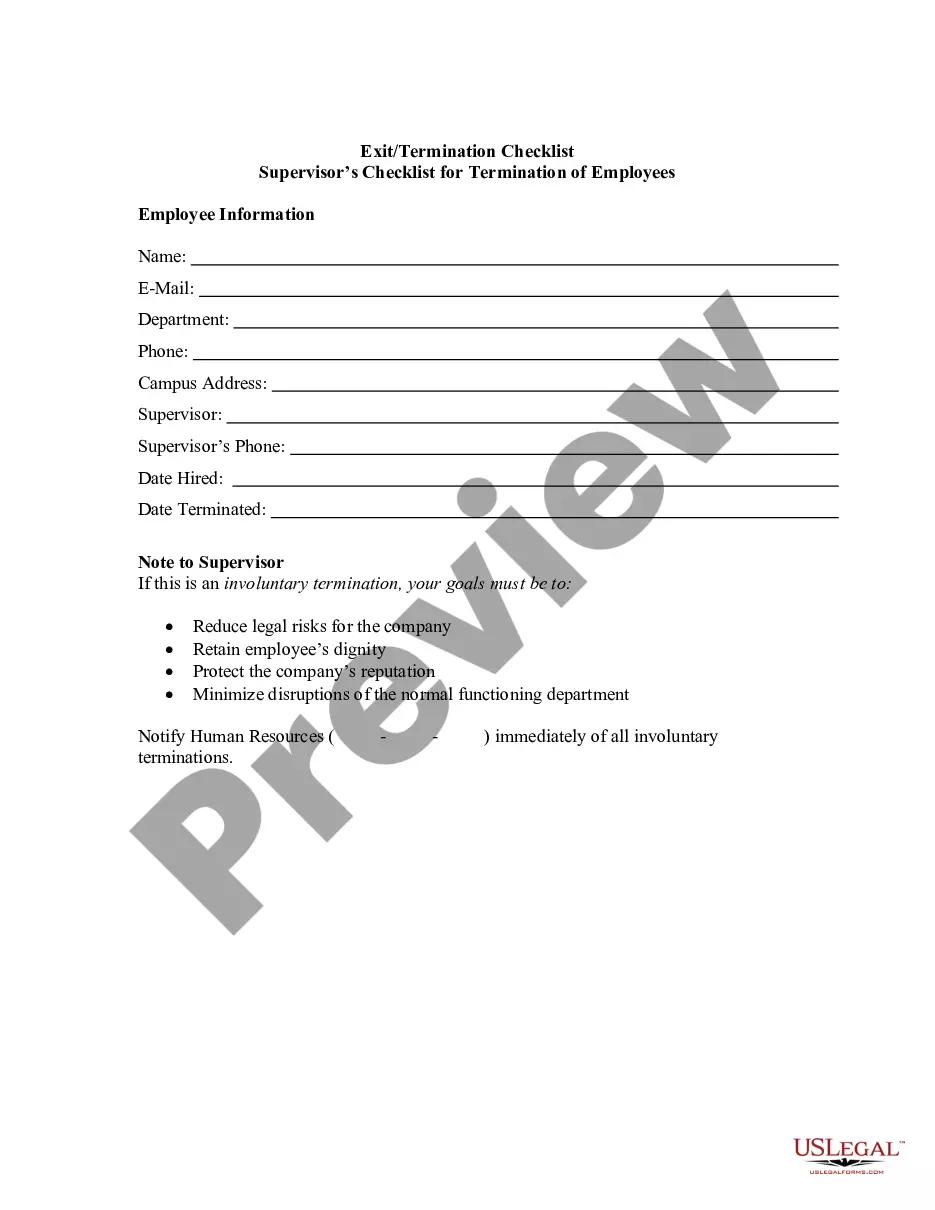
Settlement Letter Example In Fairfax
Description


Get your form ready online
Our built-in tools help you complete, sign, share, and store your documents in one place.
Make edits, fill in missing information, and update formatting in US Legal Forms—just like you would in MS Word.
Download a copy, print it, send it by email, or mail it via USPS—whatever works best for your next step.
Sign and collect signatures with our SignNow integration. Send to multiple recipients, set reminders, and more. Go Premium to unlock E-Sign.
If this form requires notarization, complete it online through a secure video call—no need to meet a notary in person or wait for an appointment.
We protect your documents and personal data by following strict security and privacy standards.

Make edits, fill in missing information, and update formatting in US Legal Forms—just like you would in MS Word.

Download a copy, print it, send it by email, or mail it via USPS—whatever works best for your next step.

Sign and collect signatures with our SignNow integration. Send to multiple recipients, set reminders, and more. Go Premium to unlock E-Sign.

If this form requires notarization, complete it online through a secure video call—no need to meet a notary in person or wait for an appointment.

We protect your documents and personal data by following strict security and privacy standards.
Looking for another form?

Form popularity
FAQ
Timeline of How to File a Lawsuit Step 1: File a Complaint. Plaintiff files a complaint and summons with the local county court. Step 2: Answer Complaint. Step 3: Discovery. Step 4: Failing to Respond to Discovery. Step 5: Conclusion of Lawsuit.
Defining a Motion of Reconsideration in Fairfax A motion for reconsideration asks a court to reconsider the sentence previously imposed on a defendant. Only the sentence that the court imposed after having found the defendant guilty is re-examined.
Note: Virginia does not issue “letters testamentary”. A qualification certificate stamped with the seal of the Court is issued showing that an executor or administrator has been qualified, posted bond and has authority to act on behalf of the estate.
Estate or Probate Attorney. Anyone who needs assistance in navigating the probate process would be well-advised to consult with a knowledgeable attorney experienced in estates and probate administration.
The will should be probated in the circuit court in the county or city where the decedent resided at the time of death. If the decedent had no known place of residence, the will should be probated where the decedent owned any real estate, or if none, where the decedent died or has any estate.
Probating a copy of a will in Virginia requires an additional step – a petition must be be filed in the Circuit Court where the decedent last lived (unless they were in a nursing home, then other rules may apply) asking that the Court accept the copy as the original will.
The probate of the will can usually wait until a week or so after the funeral. It is recommended that the initial steps in the estate process start within 30 days after death. If any questions exist, call your attorney or your local Circuit Court Clerk's Office.
The Fairfax Circuit Court serves the residents of Fairfax County and Fairfax City. The Fairfax Circuit Court (19th Judicial Circuit) is the trial court of general jurisdiction and is the largest trial court in Virginia, composed of fifteen full-time trial judges.
In Fairfax County and the City of Fairfax, homestead deeds are recorded in the Land Records Division of the Fairfax Circuit Court. The address of the Land Records Division is: Fairfax Circuit Court, 4110 Chain Bridge Road, Suite 317, Fairfax, VA 22030. The telephone number is 703/691-7320 (press 3, then 3).