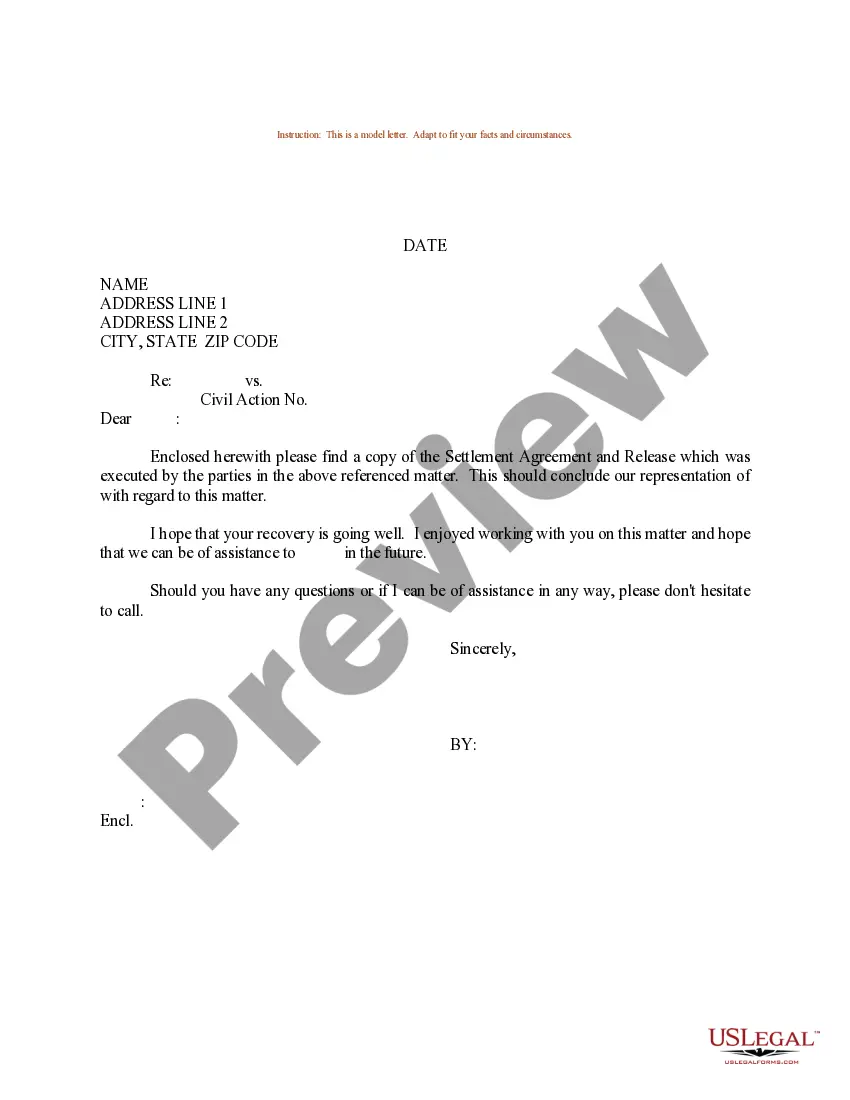
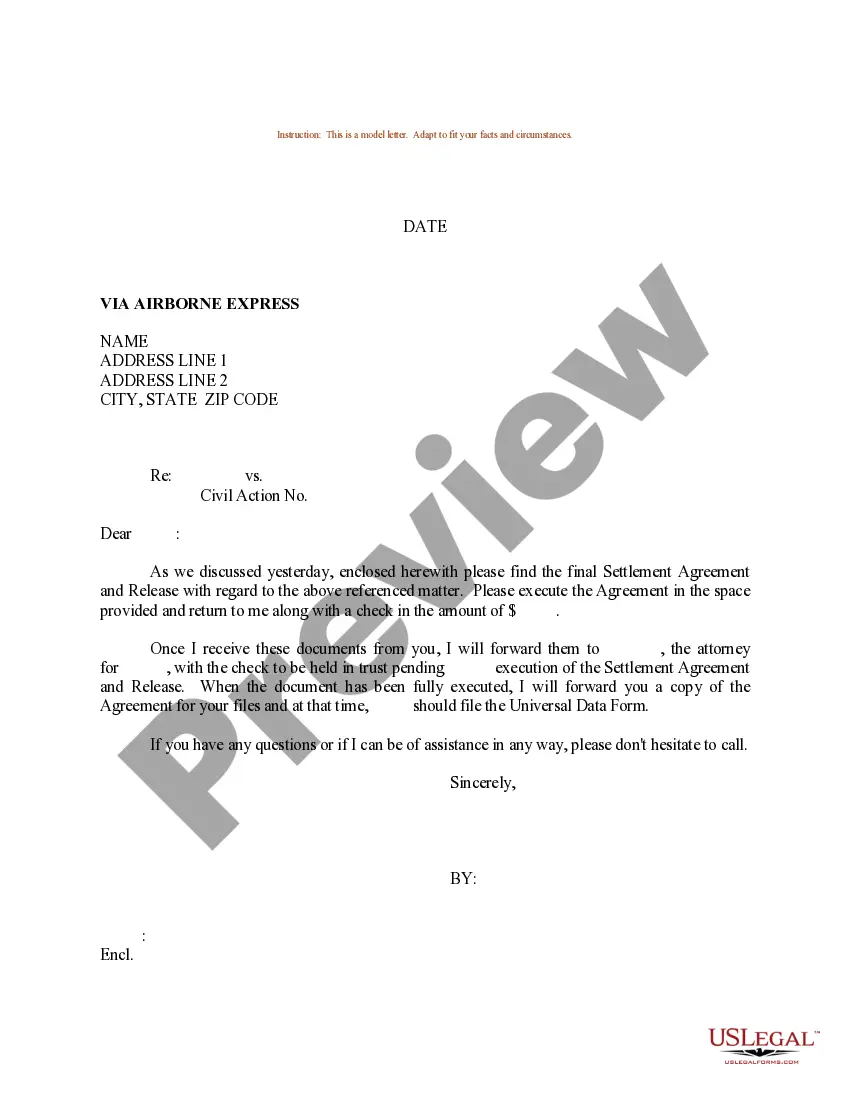
Settlement Agreement Cover Letter With No Experience In Collin
Description


Get your form ready online
Our built-in tools help you complete, sign, share, and store your documents in one place.
Make edits, fill in missing information, and update formatting in US Legal Forms—just like you would in MS Word.
Download a copy, print it, send it by email, or mail it via USPS—whatever works best for your next step.
Sign and collect signatures with our SignNow integration. Send to multiple recipients, set reminders, and more. Go Premium to unlock E-Sign.
If this form requires notarization, complete it online through a secure video call—no need to meet a notary in person or wait for an appointment.
We protect your documents and personal data by following strict security and privacy standards.

Make edits, fill in missing information, and update formatting in US Legal Forms—just like you would in MS Word.

Download a copy, print it, send it by email, or mail it via USPS—whatever works best for your next step.

Sign and collect signatures with our SignNow integration. Send to multiple recipients, set reminders, and more. Go Premium to unlock E-Sign.

If this form requires notarization, complete it online through a secure video call—no need to meet a notary in person or wait for an appointment.

We protect your documents and personal data by following strict security and privacy standards.
Looking for another form?






Form popularity
FAQ
What things should be included in the Full and Final Settlement Letter? Settlement Amount: Clearly state the finalized amount to be settled. Settlement Cheque: Provide details regarding the issuance of the settlement cheque. Resignation/Termination Date: Specify the date on which the employee resigned or was terminated.
Settlement negotiations involve knowing the case inside and out; being able to understand and anticipate opposing counsel's position; understanding the law, jurisdiction, and court in play; arguing the strengths of the case while also recognizing the weaknesses; seeing the case through from start to finish; and ...
Drafting a settlement agreement Consult with legal counsel. Always get legal advice when drafting or entering into a settlement agreement. Detail the dispute. Clearly outline the nature of the dispute and the reasons for the settlement. Specify terms. Include a release. Maintain confidentiality. Sign and date.
If you think the offer is reasonable, it's probably worth accepting. If you don't think it's reasonable, you could ask them to increase it or decline the offer and go to a tribunal.
How to Increase Your Personal Injury Settlement Value Decline the Insurance Company's Initial Offer. Get Immediate Medical Attention. Document the Incident. Take Notes About the Aftermath. Track Your Expenses. Don't Say Too Much. Avoid Social Media. File Your Claim Before the Deadline.
Try to stay level-headed. Keeping the conversation polite and respectful will improve your chances of reaching agreement. It is also important that you take time to prepare yourself before those negotiation talks begin. Good preparation will give you more confidence going into mediation or settlement discussions.
Making an offer It is very important to make sure the creditor accepts your full and final settlement offer in writing. Make sure you keep a copy in case there is a dispute. This could happen years later and you may need the letter as proof. Never send a lump-sum payment before the offer is accepted.
If you're thinking about negotiating a settlement or repayment agreement with a debt collector, consider the following three steps: Confirm that you owe the debt. Calculate a realistic repayment plan. 3. Make a repayment proposal to the debt collector.
How long do you have to decide whether you want to accept the Settlement Agreement? ing to Acas guidance, employers should give employees a minimum of 10 calendar days to decide whether they want to accept a Settlement Agreement. Your employer should not demand that the Agreement be signed straight away.
Drafting a settlement agreement Consult with legal counsel. Always get legal advice when drafting or entering into a settlement agreement. Detail the dispute. Clearly outline the nature of the dispute and the reasons for the settlement. Specify terms. Include a release. Maintain confidentiality. Sign and date.