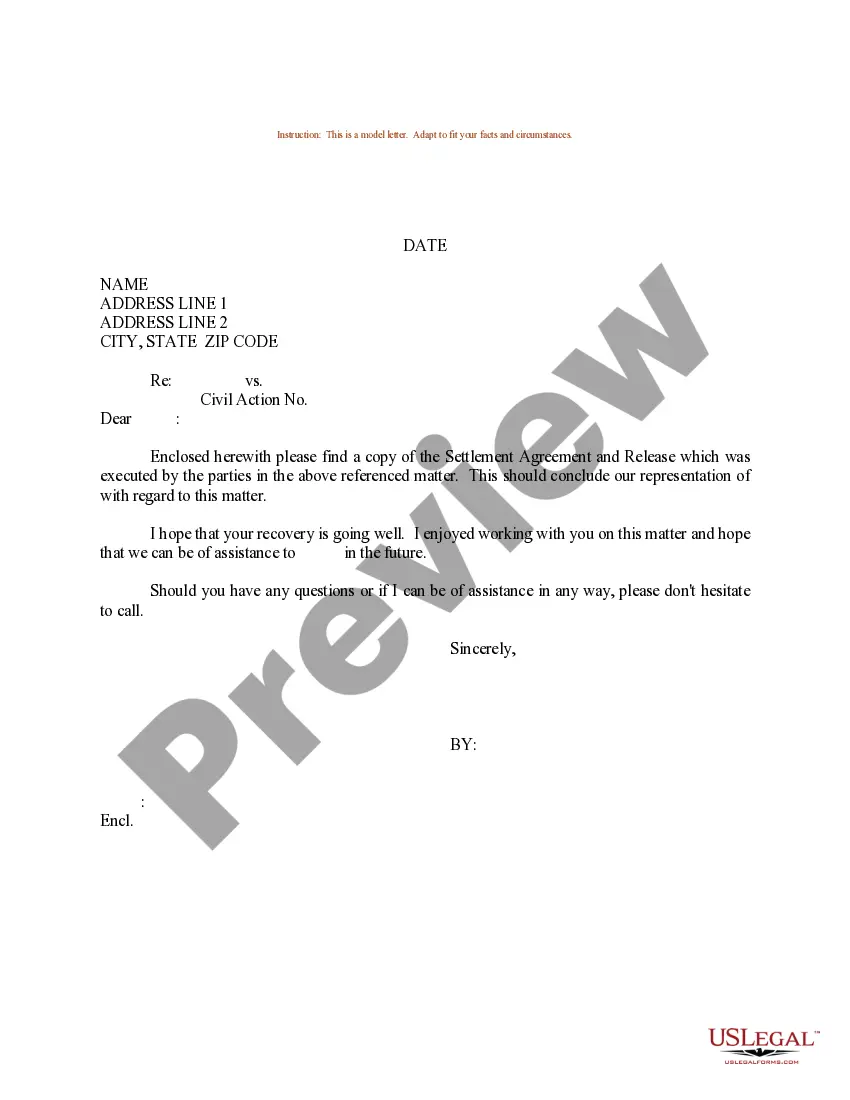
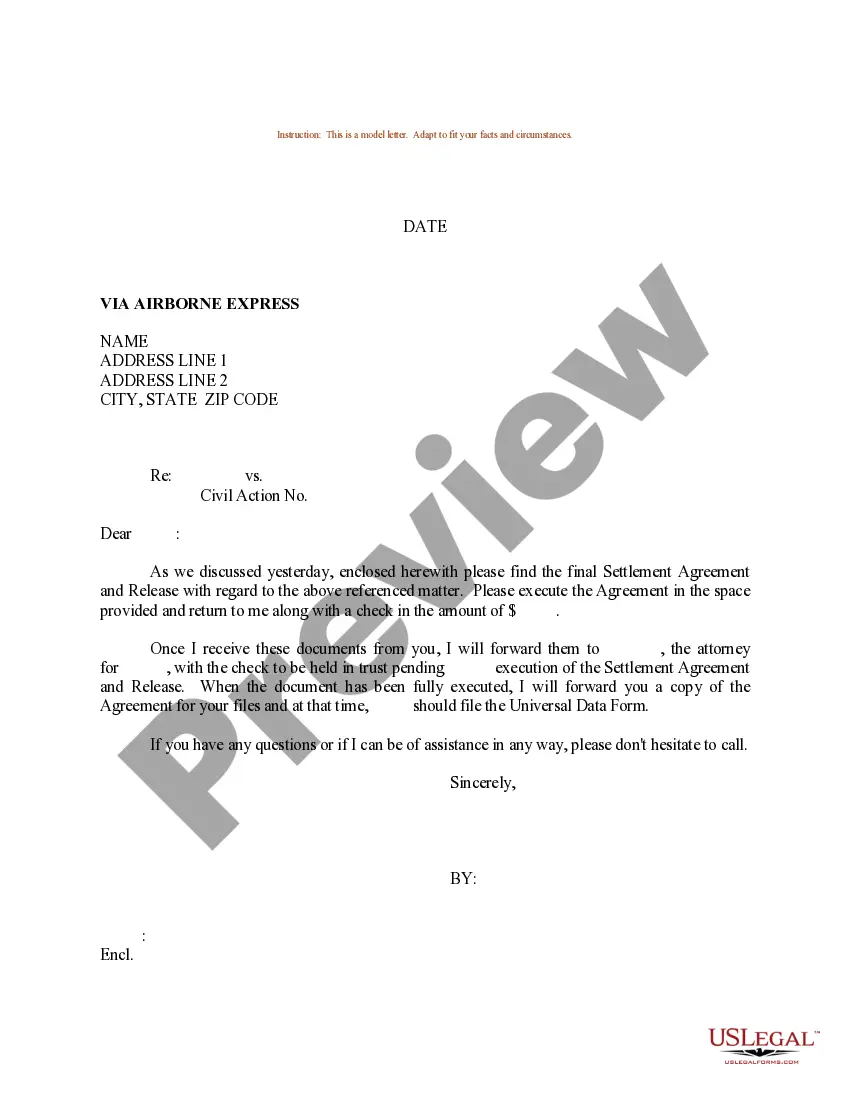
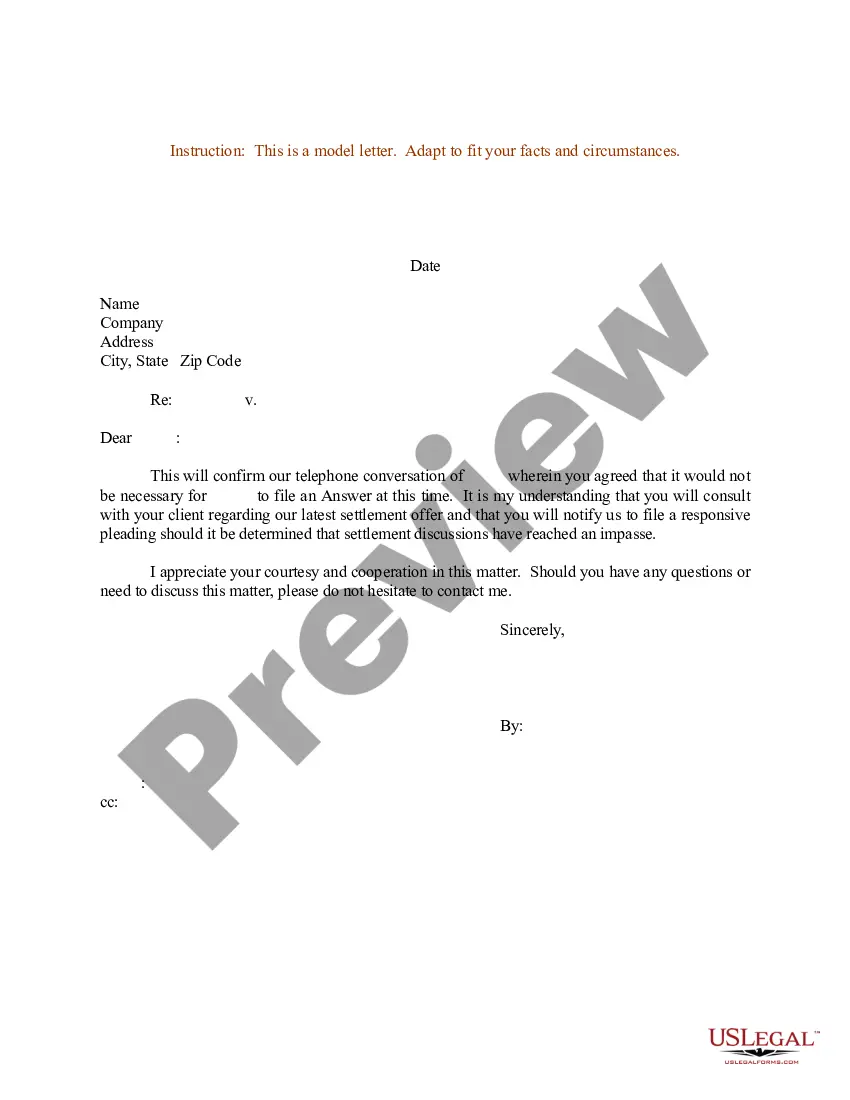
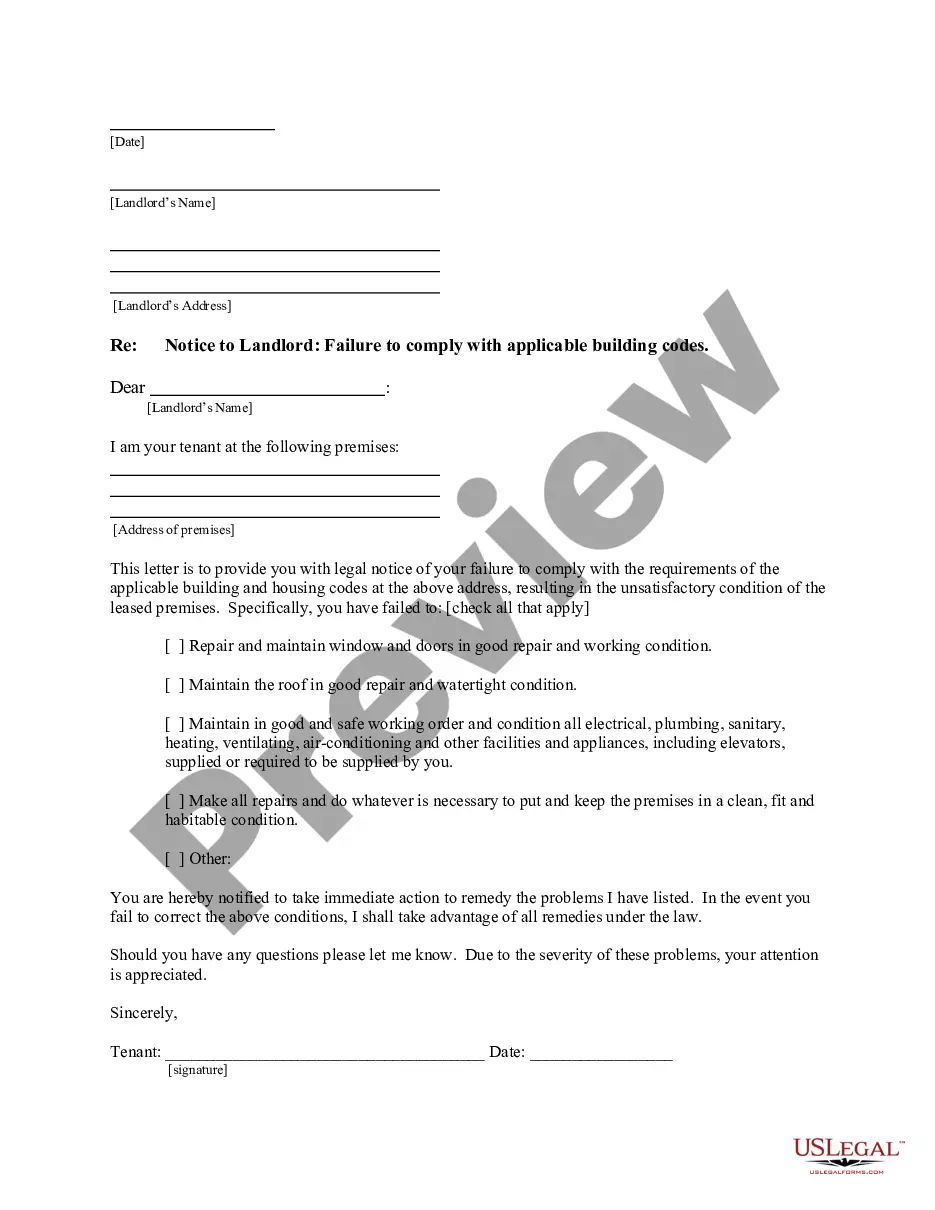
Settlement Agreement Example In Clark
Description


Get your form ready online
Our built-in tools help you complete, sign, share, and store your documents in one place.
Make edits, fill in missing information, and update formatting in US Legal Forms—just like you would in MS Word.
Download a copy, print it, send it by email, or mail it via USPS—whatever works best for your next step.
Sign and collect signatures with our SignNow integration. Send to multiple recipients, set reminders, and more. Go Premium to unlock E-Sign.
If this form requires notarization, complete it online through a secure video call—no need to meet a notary in person or wait for an appointment.
We protect your documents and personal data by following strict security and privacy standards.

Make edits, fill in missing information, and update formatting in US Legal Forms—just like you would in MS Word.

Download a copy, print it, send it by email, or mail it via USPS—whatever works best for your next step.

Sign and collect signatures with our SignNow integration. Send to multiple recipients, set reminders, and more. Go Premium to unlock E-Sign.

If this form requires notarization, complete it online through a secure video call—no need to meet a notary in person or wait for an appointment.

We protect your documents and personal data by following strict security and privacy standards.
Looking for another form?







Form popularity
FAQ
Yes, once all the necessary written concurrences are obtained, a settlement agreement is binding on both parties.
A settlement agreement is a legally binding contract that resolves a dispute between parties, typically without the need for formal court proceedings. It's commonly used in various legal contexts, such as legal contract disputes, employment disputes, marital issues, and medical malpractice cases.
Drafting a settlement agreement Consult with legal counsel. Always get legal advice when drafting or entering into a settlement agreement. Detail the dispute. Clearly outline the nature of the dispute and the reasons for the settlement. Specify terms. Include a release. Maintain confidentiality. Sign and date.
What Should Be Included in a Settlement Agreement? Identifying information for all involved parties. A description of the issue you're seeking to settle. An offer of resolutions that both parties agree to. Proof of valid consideration from both parties without coercion or duress. Legal purpose.
A settlement agreement is a legally binding contract made between an employer and employee. Employers usually offer settlement agreements when they are terminating someone's employment, or if there is an ongoing dispute that they want to resolve. Settlement agreements used to be known as compromise agreements.
A settlement agreement is always in writing, and both parties must agree to the provisions in the settlement agreement. Also, both parties must sign the settlement agreement for it to be legally binding. A settlement agreement will resolve a civil lawsuit.
To meet the requirements of summary enforcement, an out-of-court written settlement agreement must be signed by the parties themselves and not just their attorneys. In addition, all of the parties to the settlement agreement must sign the agreement and not just the party against whom enforcement is sought.
A settlement agreement is always in writing, and both parties must agree to the provisions in the settlement agreement. Also, both parties must sign the settlement agreement for it to be legally binding. A settlement agreement will resolve a civil lawsuit.
They can either ask for a settlement agreement themselves or with support from a qualified advisor or solicitor. Regardless of whether the employer or employee is the one initiating settlement agreement discussions, we always recommend reaching out to an experienced solicitor or qualified advisor.
What Should Be Included in a Settlement Agreement? Identifying information for all involved parties. A description of the issue you're seeking to settle. An offer of resolutions that both parties agree to. Proof of valid consideration from both parties without coercion or duress. Legal purpose.