Termination With Severance Letter In Travis
Description


Form popularity
FAQ
What is the downside to severance? The downside to severance includes financial drawbacks such as loss of steady income, potential loss of benefits, and uncertainty about future job prospects, as well as the impact on retirement savings and benefits.
A termination clause is a provision in the employment contract that defines the rights of the employee at the termination of the employment relationship. It typically determines how much notice period and severance an employee is entitled to when the termination is on a without-cause basis.
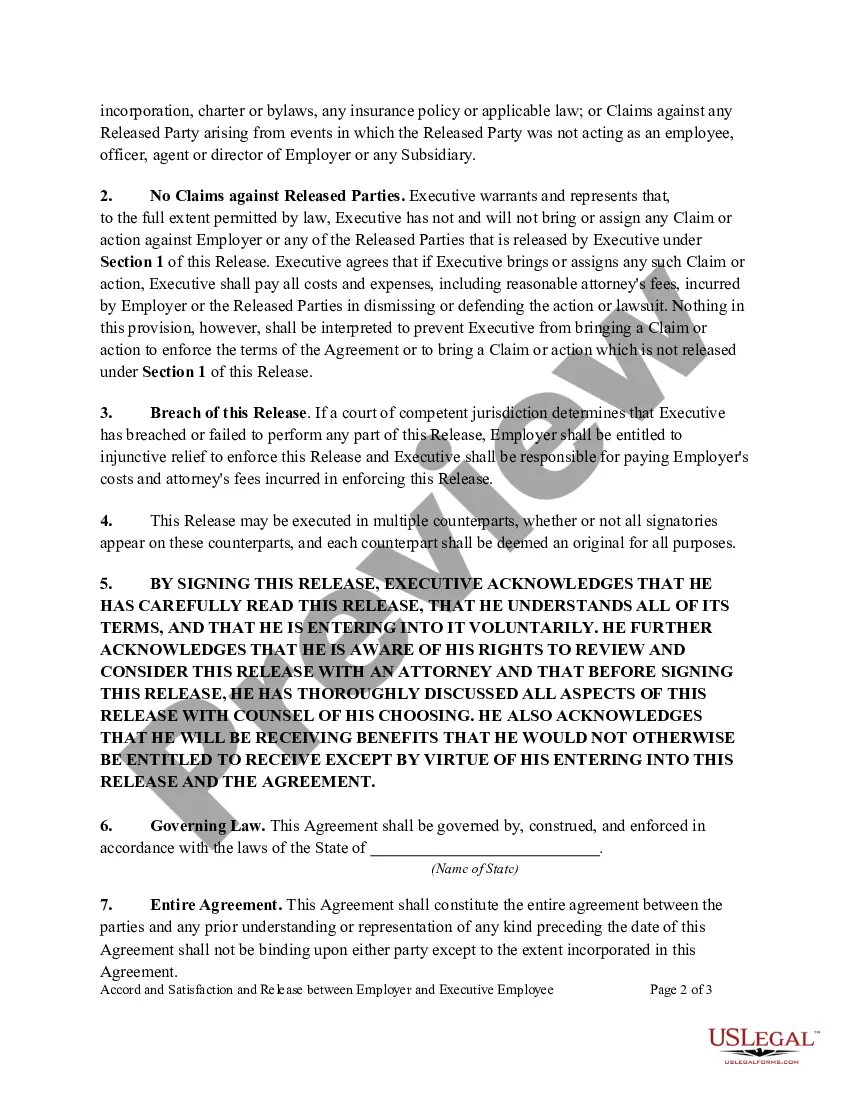
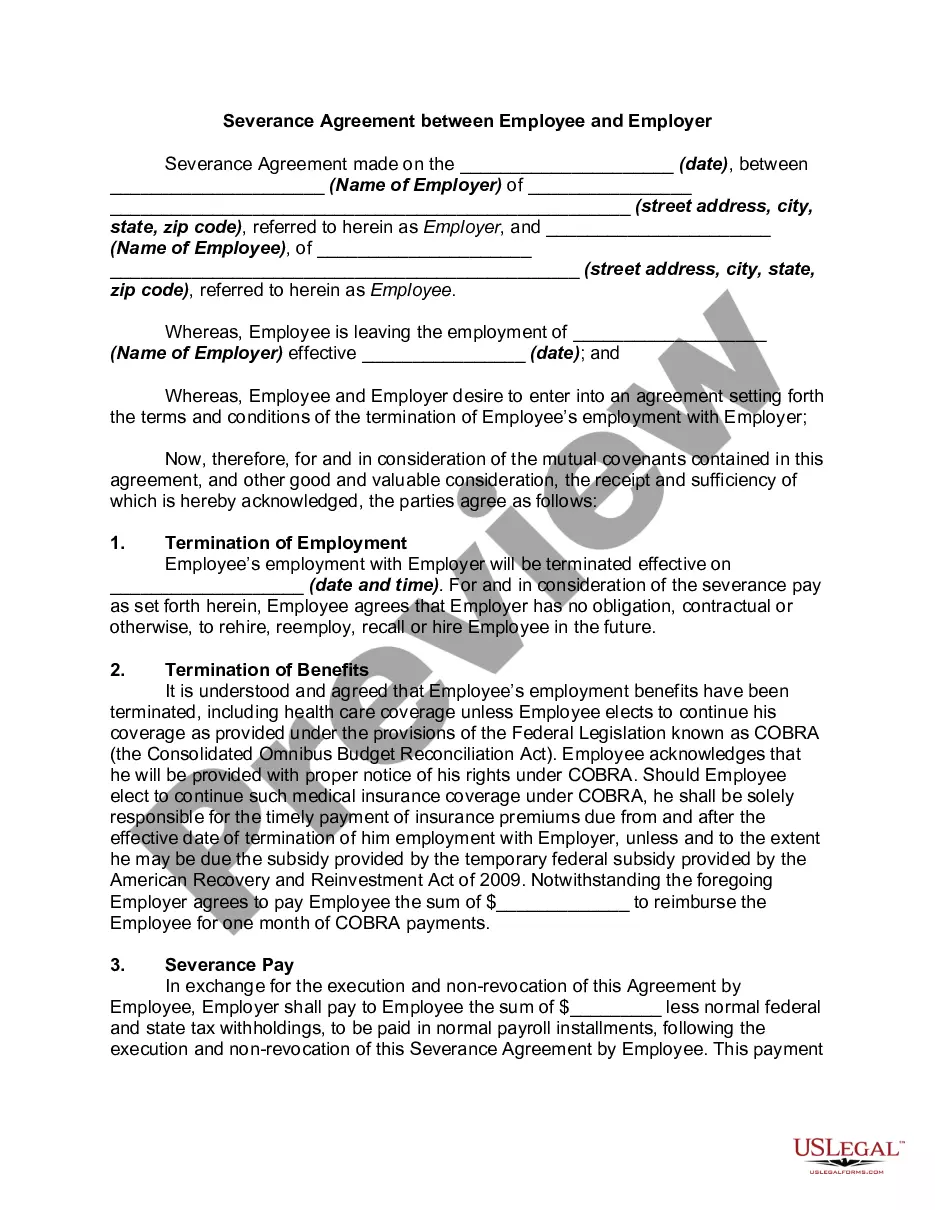
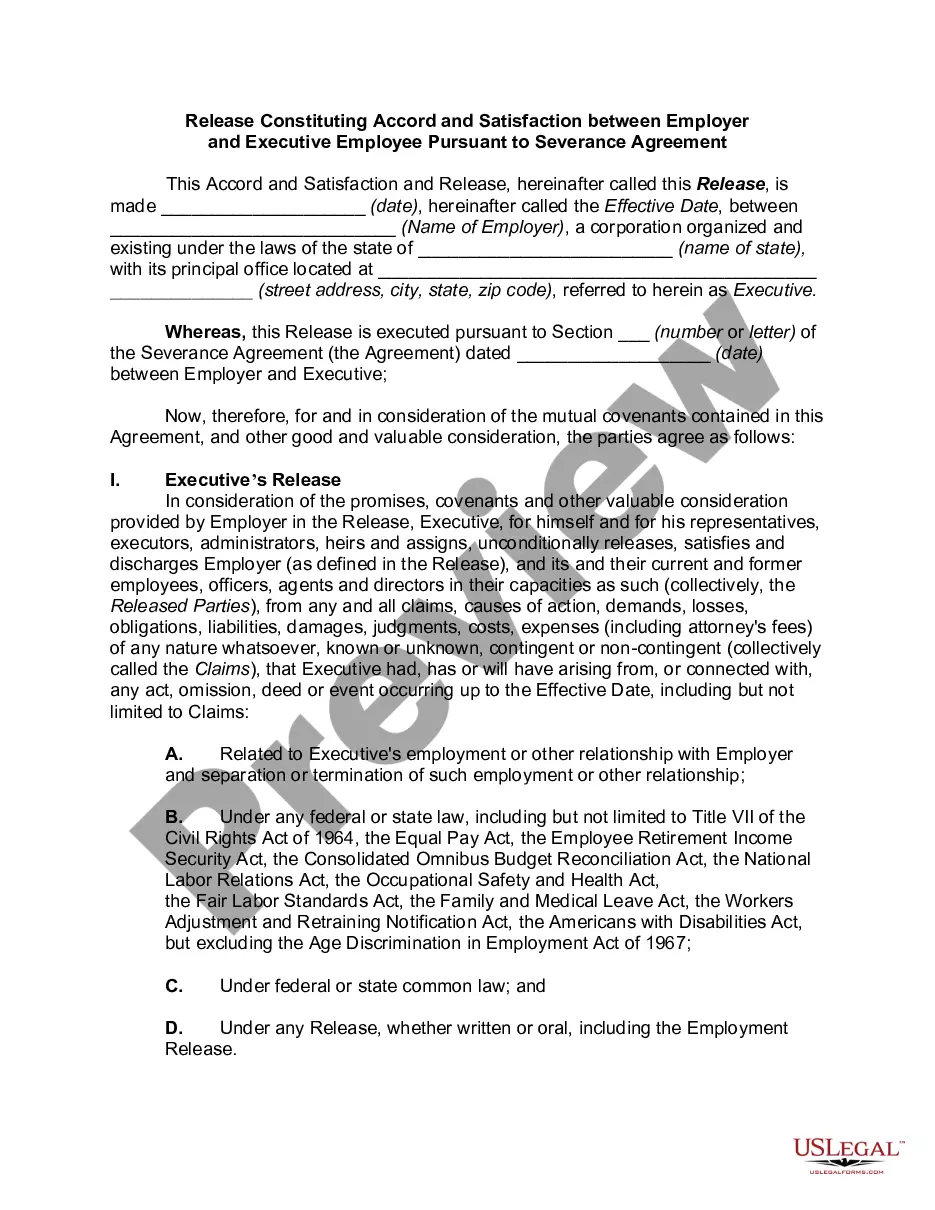
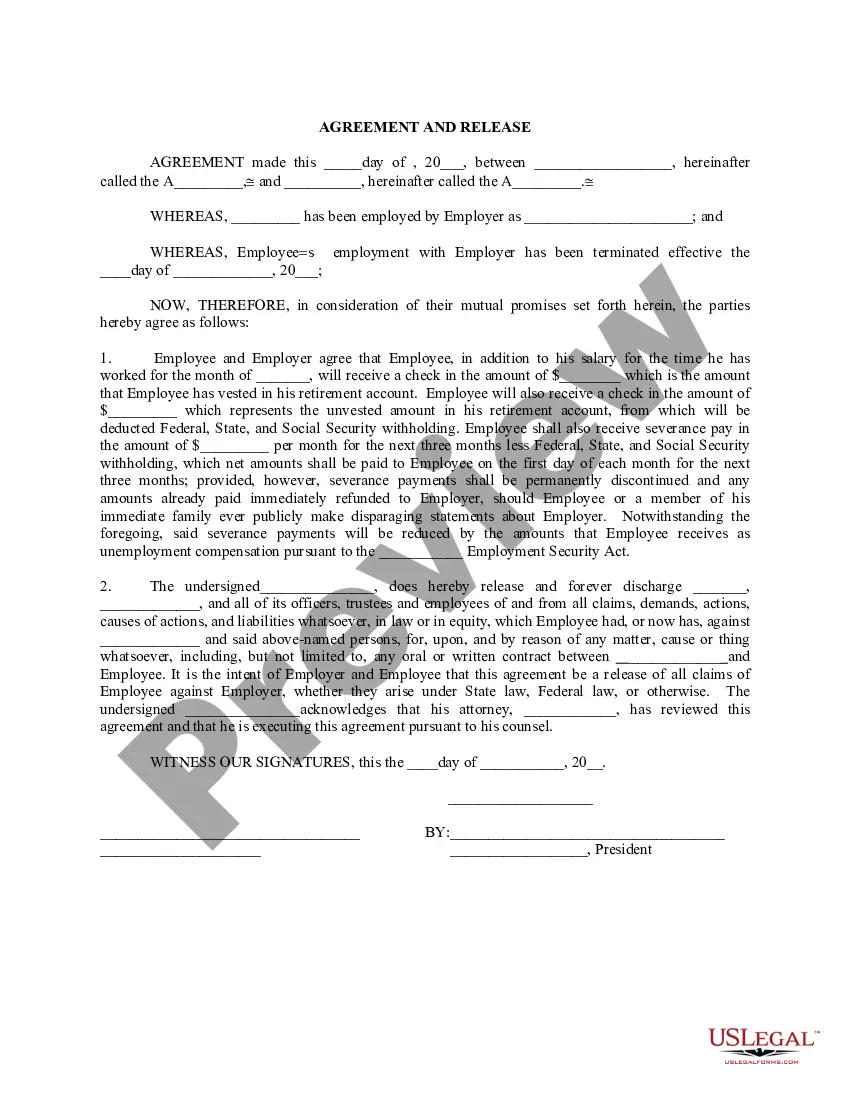
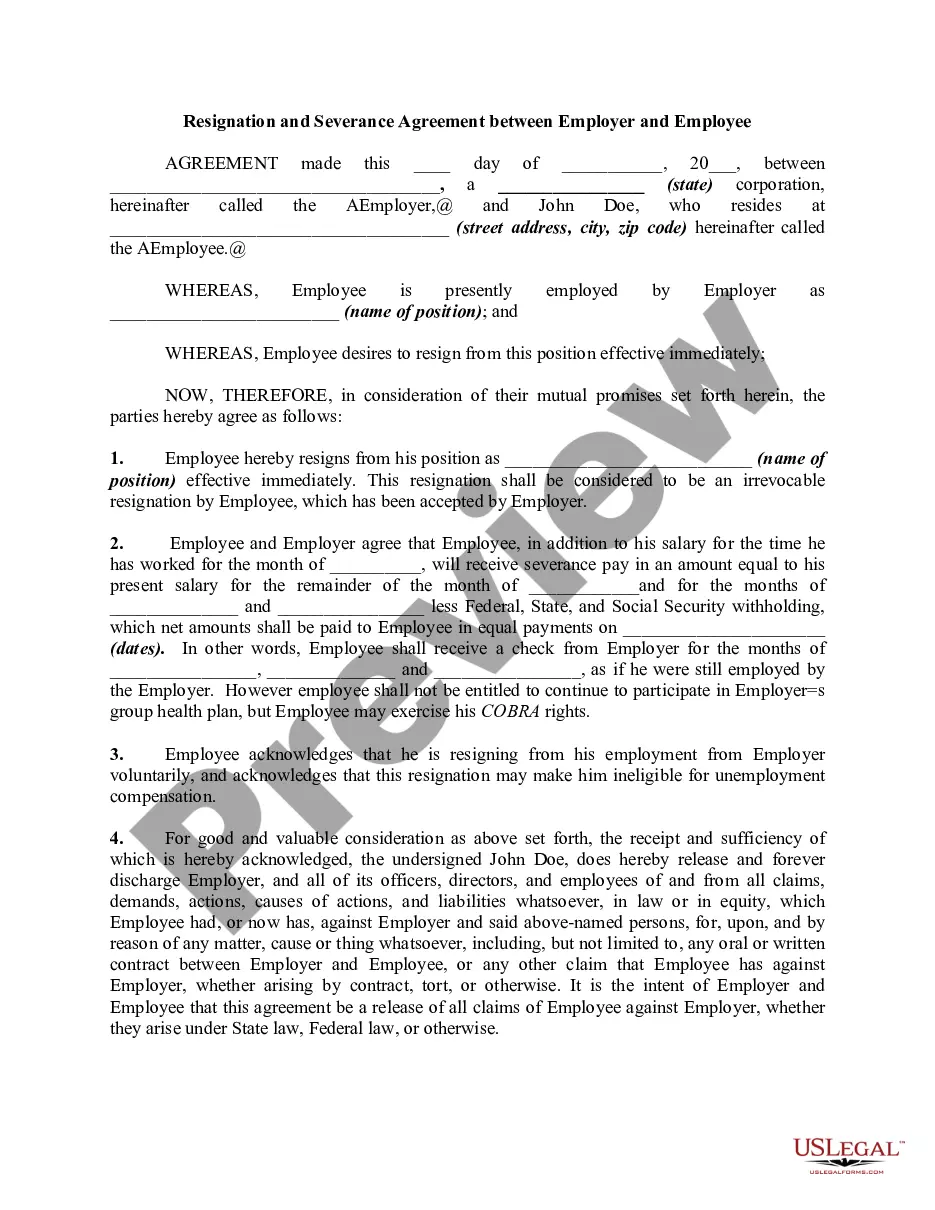
Basically, a severance agreement is a waiver or release of liability that the outgoing employee signs, protecting the business from lawsuits. These agreements are usually part of a larger severance package that includes compensation, outplacement services, and other benefits in exchange for the employee's signature.
The following is a list of some common reasons for denial: Voluntarily leaving work without good cause. Being discharged for misconduct connected with work. Not being able to work or available for work. Refusing an offer of suitable work. Knowingly making false statements to obtain benefit payments.