Termination Without Severance Pay In Tarrant
Description

Form popularity
FAQ
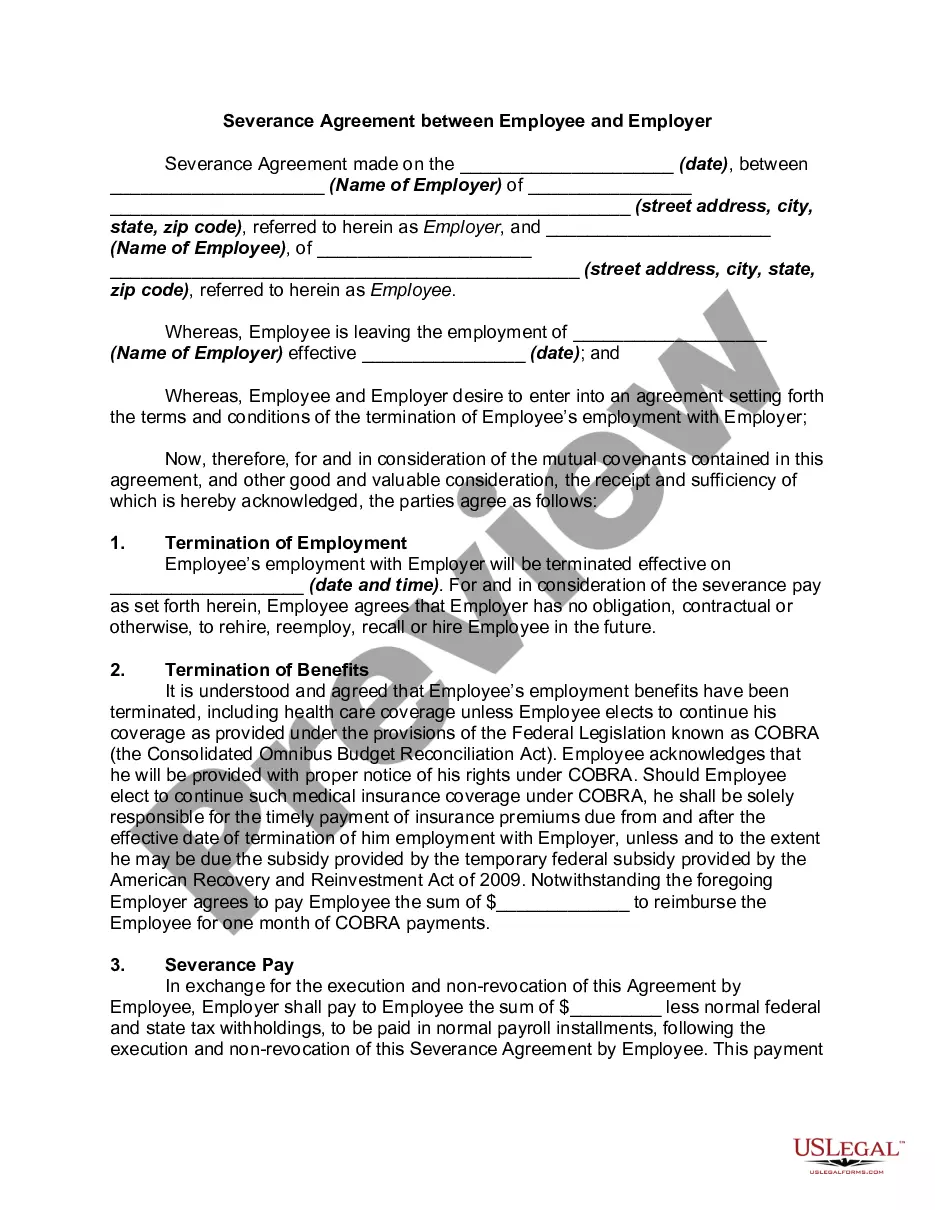
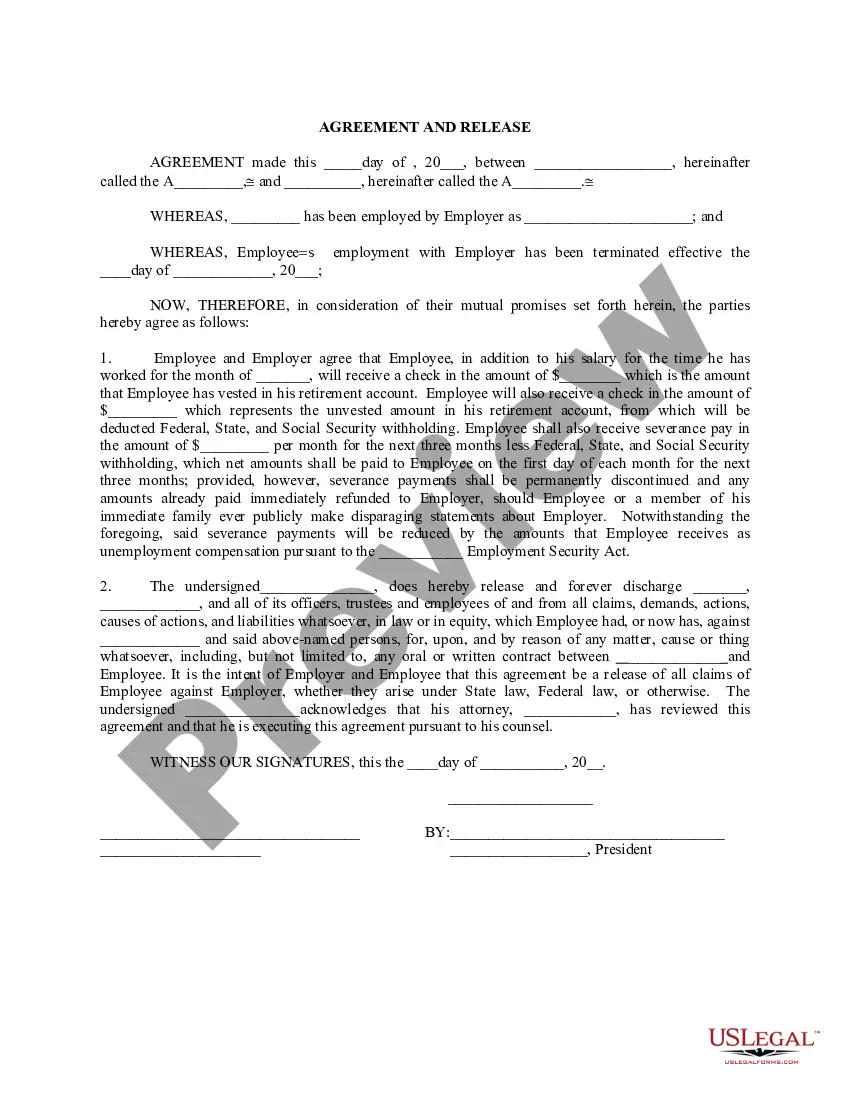
There is no requirement to provide severance in the US and if you were terminated for cause a company generally would not provide it. In general severance is only provided when a company does something like lay you off because of financial conditions or restructuring (if even then).
"Pink slip" or work separation notice - optional in most states - not required in Texas (however, giving at least a simple work separation notice can help prevent ex-employees from filing wage claims based upon "work" they allegedly did after your company thought they were gone - see comment 5 under "Work Separations - ...
Because Texas is an “employment at-will” state, an employer can fire an employee at any time for any lawful reason. Any lawful reason for termination may include a bad reason or no reason at all.
Employment relationships in Texas are governed by the “at-will employment” doctrine. This means that either the employer or employee can terminate employment for any reason, or even no reason, unless there is a specific law or agreement to the contrary.
Unfortunately for Texas employees, Texas is not a “for cause” state. Instead, Texas has adopted employment-at-will. So when a Texas employee claims “wrongful termination” what he or she really means is “illegal termination.” In Texas, for a termination to be illegal, it must violate a law, statute, or regulation.
The Basics of Texas Law on Commissions In general, Texas employers have wide discretion to implement and modify the terms of a commission plan or bonus agreement, but generally cannot interfere with an employee's earned commissions.
Let's break it down with some definitions, as they pertain to U.S. employers: At-Will Employment. Voluntary Terminations. Mutual Termination of Employment. Involuntary Termination.
For example, if you decide to quit, you can do so without giving advance notice, unless your work contract or employee handbook says you should. Even though Texas law doesn't require you to give two weeks' notice, doing so can show professionalism and help you leave on good terms with your current employer.
No advance notice of termination or resignation is required. If advance notice of resignation is given, it can be accepted, rejected, or modified by the employer.