Direct Lease Vs Sublease In San Bernardino
Description


Get your form ready online
Our built-in tools help you complete, sign, share, and store your documents in one place.
Make edits, fill in missing information, and update formatting in US Legal Forms—just like you would in MS Word.
Download a copy, print it, send it by email, or mail it via USPS—whatever works best for your next step.
Sign and collect signatures with our SignNow integration. Send to multiple recipients, set reminders, and more. Go Premium to unlock E-Sign.
If this form requires notarization, complete it online through a secure video call—no need to meet a notary in person or wait for an appointment.
We protect your documents and personal data by following strict security and privacy standards.

Make edits, fill in missing information, and update formatting in US Legal Forms—just like you would in MS Word.

Download a copy, print it, send it by email, or mail it via USPS—whatever works best for your next step.

Sign and collect signatures with our SignNow integration. Send to multiple recipients, set reminders, and more. Go Premium to unlock E-Sign.

If this form requires notarization, complete it online through a secure video call—no need to meet a notary in person or wait for an appointment.

We protect your documents and personal data by following strict security and privacy standards.
Looking for another form?







Form popularity
FAQ
The landlord must give the initial renter approval before subletting the property. A sublease is required when the original tenant wants to lease a sizable piece of the property. When the original tenant wishes to lease the entire property to a different party, a sublease is also necessary.
Consent from the landlord A tenant must get a landlord's written permission to sub-let or transfer any part of the property. If a tenant does this without consent, they are breaching the terms of the tenancy agreement.
California law requires tenants to seek explicit, written permission from their landlords to sublet if it is not already allowed in the lease. Landlords have the right to approve or deny these requests unless prohibited by a local ordinance.
In a standard lease, the tenant has direct obligations to the landlord including paying rent, maintaining the property, and complying with lease terms. In a sublease, the original tenant retains these responsibilities to the landlord, even after subleasing the property.
Subletting Can Impact Property Values Parking becomes difficult, there are higher utility costs, and the neighborhood won't be as appealing to prospective buyers.
There are many ways a sublease can benefit both parties, but overall, it has to do with flexibility. You may be looking to get out of your lease early without fees or penalties, while someone else may only need a place to live for a short while.
California law requires tenants to seek explicit, written permission from their landlords to sublet if it is not already allowed in the lease. Landlords have the right to approve or deny these requests unless prohibited by a local ordinance.
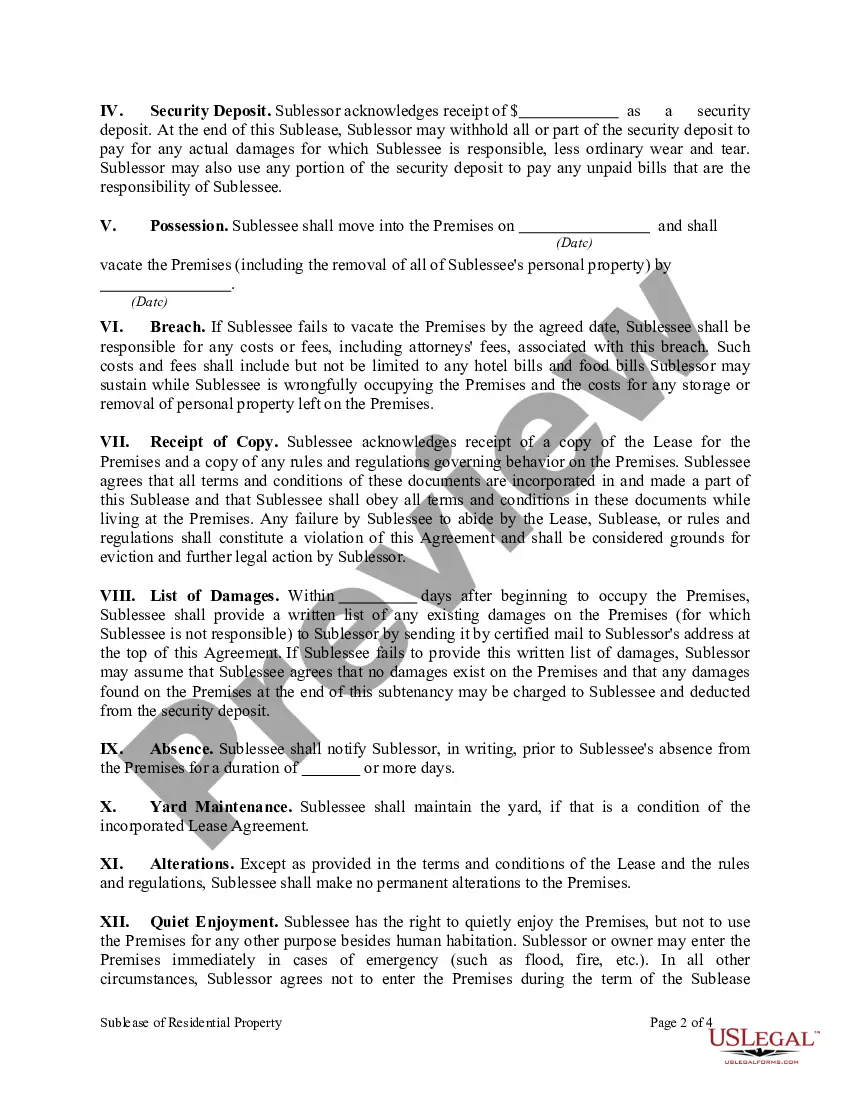
A lease is a rental contract between a landlord and a tenant, whereas a sublease is a contract between a tenant and a sub-tenant who has assumed obligations of the tenant's lease.
The cons of sub leasing for sublessees Your sublease terms include the rights to recover costs and damages. You understand your rights and obligations when it comes to sublessor default. The rent you're paying is finding its way to the landlord's pocket.
