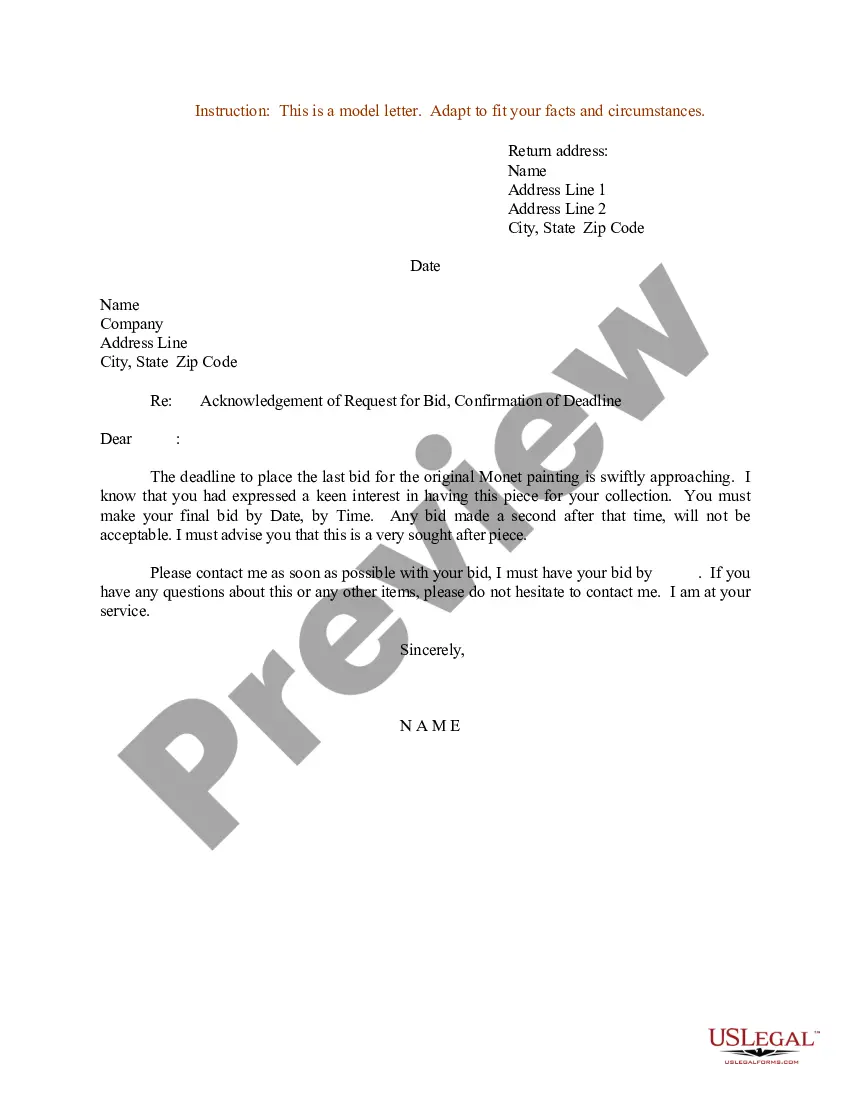
Request For Bid In Middlesex
Description


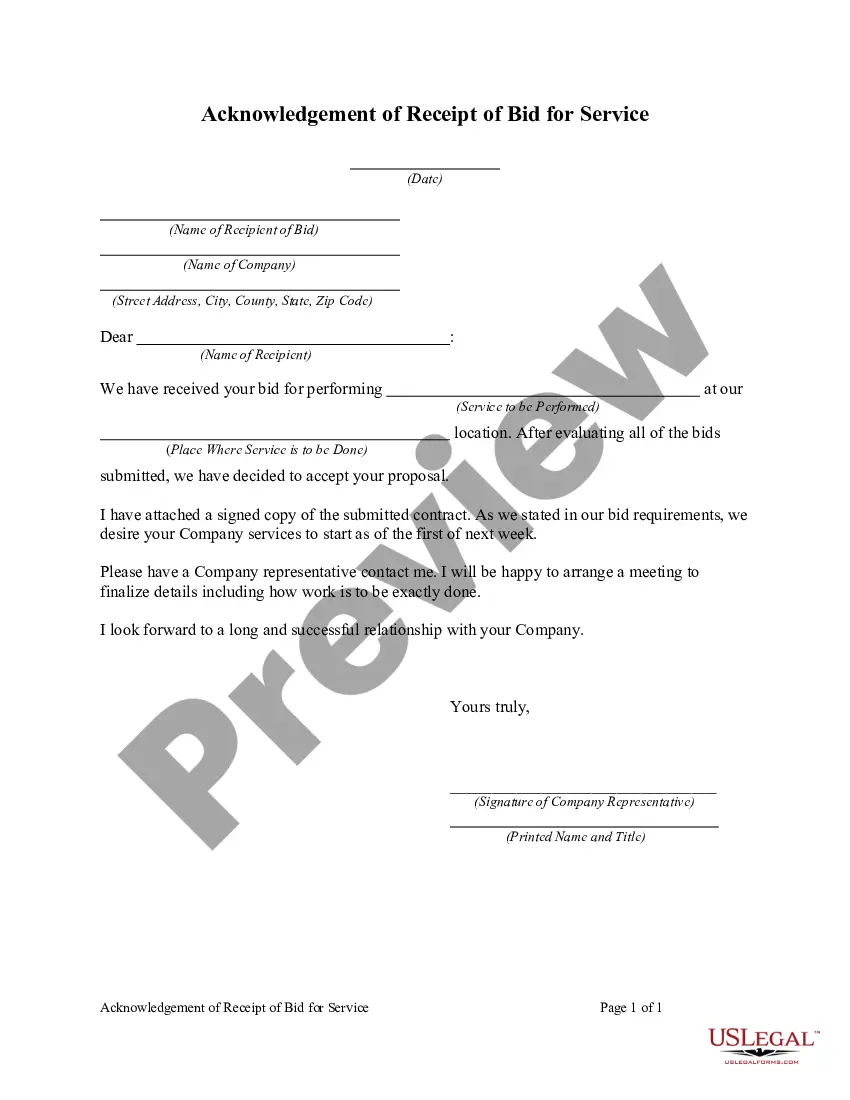
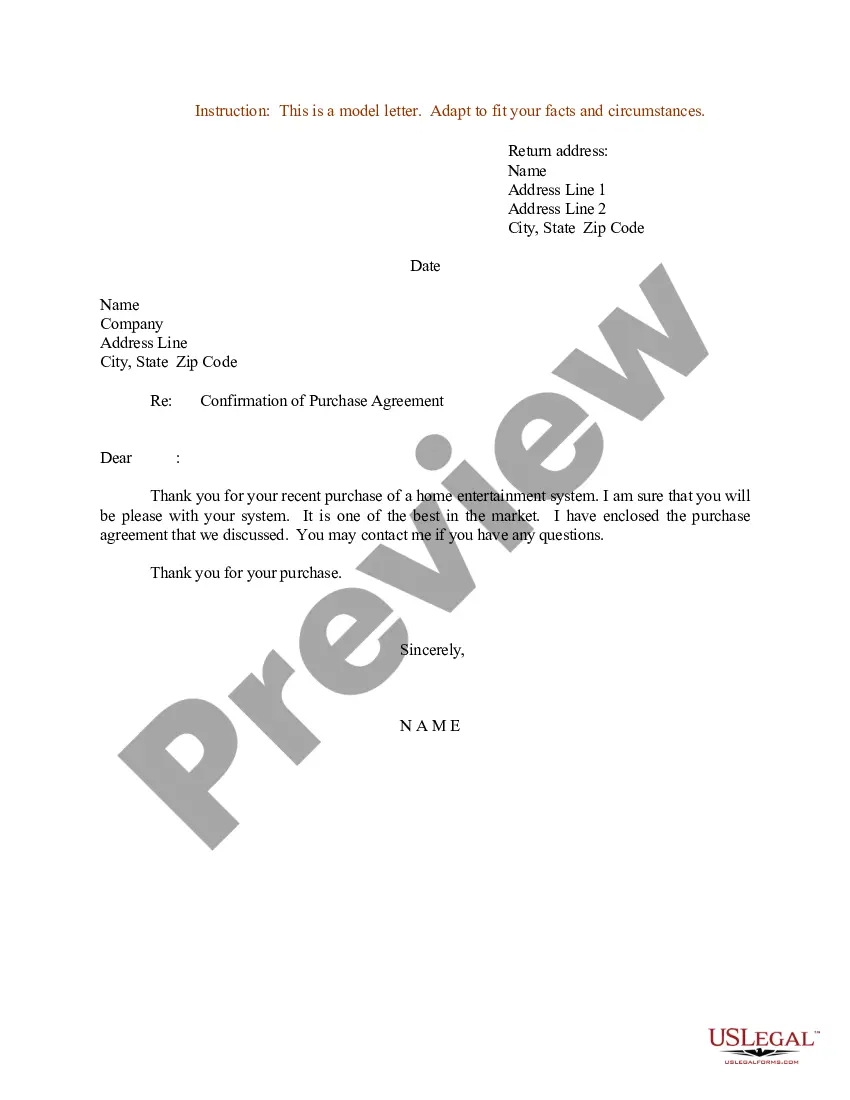
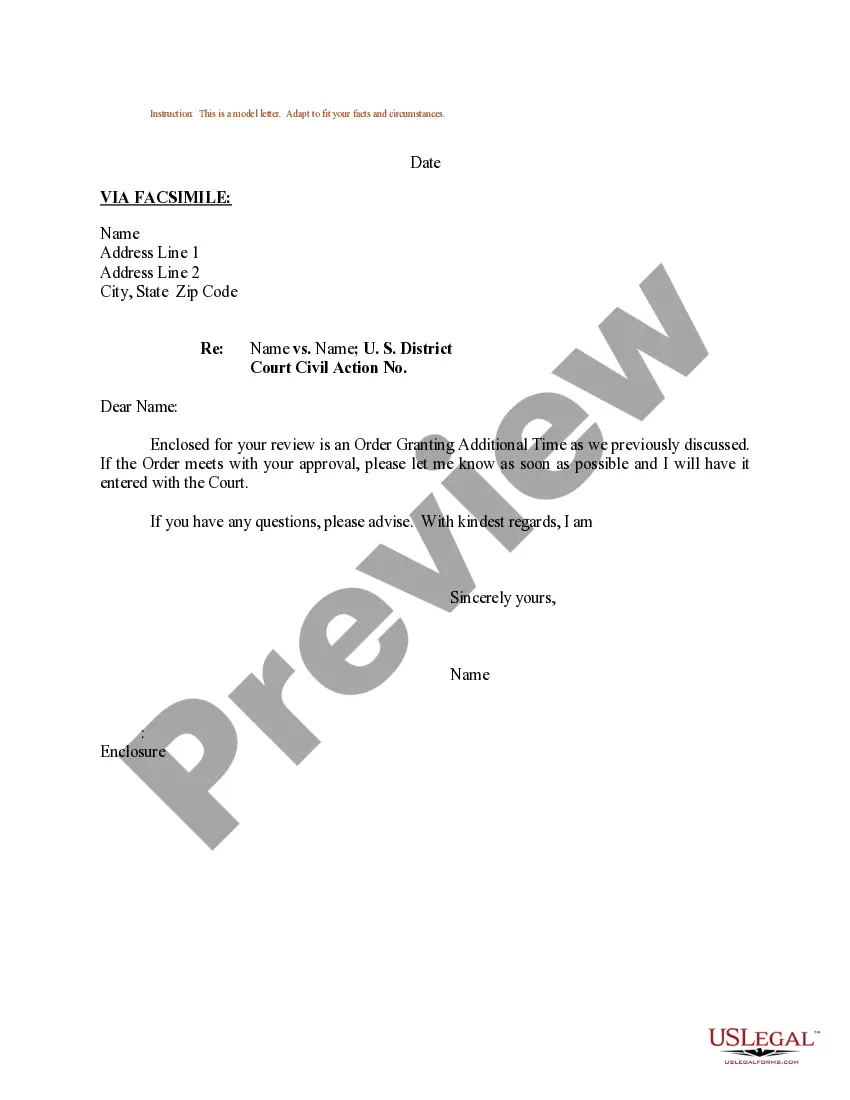
Get your form ready online
Our built-in tools help you complete, sign, share, and store your documents in one place.
Make edits, fill in missing information, and update formatting in US Legal Forms—just like you would in MS Word.
Download a copy, print it, send it by email, or mail it via USPS—whatever works best for your next step.
Sign and collect signatures with our SignNow integration. Send to multiple recipients, set reminders, and more. Go Premium to unlock E-Sign.
If this form requires notarization, complete it online through a secure video call—no need to meet a notary in person or wait for an appointment.
We protect your documents and personal data by following strict security and privacy standards.

Make edits, fill in missing information, and update formatting in US Legal Forms—just like you would in MS Word.

Download a copy, print it, send it by email, or mail it via USPS—whatever works best for your next step.

Sign and collect signatures with our SignNow integration. Send to multiple recipients, set reminders, and more. Go Premium to unlock E-Sign.

If this form requires notarization, complete it online through a secure video call—no need to meet a notary in person or wait for an appointment.

We protect your documents and personal data by following strict security and privacy standards.
Looking for another form?






Form popularity
FAQ
The RFP process allows more flexibility than the sealed bid process in the evaluation process. The evaluation committee first evaluates proposals for compliance to the specifications and requirements in the RFP and creates a list of those firms whose proposals meet mandatory requirements.
The purpose of a bid is to win a contract by offering a solution that meets the client's needs and requirements. On the other hand, a proposal is a document that outlines a solution to a problem or an opportunity.
A bid request is a piece of code used to sell display ads and inventory details. It allows visitors to see ads most suited to them, and for multiple advertisers to utilize the same ad spot on a given publisher's platform.
The RFP process allows more flexibility than the sealed bid process in the evaluation process. The evaluation committee first evaluates proposals for compliance to the specifications and requirements in the RFP and creates a list of those firms whose proposals meet mandatory requirements.
An RFB is used when you know precisely what you need and have precise requirements and specifications. The RFP is a hybrid of these documents. An RFP is used when you have a general idea with some specifications and/or it's a large, complex project with potential for multiple solutions.
How to write a bid proposal Get an in-depth understanding of the project. Research the client. Evaluate the competition. Consider offering an additional good or service. Include relevant information. Proofread your proposal.
Dear Sir, With reference to your Tender Document dated date, I, have examined the Tender Document and understood their contents, hereby submit my Technical Bid. Capitalised expressions used in this letter have the same meaning as ascribed thereto in the Tender Document.
Bid writing example response (for the tender question above): With number years' experience working with you, we have the capacity and capability to provide efficient, best value services. 100% of our Operatives on this contract are based within time minutes' drive from your sites.
How does it actually work? As soon as a user visits the web page or a user hits an app, the bid request is generated and pulls various data points based on the consenting user, page, and site analytics. This information is then passed to the ad exchange, where it's shared with advertisers.