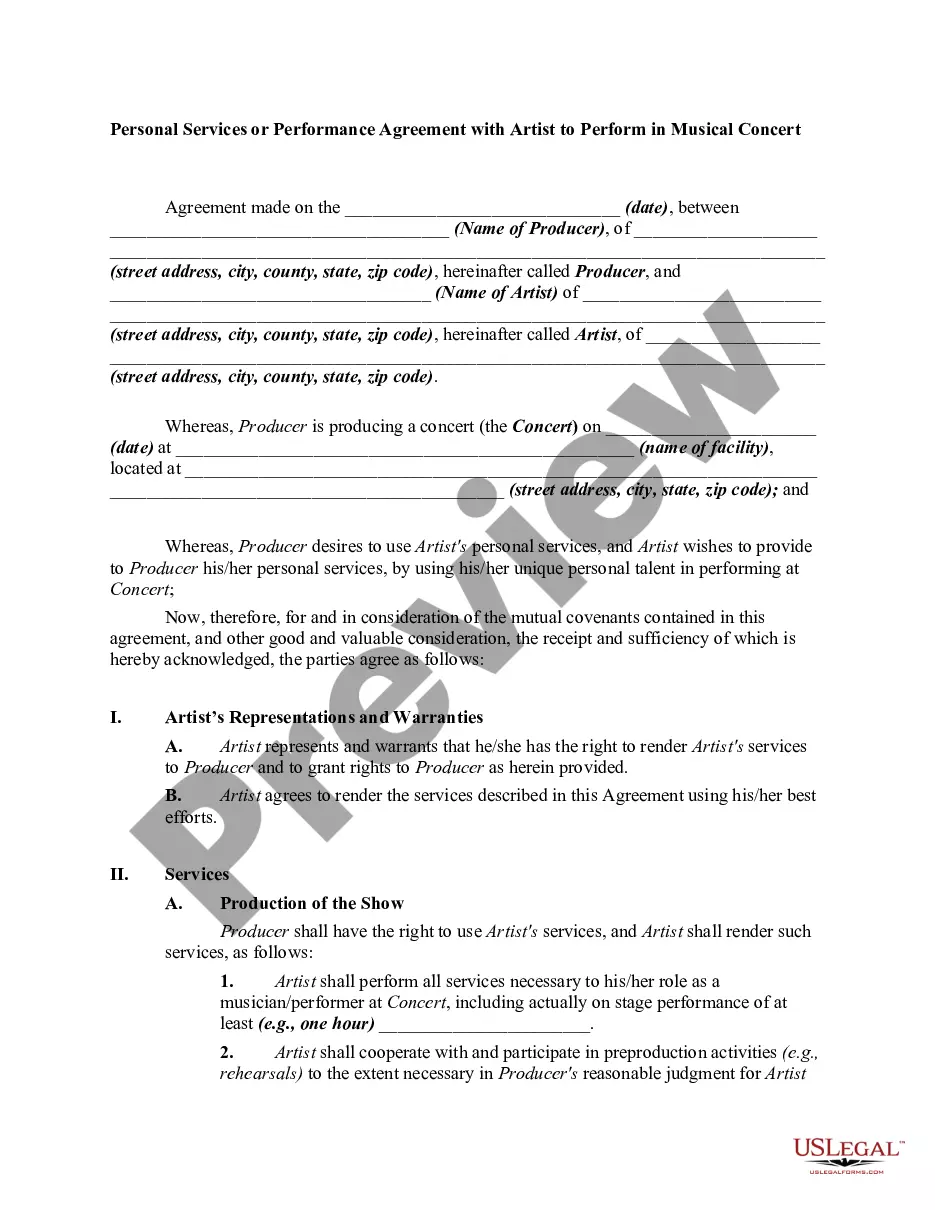
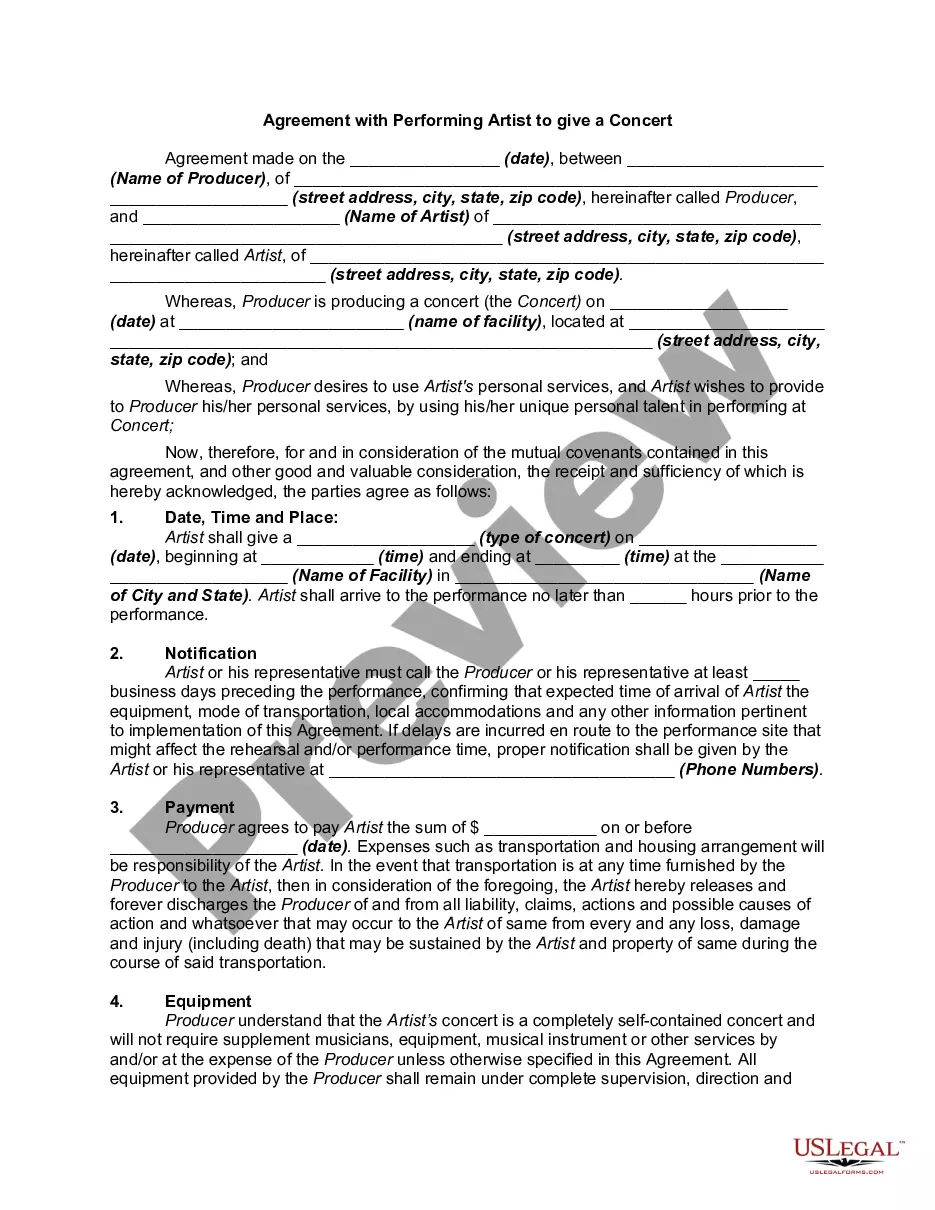
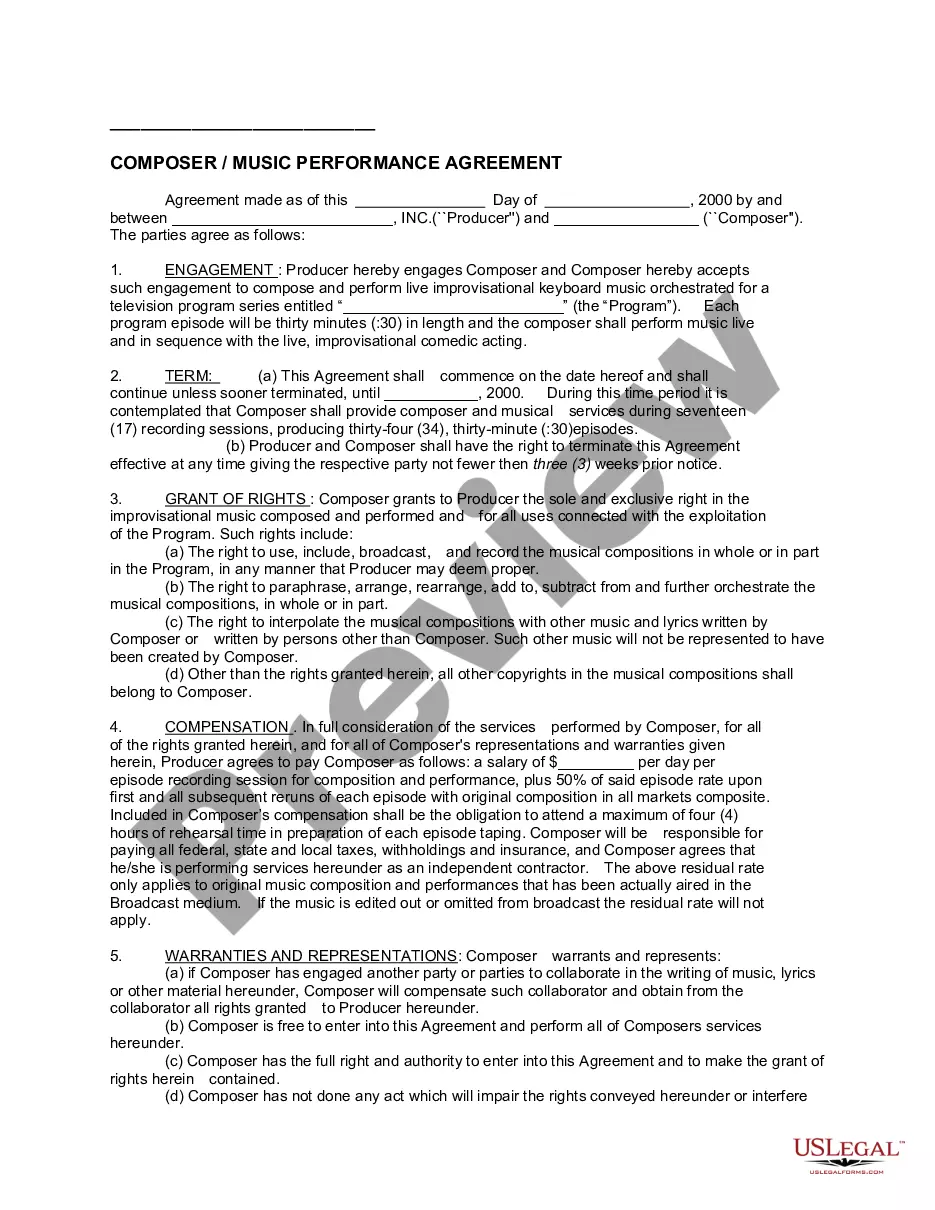
Performance Agreement For Supply Chain Manager In Phoenix
Description

Get your form ready online
Our built-in tools help you complete, sign, share, and store your documents in one place.
Make edits, fill in missing information, and update formatting in US Legal Forms—just like you would in MS Word.
Download a copy, print it, send it by email, or mail it via USPS—whatever works best for your next step.
Sign and collect signatures with our SignNow integration. Send to multiple recipients, set reminders, and more. Go Premium to unlock E-Sign.
If this form requires notarization, complete it online through a secure video call—no need to meet a notary in person or wait for an appointment.
We protect your documents and personal data by following strict security and privacy standards.

Make edits, fill in missing information, and update formatting in US Legal Forms—just like you would in MS Word.

Download a copy, print it, send it by email, or mail it via USPS—whatever works best for your next step.

Sign and collect signatures with our SignNow integration. Send to multiple recipients, set reminders, and more. Go Premium to unlock E-Sign.

If this form requires notarization, complete it online through a secure video call—no need to meet a notary in person or wait for an appointment.

We protect your documents and personal data by following strict security and privacy standards.
Looking for another form?





Form popularity
FAQ
Entry requirements Admission requirements for the Higher Certificate in Supply Chain Management are as follows: A National Senior Certificate with minimum Higher Certificate admission. A relevant NQF4 qualification OR equivalent ('A' or 'O' level certificates)
Becoming a Supply Chain Analyst without prior experience can be a challenge, yet it's not out of reach. The role typically requires understanding supply chain principles, data analysis, and problem-solving skills. To start, consider educational courses or certifications in supply chain management.
How to Become a Supply Chain Planner. To begin a supply chain planner career, you need a bachelor's degree in a relevant area of study, like supply chain management, logistics, or business, plus previous job experience with duties relating to business partnerships and inventory management.
Supply chain managers collaborate with sales, marketing, and production teams to forecast demand, anticipate customer needs, and develop accurate demand plans. Demand planning involves analyzing historical data, market trends, and customer feedback to determine appropriate inventory levels and production schedules.
Procurement, Logistics, and Supply Chain Management are some of the fastest growing fields nationwide. ing to the U.S. Bureau of Labor Statistics, employment of logisticians is projected to grow 30 percent from 2020 to 2030, much faster than the average for all occupations.
Education and training. The education and training required to become a supply chain planner will vary from organization to organization. Many companies want you to have a bachelor's degree in business, logistics, engineering, supply chain management, or a similar field.
Contract management is a systematic process of managing contracts to minimize operational and functional risks and optimize vendor performance. It involves contract creation, execution, and analysis. Depending on the business operations, it also consists of termination of contracts.
Here are the key steps you need to take to build your career in supply chain. Get proper education. Start by obtaining a Bachelor's Degree in Supply Chain Management or a Bachelor of Business Administration. Gain practical experience. Join professional networks. Continue learning and adapting.
By placing relationships at the centre of supply chain management, it is possible to create a more collaborative and effective dynamic. Buyers that work well with their suppliers are better placed to get their compliance when it comes to new rules and regulations.
