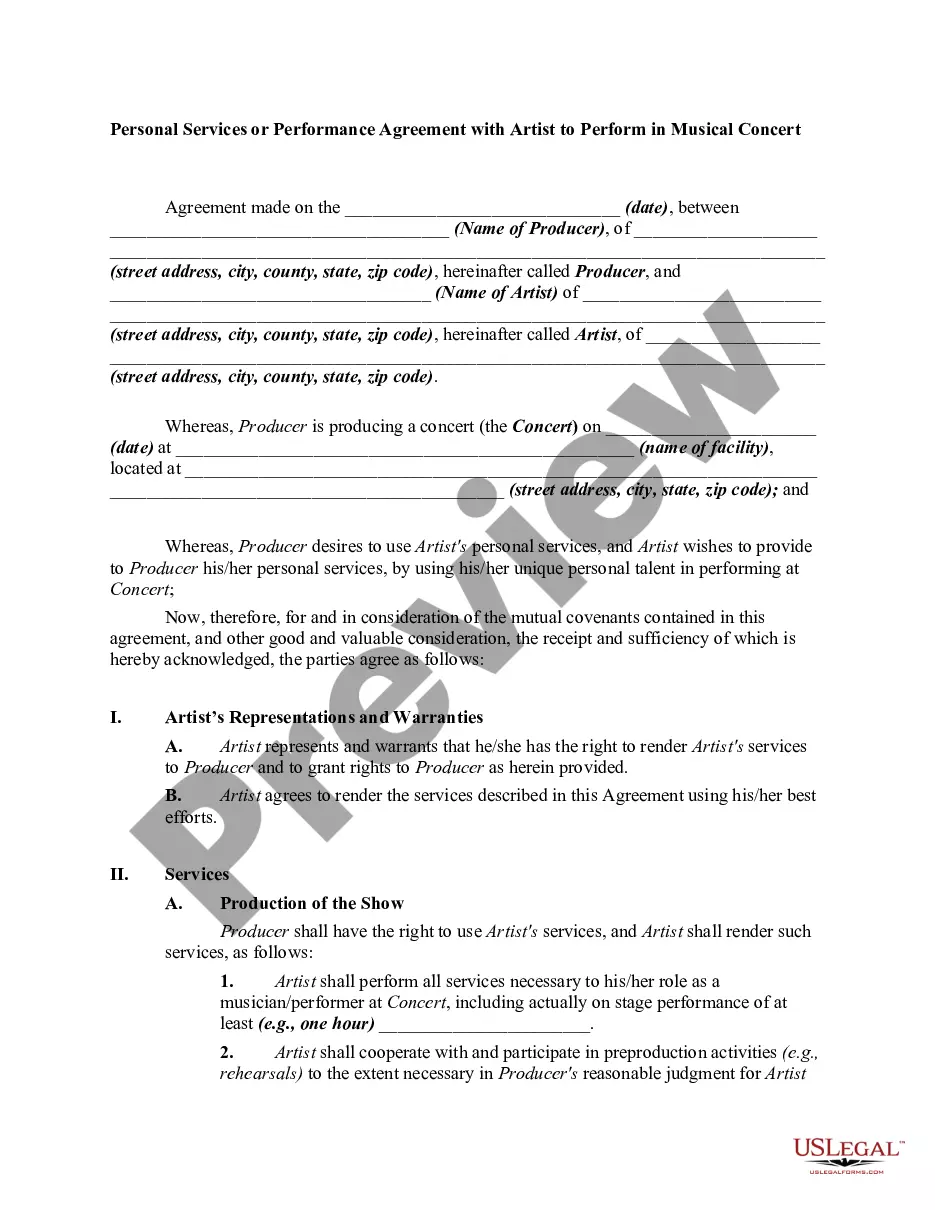
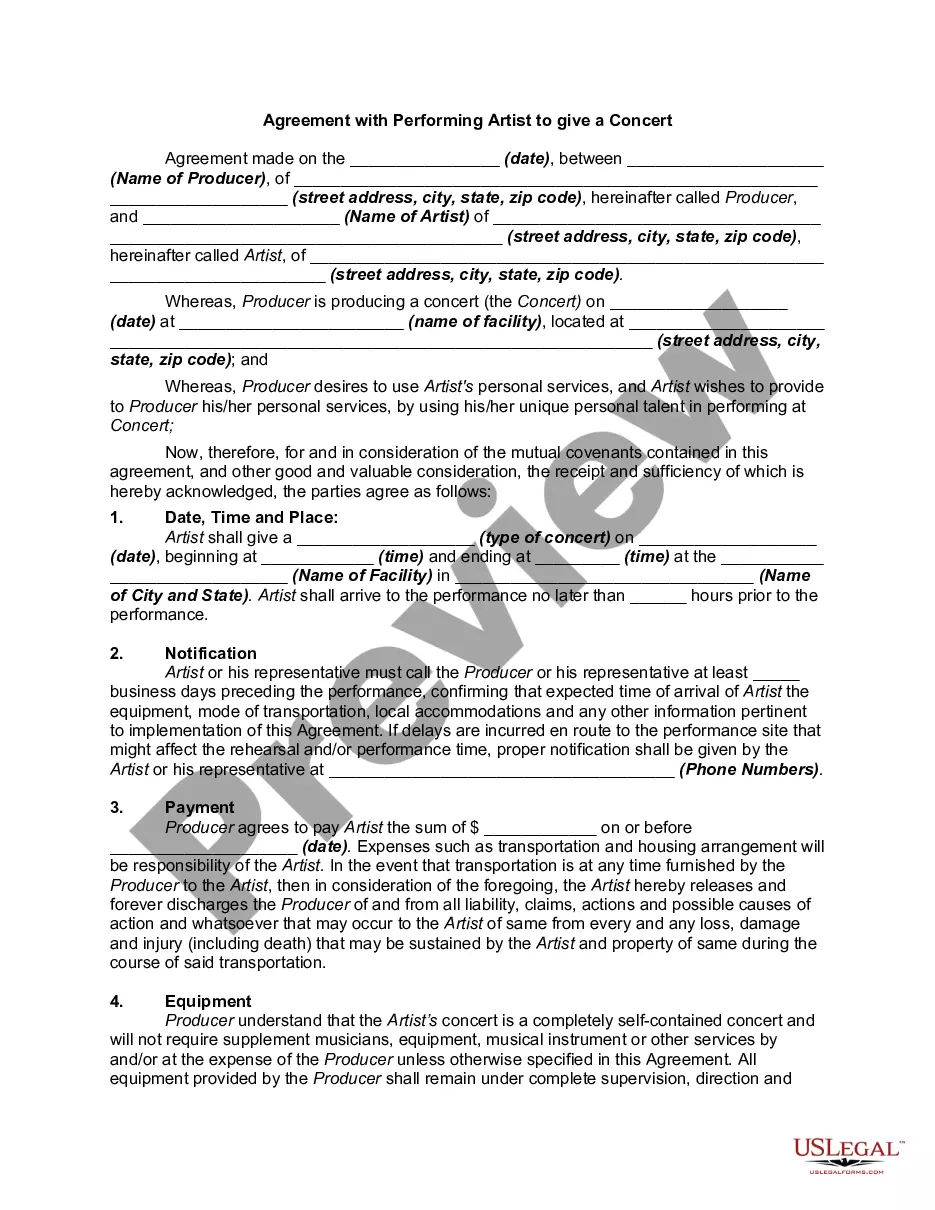
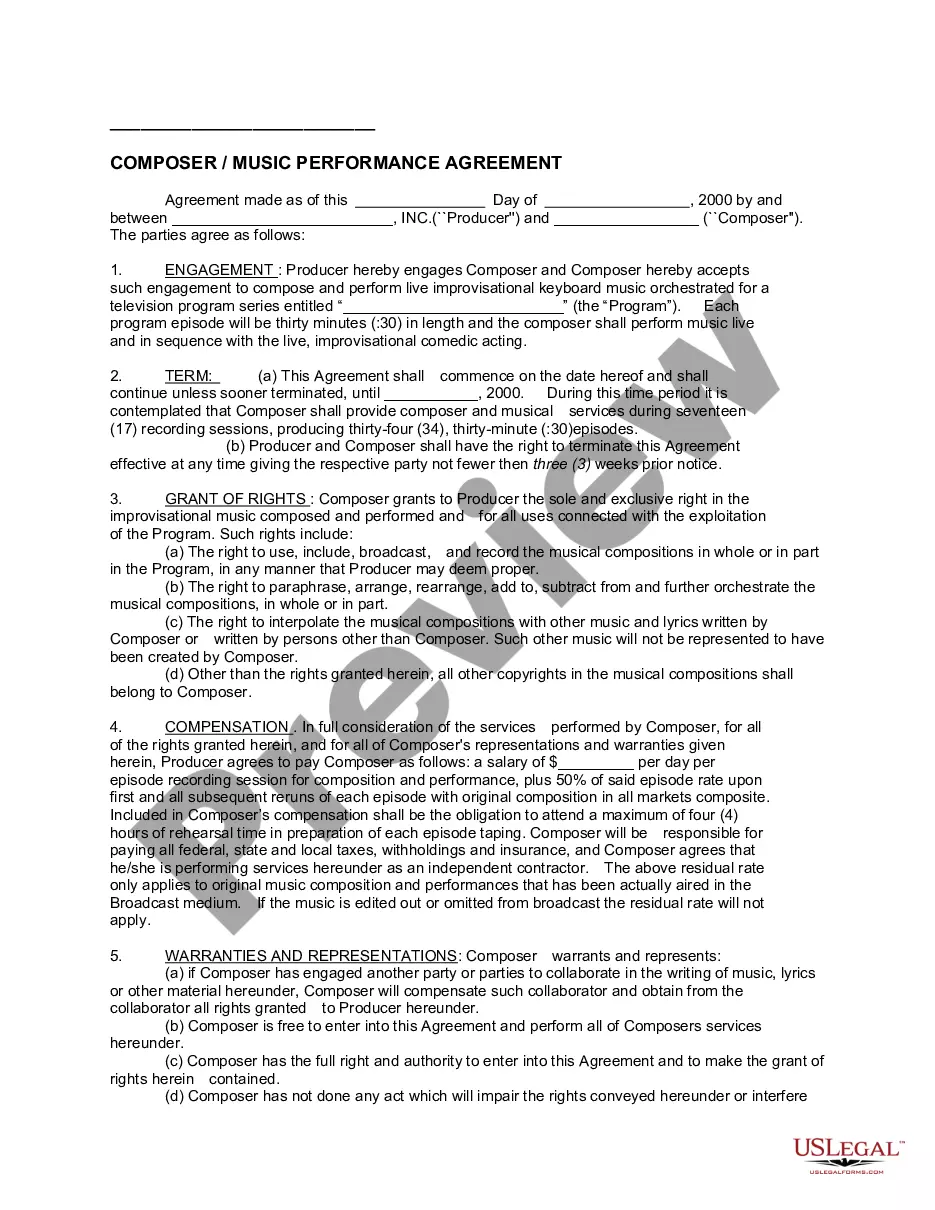
Performance Agreement To In Massachusetts
Description

Get your form ready online
Our built-in tools help you complete, sign, share, and store your documents in one place.
Make edits, fill in missing information, and update formatting in US Legal Forms—just like you would in MS Word.
Download a copy, print it, send it by email, or mail it via USPS—whatever works best for your next step.
Sign and collect signatures with our SignNow integration. Send to multiple recipients, set reminders, and more. Go Premium to unlock E-Sign.
If this form requires notarization, complete it online through a secure video call—no need to meet a notary in person or wait for an appointment.
We protect your documents and personal data by following strict security and privacy standards.

Make edits, fill in missing information, and update formatting in US Legal Forms—just like you would in MS Word.

Download a copy, print it, send it by email, or mail it via USPS—whatever works best for your next step.

Sign and collect signatures with our SignNow integration. Send to multiple recipients, set reminders, and more. Go Premium to unlock E-Sign.

If this form requires notarization, complete it online through a secure video call—no need to meet a notary in person or wait for an appointment.

We protect your documents and personal data by following strict security and privacy standards.
Looking for another form?







Form popularity
FAQ
When there is a breach of certain types of contracts, the aggrieved party may seek the equitable remedy of specific performance, that is, a court order compelling the breaching party to undertake to perform or to complete performance of such party's obligations under the contract.
Employment contracts are enforceable in Massachusetts. When an employer and an employee enter into a written and signed employment contract, both parties will be held to the terms of the contract.
Massachusetts does not require you to submit an Operating Agreement to form your LLC. However, it is important for every LLC to have an Operating Agreement, establishing the rules and structure of the business. The Operating Agreement is a private agreement and is not filed with the state.
Requirements to Win a Specific Performance Lawsuit 1) A valid, enforceable contract exists. 2) The buyer proves readiness and willingness to fulfill all contract terms. 3) The seller refuses to complete the sale without legal grounds.
For example, a contract for the sale of a specific piece of property, from which the owner pulls out, may result in a specific performance order requiring the seller to complete the sale to put the buyer in the position they would have enjoyed if the contract had been honored in the first place.
Specific intent means that “a defendant must not only have consciously intended to take certain actions, but that he also consciously intended certain consequences.” Commonwealth v. Gunter, 427 Mass.
Nearly all states have adopted the UCC, which addresses specific performance. For example, California law states that specific performance may be compelled if: Specific performance of a contract is an appropriate remedy; and. The other side has substantially performed its obligations, or future performance is assured.
A contract is an agreement between parties, creating mutual obligations that are enforceable by law. The basic elements required for the agreement to be a legally enforceable contract are: mutual assent, expressed by a valid offer and acceptance; adequate consideration; capacity; and legality.
In contract law, there must be consideration for the contract to be enforceable. In some contracts , this means that one party promises something in exchange for a performance from second party. The action of completing that performance fulfills the second party's obligations in the contract.
There are four essential elements of forming a contract: offer, acceptance, consideration, and intention to create legal relations. Beyond this, the terms of the contract must also be unambiguous, and the parties must have the mental capacity to agree.
