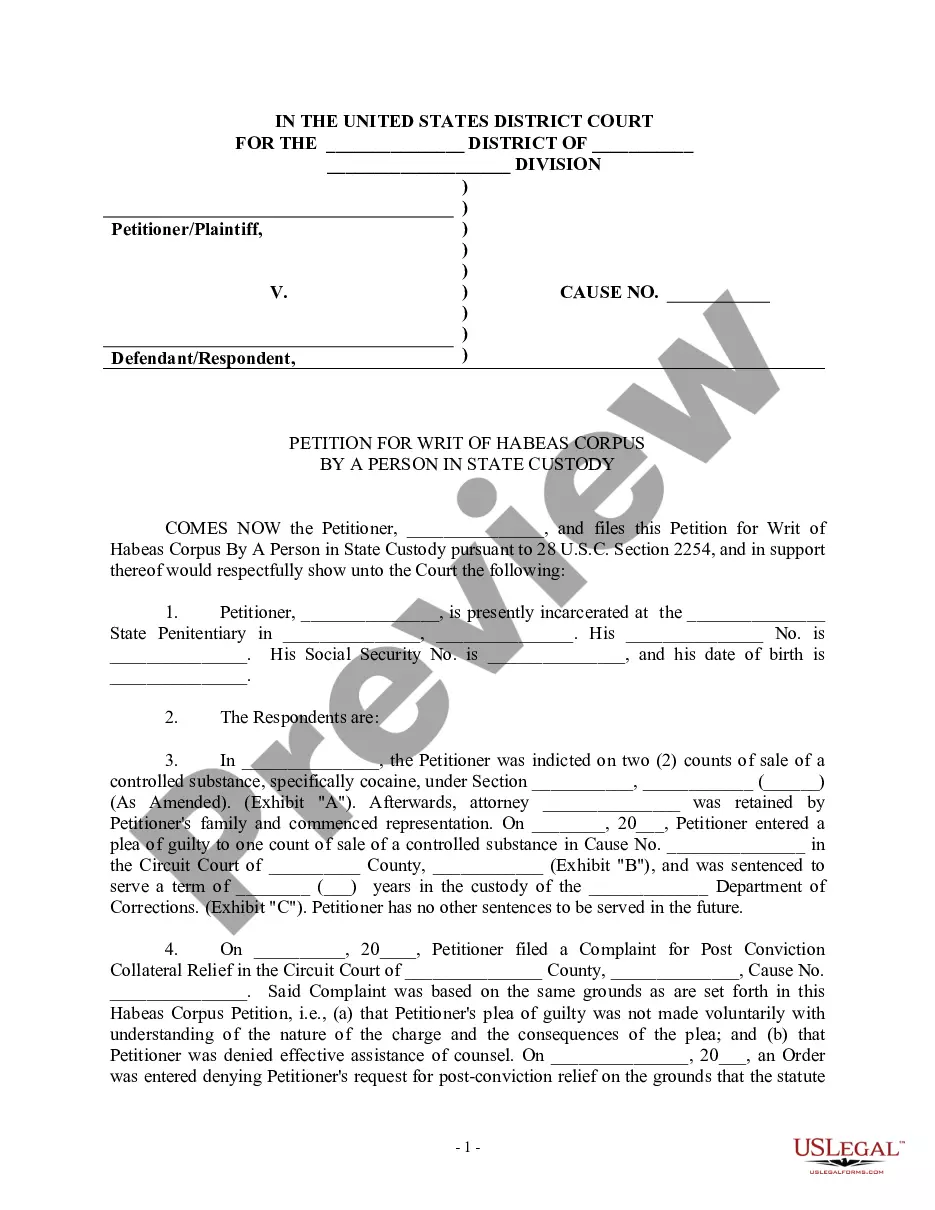
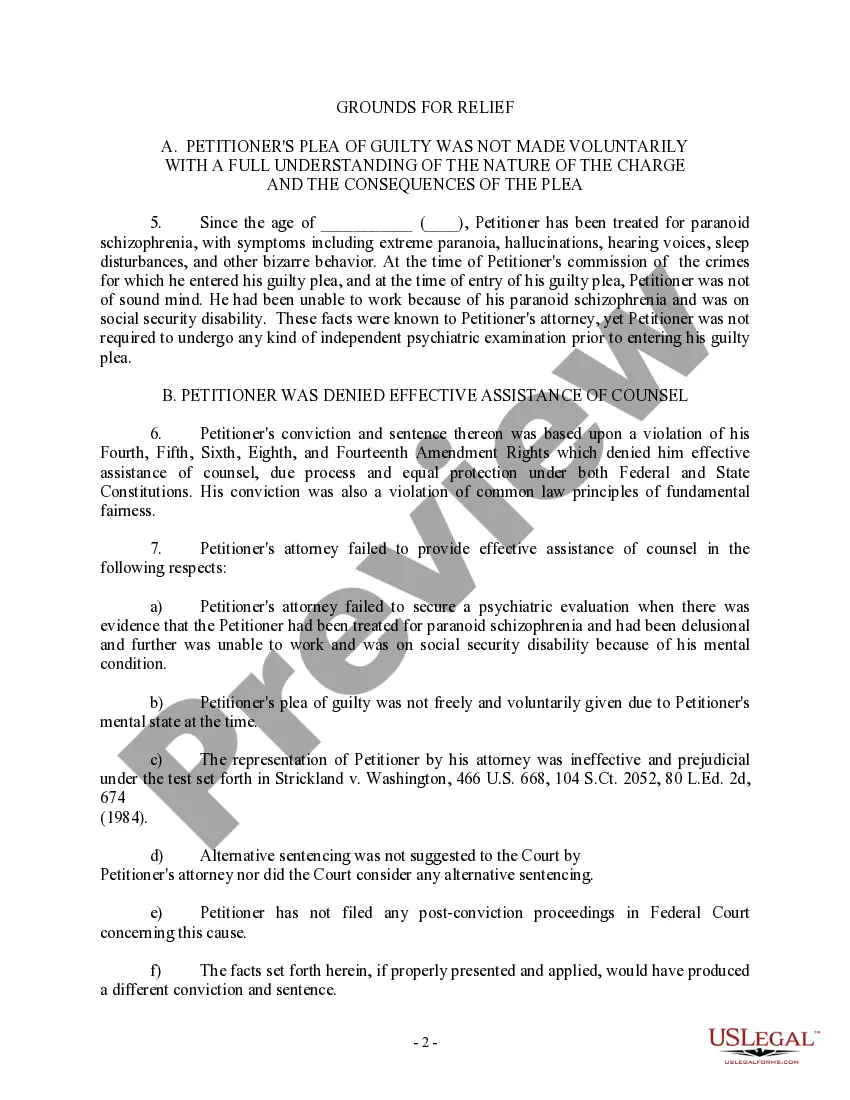
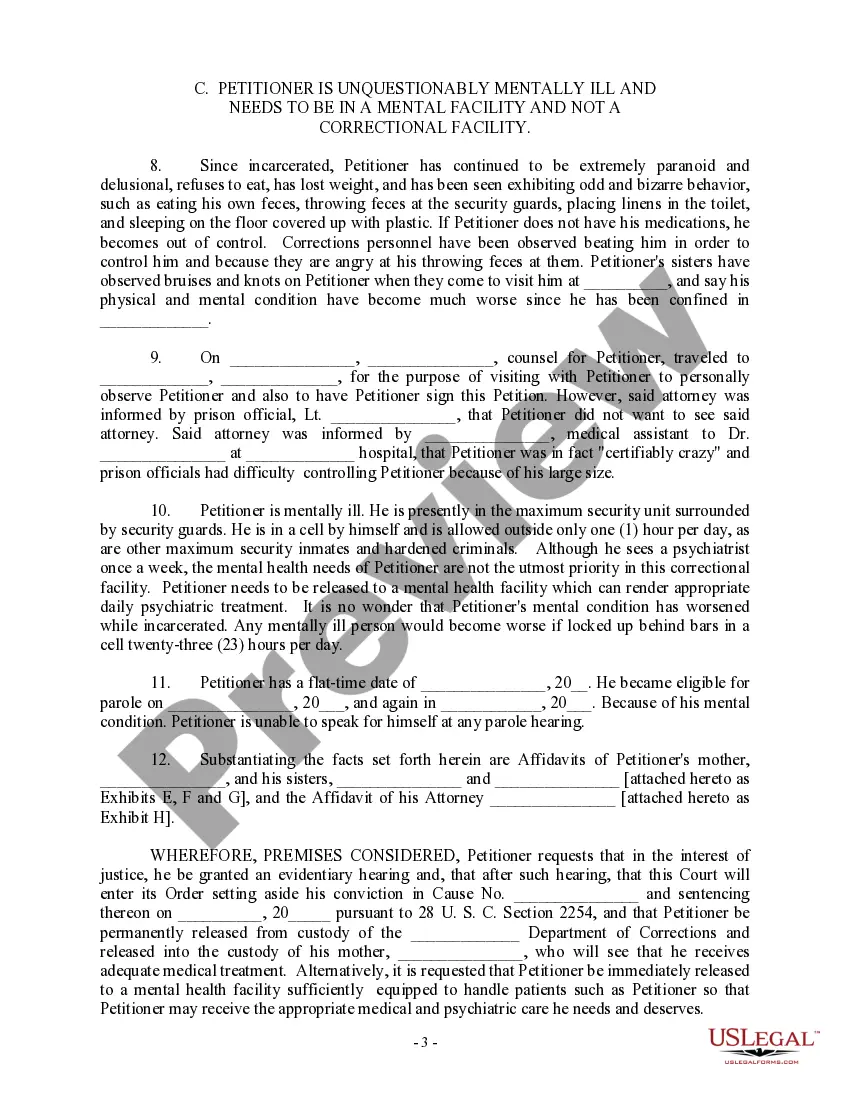
Habeas Corpus Petition Form With Court In Maryland
Description
Get your form ready online
Our built-in tools help you complete, sign, share, and store your documents in one place.
Make edits, fill in missing information, and update formatting in US Legal Forms—just like you would in MS Word.
Download a copy, print it, send it by email, or mail it via USPS—whatever works best for your next step.
Sign and collect signatures with our SignNow integration. Send to multiple recipients, set reminders, and more. Go Premium to unlock E-Sign.
If this form requires notarization, complete it online through a secure video call—no need to meet a notary in person or wait for an appointment.
We protect your documents and personal data by following strict security and privacy standards.

Make edits, fill in missing information, and update formatting in US Legal Forms—just like you would in MS Word.

Download a copy, print it, send it by email, or mail it via USPS—whatever works best for your next step.

Sign and collect signatures with our SignNow integration. Send to multiple recipients, set reminders, and more. Go Premium to unlock E-Sign.

If this form requires notarization, complete it online through a secure video call—no need to meet a notary in person or wait for an appointment.

We protect your documents and personal data by following strict security and privacy standards.
Looking for another form?

Form popularity
FAQ
Ask the court for a writ of habeas corpus (a court order telling a public official, like a prison warden, to bring you to the court and show a legal reason for holding you) to challenge your criminal conviction or commitment to another facility or the conditions under which you are being held. Get form HC-001.
The habeas petition must be in writing and signed and verified either by the petitioner seeking relief or by someone acting on his or her behalf. The petition must name the custodian as the respondent and state the facts concerning the applicant's custody and include the legal basis for the request.
Most judicial records are in the custody of a local clerk's office. To request those records, please contact the appropriate clerk's office, which is generally where the case was filed or the hearing or trial was conducted.
HABEAS CORPUS. "'The writ of habeas corpus is a high prerogative writ, given by the common law, and made effective and enforced by statute, the great object of which is the liberation of parties who may be imprisoned or detained without sufficient cause.
To file a state habeas corpus petition, individuals must use the official Judicial Council Form HC-001, which should be filled out completely and clearly. The petition should include detailed information about the grounds for relief, supporting facts, and relevant legal authorities.
The petitioner, typically through an attorney, files a writ of habeas corpus to the relevant court, usually the California Superior Court, and the arguments as to why the petitioner has been illegally detained. The petitioner's lawyer files a writ of habeas corpus to explain why they have been illegally detained.
A petition for a writ of habeas corpus shall be supported by affidavit of the petitioner and shall include: (1) a statement that the individual by or on behalf of whom the writ is sought is unlawfully confined or restrained; (2) the place where the individual is confined or restrained, if known;
James Liebman, Professor of Law at Columbia Law School, stated in 1996 that his study found that when habeas corpus petitions in death penalty cases were traced from conviction to completion of the case that there was "a 40 percent success rate in all capital cases from 1978 to 1995." Similarly, a study by Ronald Tabek ...