Sample Motion For Judgment On The Pleadings Federal Court
Description
Get your form ready online
Our built-in tools help you complete, sign, share, and store your documents in one place.
Make edits, fill in missing information, and update formatting in US Legal Forms—just like you would in MS Word.
Download a copy, print it, send it by email, or mail it via USPS—whatever works best for your next step.
Sign and collect signatures with our SignNow integration. Send to multiple recipients, set reminders, and more. Go Premium to unlock E-Sign.
If this form requires notarization, complete it online through a secure video call—no need to meet a notary in person or wait for an appointment.
We protect your documents and personal data by following strict security and privacy standards.

Make edits, fill in missing information, and update formatting in US Legal Forms—just like you would in MS Word.

Download a copy, print it, send it by email, or mail it via USPS—whatever works best for your next step.

Sign and collect signatures with our SignNow integration. Send to multiple recipients, set reminders, and more. Go Premium to unlock E-Sign.

If this form requires notarization, complete it online through a secure video call—no need to meet a notary in person or wait for an appointment.

We protect your documents and personal data by following strict security and privacy standards.
Looking for another form?
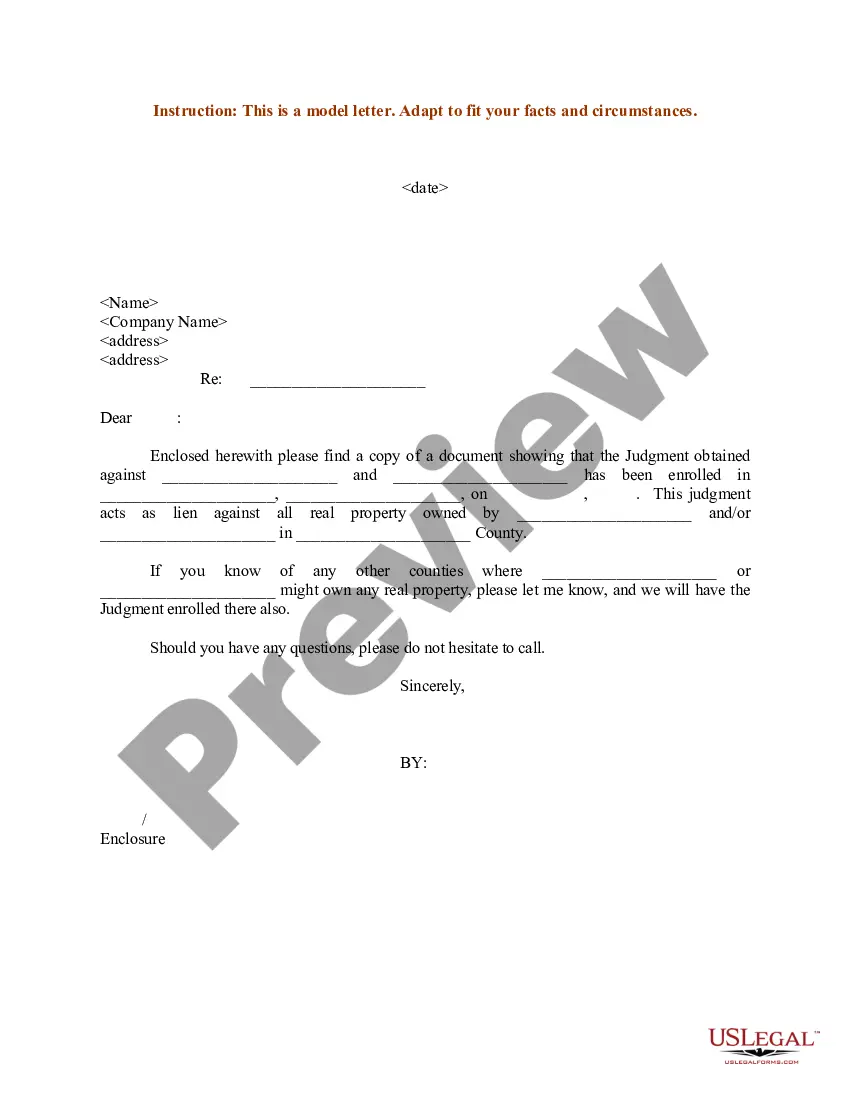
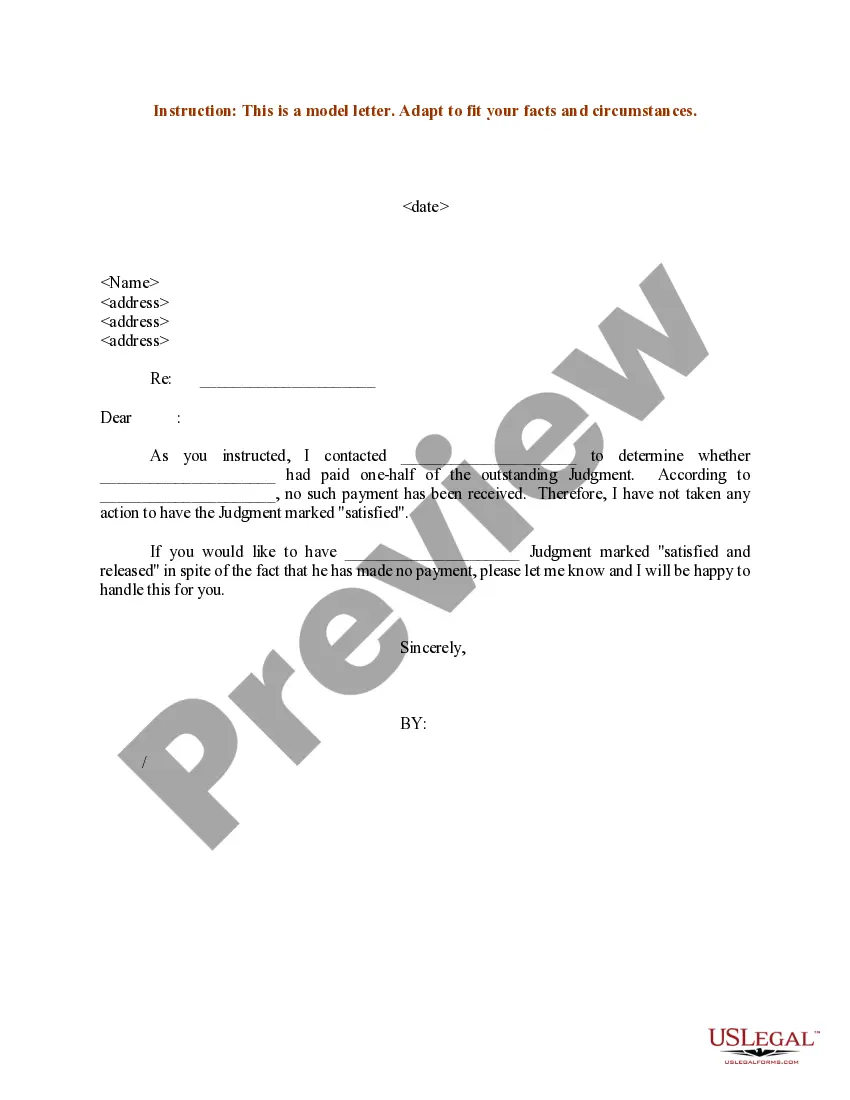
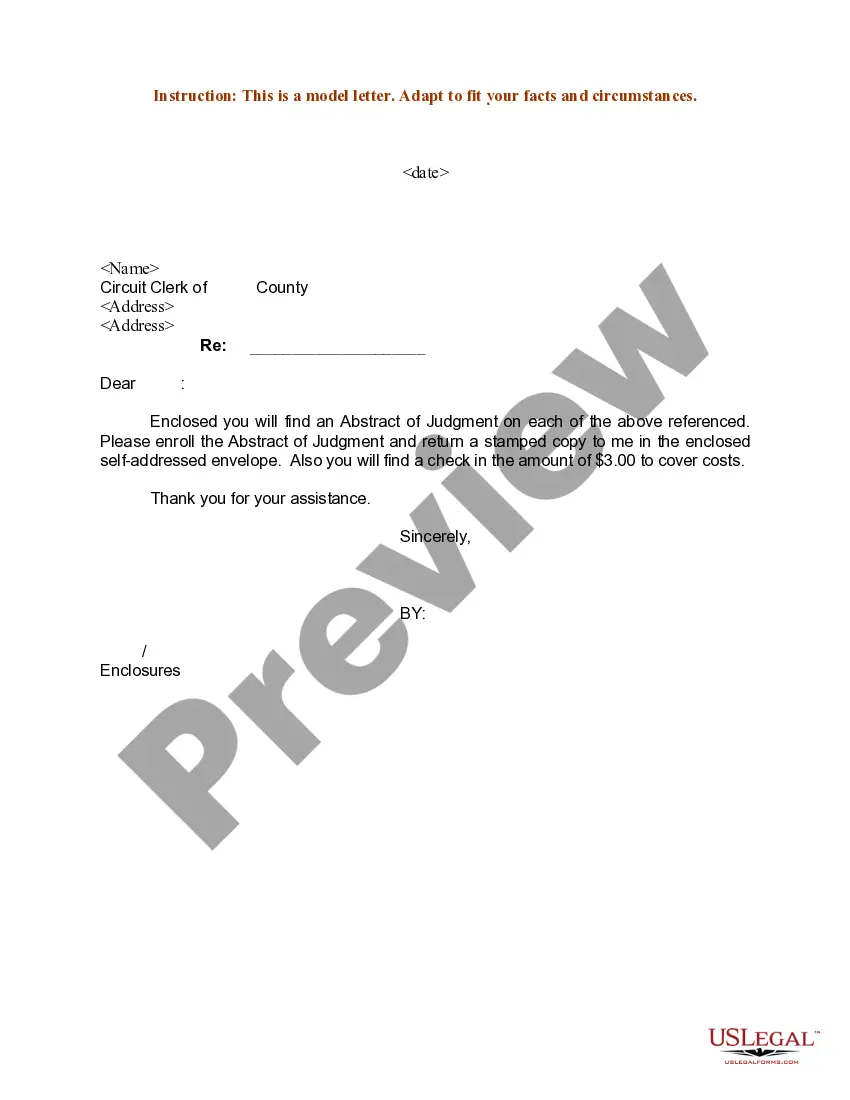
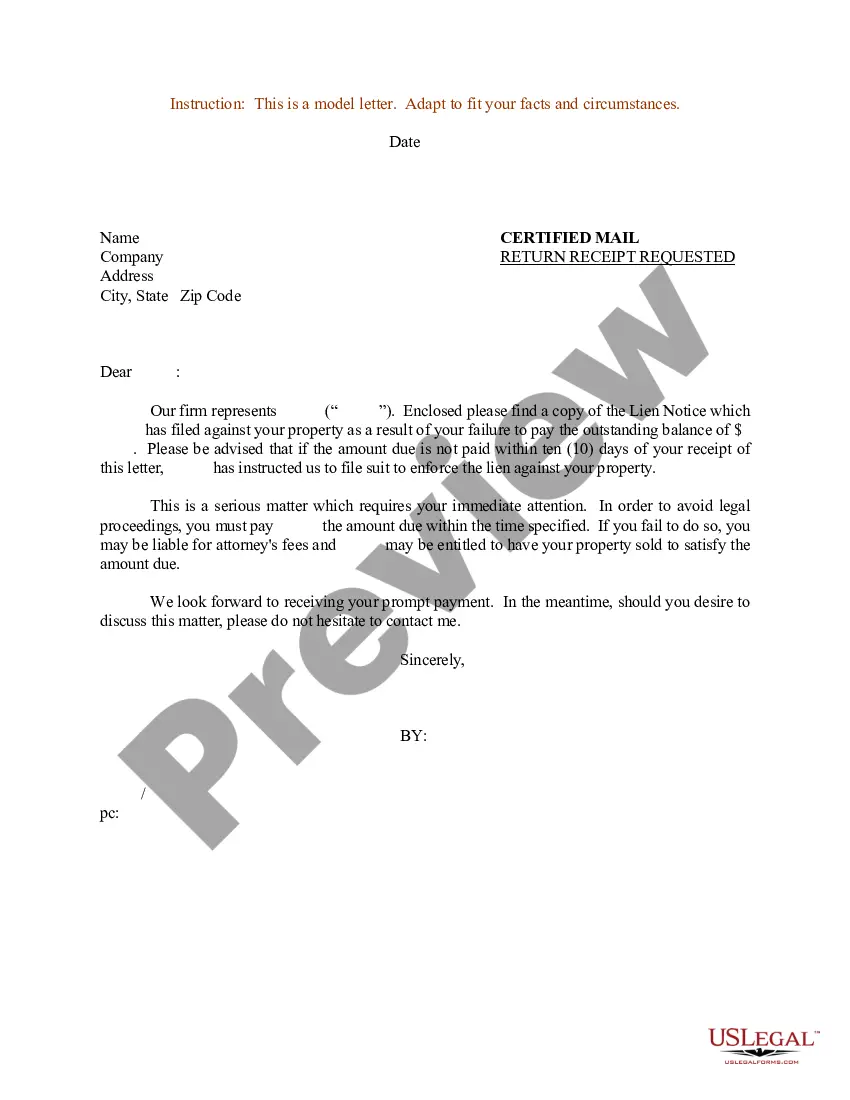
How to fill out Sample Letter For Notice Of Judgment - Lien?
Regardless of whether it’s for corporate reasons or personal issues, everyone eventually encounters legal matters in their lifetime.
Completing legal documents demands meticulous attention, beginning with selecting the appropriate form template.
With an extensive US Legal Forms library available, you won’t have to waste time searching for the correct template online. Utilize the library’s straightforward navigation to find the right form for any situation.
- Obtain the template you require by using the search bar or browsing the catalog.
- Review the form’s details to confirm it aligns with your case, state, and county.
- Click on the form’s preview to scrutinize it.
- If it’s the incorrect document, return to the search option to locate the Sample Motion For Judgment On The Pleadings Federal Court template you need.
- Download the file if it satisfies your requirements.
- If you have a US Legal Forms account, click Log in to retrieve previously saved documents in My documents.
- If you haven’t created an account yet, you can acquire the form by clicking Buy now.
- Select the suitable pricing plan.
- Complete the account registration form.
- Choose your payment method: use a credit card or PayPal account.
- Select the preferred document format and download the Sample Motion For Judgment On The Pleadings Federal Court.
- Once it is saved, you can either complete the form using editing software or print it and fill it out by hand.
Form popularity
FAQ
To fill out a motion for court, start by clearly identifying the court and the case number at the top of the document. Next, provide a concise title indicating the motion type, such as 'Motion for Judgment on the Pleadings.' Follow this with a statement of facts, legal grounds for your request, and the specific relief you seek. For assistance, consider reviewing a sample motion for judgment on the pleadings federal court from USLegalForms, which can provide valuable guidance in ensuring your motion meets all necessary requirements.
The primary difference between a motion for judgment on the pleadings and a motion for summary judgment lies in the evidence considered. A motion for judgment on the pleadings focuses solely on the written filings, while a motion for summary judgment can include additional evidence such as documents, affidavits, or depositions. Essentially, summary judgment allows for a more comprehensive view of the case. If you seek clarity, you might look for a sample motion for judgment on the pleadings federal court or a sample motion for summary judgment to visualize these distinctions.
A motion for judgment on the pleadings in federal court is a request made to the judge to decide a case based solely on the pleadings, without the need for a trial. This motion argues that, even if all allegations in the opposing party's pleadings are true, there is no legal basis for their claim. In essence, it seeks to dispose of the case quickly when there are no genuine issues of material fact. For those interested, a sample motion for judgment on the pleadings federal court is often available to guide the drafting process.
A motion for judgment on the pleadings requests the court to assess the legal sufficiency of the pleadings and decide if the moving party is entitled to judgment as a matter of law. In this motion, the party emphasizes that even if the opposing party's claims are accepted as true, no facts support a viable cause of action. This request aims to expedite the legal process by eliminating the need for a trial. For further contextual understanding, refer to our Sample motion for judgment on the pleadings federal court.
The key difference between summary judgment and judgment on the pleadings lies in the type of evidence considered. A summary judgment motion can include affidavits, depositions, and other materials outside the pleadings to support the argument. In contrast, a judgment on the pleadings relies solely on the written pleadings without additional evidence. Understanding these distinctions can guide your legal strategy. For practical examples, consult our Sample motion for judgment on the pleadings federal court.
A motion for judgment on the pleadings is a request for the court to issue a ruling based solely on the written documents submitted in a case, without conducting a trial. This motion argues that the pleadings present sufficient evidence to resolve the case without further proceedings. It is a strategic legal tool that can streamline the litigation process. For more resources, explore our Sample motion for judgment on the pleadings federal court.
To write a motion for summary judgment, start by clearly stating the legal basis for your request, citing the relevant laws. Next, organize the motion with sections that present undisputed facts, supporting evidence, and applicable legal arguments. Using a structured format enhances clarity and persuasiveness, ensuring that the court easily understands your position. For a full guide on this process, refer to our Sample motion for judgment on the pleadings federal court.
The primary purpose of a motion for judgment is to seek a prompt resolution of a case when there is little or no dispute regarding the material facts. By filing this motion, a party aims to avoid a lengthy trial process, saving time and legal costs. This type of motion can lead to a favorable judgment if the court agrees that the facts warrant it. For details, refer to our Sample motion for judgment on the pleadings federal court to better understand its implications.
A motion for judgment on the pleadings in federal court is a legal request made by one party to obtain a judgment based solely on the pleadings filed in the case. This type of motion is appropriate when there are no material facts in dispute, allowing the court to make a decision based on the law. In essence, the party believes that even if everything in the opposing party's pleadings is true, they are still entitled to judgment in their favor. For additional insights, check out our Sample motion for judgment on the pleadings federal court.