Sample Motion For Judgment On The Pleadings Federal Court In Georgia
Description




Get your form ready online
Our built-in tools help you complete, sign, share, and store your documents in one place.
Make edits, fill in missing information, and update formatting in US Legal Forms—just like you would in MS Word.
Download a copy, print it, send it by email, or mail it via USPS—whatever works best for your next step.
Sign and collect signatures with our SignNow integration. Send to multiple recipients, set reminders, and more. Go Premium to unlock E-Sign.
If this form requires notarization, complete it online through a secure video call—no need to meet a notary in person or wait for an appointment.
We protect your documents and personal data by following strict security and privacy standards.

Make edits, fill in missing information, and update formatting in US Legal Forms—just like you would in MS Word.

Download a copy, print it, send it by email, or mail it via USPS—whatever works best for your next step.

Sign and collect signatures with our SignNow integration. Send to multiple recipients, set reminders, and more. Go Premium to unlock E-Sign.

If this form requires notarization, complete it online through a secure video call—no need to meet a notary in person or wait for an appointment.

We protect your documents and personal data by following strict security and privacy standards.
Looking for another form?




Form popularity
FAQ
Default Judgment: Rendered when a defendant fails to respond, awarding relief based on the plaintiff's claims. Summary Judgment: Issued when there's no genuine dispute on material facts, allowing the court to rule without a full trial.
Summary judgment is appropriate when issues are raised in the answer but are not genuine issues requiring evidence. Judgment on the pleadings is proper when the answer fails to raise any issues by admitting or omitting to address the material allegations.
If the Court grants the full motion, the moving party obtains an appealable final judgment. On the other hand, if the judge grants summary judgment on only some claims, the order is not an appealable final judgment because some remaining claims/defenses in the case must be resolved.
JMOL is similar to judgment on the pleadings and summary judgment, all of which test the factual sufficiency of a claim. Judgment on the pleadings is a motion made after pleading and before discovery; summary judgment happens after discovery and before trial; JMOL occurs during trial.
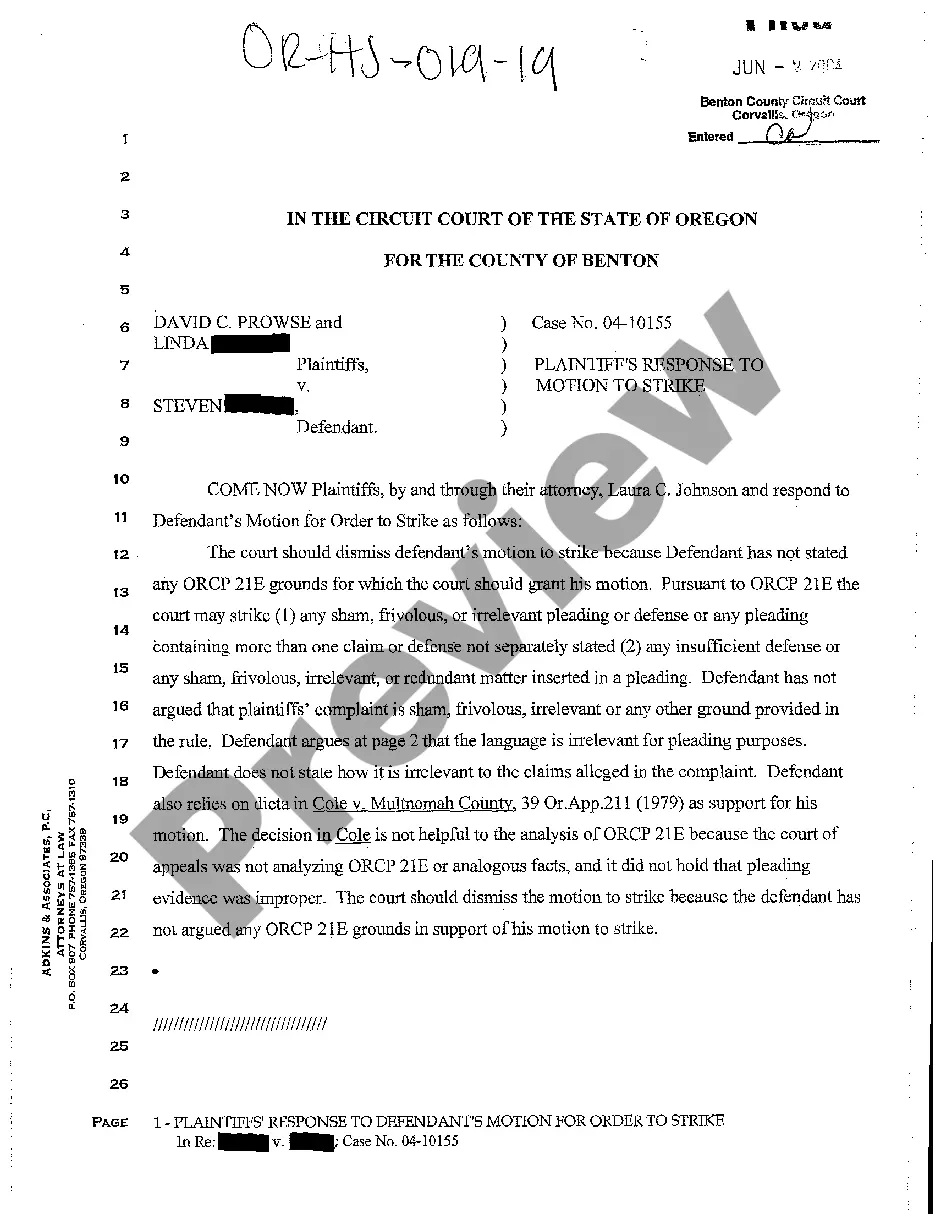
(f) Motion to strike. Upon motion made by a party within 30 days after the service of the pleading upon him, or upon the court's own initiative at any time, the court may order stricken from any pleading any insufficient defense or any redundant, immaterial, impertinent, or scandalous matter.
(c) Motions for judgment on the pleadings. A party may file a motion for judgment on the pleadings on the basis that no answer has been filed, or that the pleadings disclose that there are no material issues of fact to be resolved and that party is entitled to judgment as a matter of law.
A motion for judgment on the pleadings will occur before the trial and, unlike a motion for summary judgment, does not concern any matters other than what is contained within the pleadings.
A motion for judgment on the pleadings under FRCP 12(c) is designed to dispose of cases before trial where the material facts are not in dispute and a judgment on the merits can be rendered by looking to the substance of the pleadings and any judicially noticed facts.
The odds of winning a summary judgment, known as the grant rate, vary widely by case type. The most common grant of summary judgment is in Title VII and employment cases. These are granted in whole in 49.2% of cases, in part in 23.3% of cases, and denied in 27.5% of cases.
This type of motion is typically made when the outcome of the case depends on the court's interpretation of the law. Example: In a lawsuit involving a breach of contract, the defendant may file a motion for judgment on the pleadings if they believe that the plaintiff has failed to state a valid claim.

